

☕ Quick Answer
If you’re new to coffee, start with drinks that are easy to enjoy instead of the strongest thing on the menu. A latte is usually the best first choice because steamed milk softens the bold flavor of espresso. If you want something sweeter, try a mocha. If you want to ease into black coffee, an Americano is a smart next step. Once you understand that most coffee shop drinks are just different mixes of espresso, milk, foam, and water, the menu gets a lot less intimidating.
Coffee menus can hit like a brick wall. Latte, flat white, Americano, mocha, cold brew, and suddenly the line is moving and your brain is gone.
I got hooked young, pulled out of bed by the smell of coffee and the chance to sit with my grandfather before the rest of the house woke up. I’ve had at least one cup a day since. The point here isn’t to memorize every drink on the board. It’s to know the main coffee types for beginners, what they taste like, and which ones are the easiest first step.
Key Takeaways
- A latte is the soft landing, creamy, mild, and easy to like.
- A cappuccino tastes stronger than a latte because it has less milk and more foam.
- An Americano is espresso cut with hot water, so it’s a solid bridge into black coffee.
- Mocha is the safest pick if you want sweetness to take the bite out of coffee.
- Medium-roast Arabica, often from Colombia or Brazil, is a smart starting point.
Start with the easiest coffee types to recognize on any menu
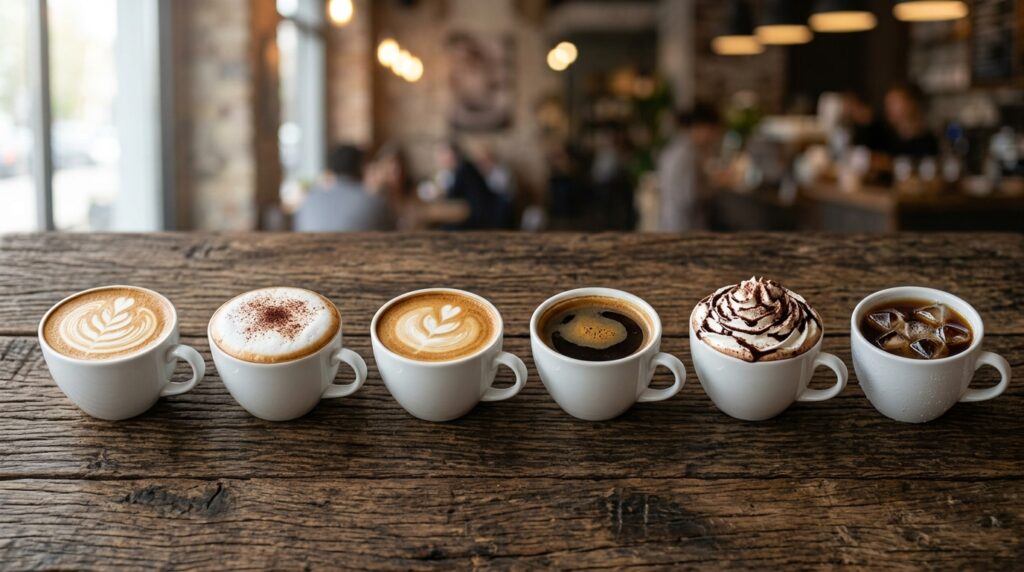
Most cafe menus are less complicated than they look. In the US, the drinks beginners see most often are latte, cappuccino, Americano, flat white, mocha, and iced coffee. The latte still rules as the most popular first-timer order, and for good reason, it’s smooth and forgiving.
Here’s the fast read.
| Drink | What It Is | Taste |
|---|---|---|
| Latte | Espresso with lots of steamed milk and a little foam. | Mild, creamy |
| Cappuccino | Equal parts espresso, steamed milk, and foam. | Stronger, airy |
| Flat White | Double espresso with silky microfoam. | Rich, smooth, more coffee-forward |
| Americano | Espresso diluted with hot water. | Clean, bold, similar to black coffee |
| Mocha | Espresso, steamed milk, and chocolate. | Sweet, dessert-like |
| Iced Coffee | Brewed coffee served cold over ice. | Can range from light and refreshing to bold depending on the brew |
Latte, cappuccino, and flat white: the milk drinks people order most

These three are the drinks most people mix up first. The difference is milk, foam, and how hard the espresso pushes through.
A latte is the gentlest of the bunch. It usually has a double shot, about 2 ounces, and a lot of steamed milk, often around 10 ounces in a large US shop drink. That milk softens the sharp edges. You still taste coffee, but it doesn’t punch.
A cappuccino is tighter and louder. The classic build is equal parts espresso, steamed milk, and foam. Less liquid milk means more coffee flavor, and the foam makes it feel lighter on the tongue.
A flat white sits right in the middle. It usually carries a double shot with less milk than a latte, plus thin, silky microfoam. It feels dense, smooth, and more espresso-driven without going harsh.
Americano, mocha, and iced coffee: the safer bridge into stronger coffee
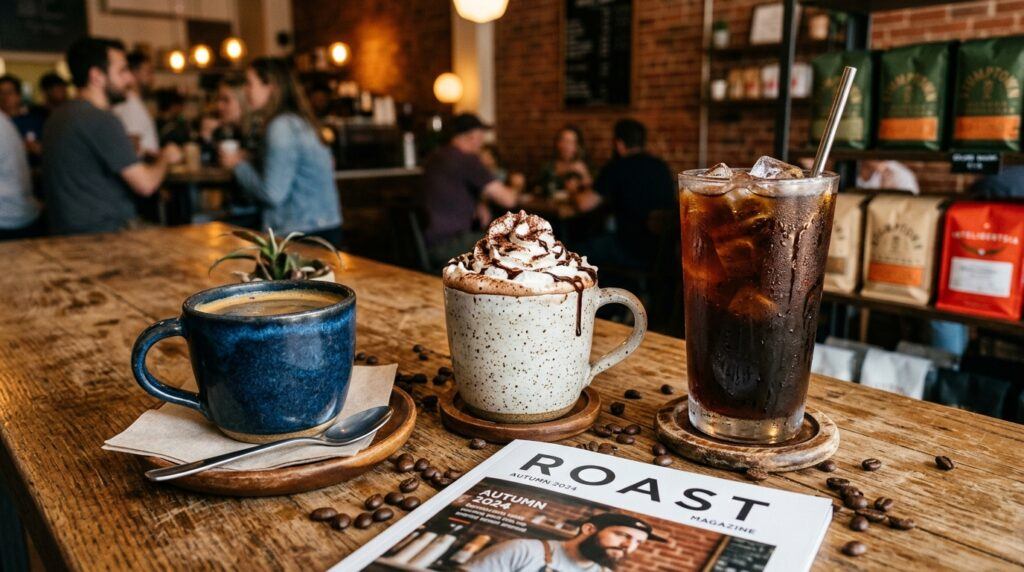
An Americano is simple, espresso diluted with hot water. That turns a concentrated shot into something closer to black brewed coffee, but with a sharper espresso aroma. If you want to ease into black coffee, start here.
A mocha is the sweet shield. Espresso, steamed milk, chocolate, sometimes whipped cream. If plain coffee tastes too bitter, mocha is a great first move. It lets you meet the coffee without getting flattened by it.
Iced coffee is brewed coffee served cold over ice. It’s not the same as cold brew. Cold brew steeps for 18 to 24 hours and usually tastes smoother; it also continues to dominate afternoon orders in 2026. If you want cold, simple, and familiar, iced coffee works.
How espresso drinks work, without the Confusion
Most coffee shop drinks are built from the same core parts: espresso, water, milk, foam, and sometimes flavor. Let me clear something up that I am always asked about espresso!
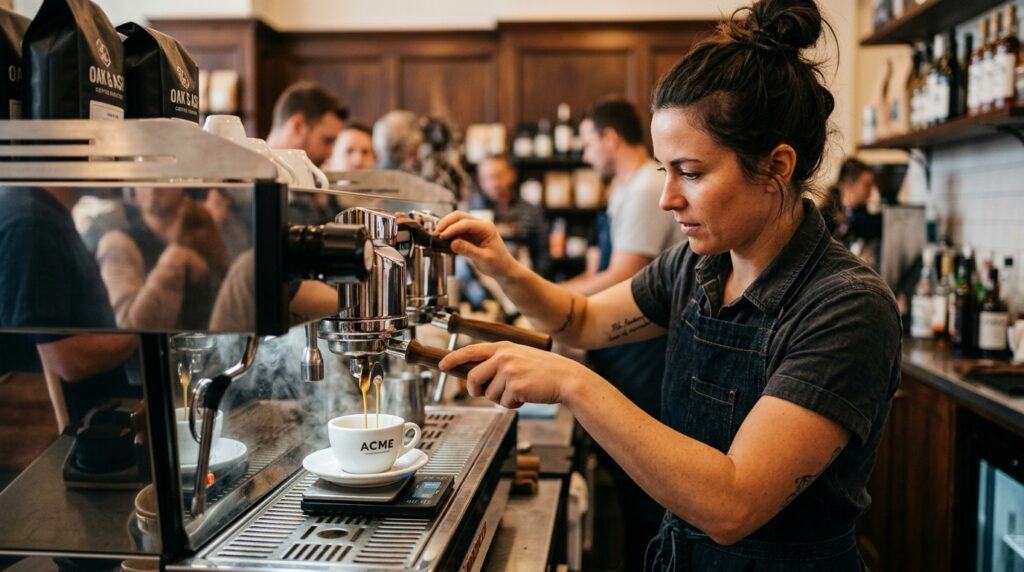
Espresso is a brewing method, not a roast.
That one fact clears a lot of smoke. Espresso is concentrated coffee pushed through fine grounds under pressure. In many US shops, the standard pull is a 2-ounce double shot.
What espresso, doppio, ristretto, and lungo actually mean
Espresso is the standard shot. Small, concentrated, intense.
A doppio is a double shot. Nothing fancy, just more espresso. In many cafes, this is the default.
A ristretto is a shorter shot made with less water. It tastes thicker and more concentrated, with less dilution in the cup.
A lungo is a longer shot. More water runs through the coffee, so the drink gets larger and often a little thinner. If menu terms still feel loaded, common coffee terms explained can strip the fog off fast.
Quick Tip: These aren’t different kinds of coffee beans. They’re different ways of preparing the espresso shot.
The milk, foam, and flavor add-ins that change the taste
Steamed milk makes coffee softer and sweeter. Microfoam, the fine silky foam used in lattes and flat whites, changes texture more than flavor. Thick foam, like you get in a cappuccino, makes the drink feel lighter and a bit sharper.
Chocolate, vanilla, caramel, and white chocolate don’t only add sweetness. They also cover bitterness, which is why flavored lattes and mochas are such a clean entry point for new drinkers. A breve uses half-and-half instead of milk, so it lands richer, heavier, and almost dessert-thick.
The best coffee types for beginners to try first
The smartest way in is not random. The best coffee for first-time coffee drinkers will start mild, then move toward drinks that let more coffee show its teeth.
If you like sweet drinks, start here
Go with a mocha, a vanilla latte, a white chocolate mocha, or an iced vanilla latte. These popular coffee drinks give you coffee flavor without dragging you through bitterness first.
A sweet latte is training wheels in the best way. No shame in it. If the goal is to enjoy the cup, sweetness is not cheating, it’s strategy.
If you want something mild but still coffee-forward
This is where the latte, flat white, and Americano earn their keep.
A latte is the mildest. The milk rounds everything off. A flat white keeps the texture lush but lets the espresso speak with a firmer voice. An Americano strips the milk away and gets you closer to the taste of regular brewed coffee. If you want that next step without going full black cup, this is the bridge.
If you are ready for a stronger coffee taste
Now you move into cappuccino, cortado, and straight espresso.
A cappuccino is stronger than a latte but still approachable. A cortado is a killer middle step, small, balanced, and built with about equal parts espresso and steamed milk, often 2 ounces of each. Straight espresso is the pure hit, dark, fast, concentrated. Better after you’ve spent time with milkier drinks first.
How to choose a coffee type that fits your taste
Forget status. Forget what other people order. The best cup is the one you finish with zero regret.
Choose by sweetness, strength, and milk level
If you hate bitterness, choose sweetness first. Mocha, vanilla latte, and flavored iced latte are safe ground.
If you want coffee flavor without a rough edge, choose more milk. Latte first, flat white second, cappuccino after that. If you want a stronger, cleaner cup, go Americano or black brewed coffee.
Use roast level and bean origin as a beginner shortcut
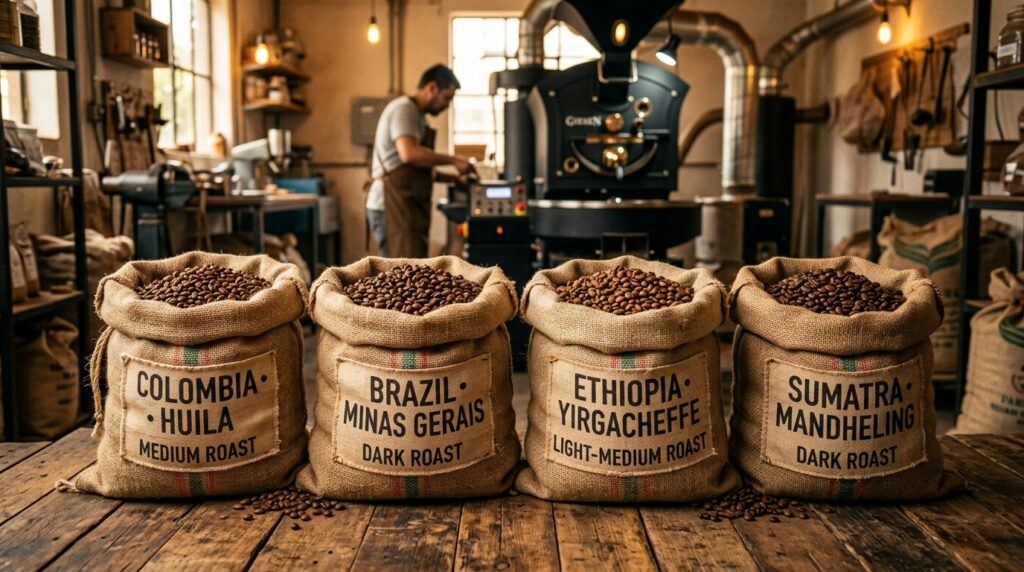
Beans matter, but not in a snobby way. Medium-roast Arabica is the safest place to start because it usually tastes smoother and less aggressive than darker, harsher options. Colombian and Brazilian coffees are often balanced, nutty, chocolatey, and easy to like.
Brighter coffees from Ethiopia or Kenya can taste fruitier and sharper. Sumatran coffees often run earthier and heavier. If you start brewing at home, knowing how coffee extraction works helps explain why one cup tastes sweet and another tastes rough.
If you’re standing in front of a shelf with dozens of bags, don’t overthink it. Pick a medium-roast 100% Arabica from Colombia or Brazil and start there. It’s one of the safest introductions to specialty coffee.
💡 Did You Know?
Many people think “espresso beans” are a special type of coffee bean, but that’s actually a myth. Espresso is a brewing method, not a bean variety. Most coffee beans can be brewed as espresso if they’re ground correctly and extracted under pressure. That’s why the same beans can often be used for drip coffee, French press, pour-over, or espresso.
The Aeropress
In the video you watched earlier, you probably noticed the AeroPress. I enjoy using one so much that I wrote an entire beginner’s guide about it. If you’re curious, check out my article: AeroPress Brewing Methods for Beginners: Brew Better Coffee.
The Final Cup
Coffee doesn’t have to feel complicated. Every coffee lover started with a first order, and nobody gets handed a secret menu. Try a latte one day, an Americano the next, maybe a mocha after that. Before long, you’ll stop reading the menu looking for answers and start looking for what sounds good. That’s when coffee becomes less about learning the names and more about enjoying the ritual. One cup at a time.
This post may contain affiliate links. If you make a purchase through these links, I may earn a small commission at no extra cost to you.
Coffee Types For Beginners FAQ
1. What is the best coffee drink for beginners?
A latte is usually the best place to start because steamed milk softens the bold flavor of espresso. If you prefer sweeter drinks, a mocha is another beginner-friendly choice.
2. What’s the difference between a latte and a cappuccino?
Both contain espresso and steamed milk, but a cappuccino has much more foam and less milk. That gives it a stronger coffee flavor than a latte.
3. Is an Americano stronger than regular coffee?
An Americano is made by adding hot water to espresso. It has a bolder espresso aroma, but depending on the size, its caffeine content is often similar to a regular cup of brewed coffee.
4. What’s the easiest coffee to drink if I don’t like bitter flavors?
Mochas, vanilla lattes, and other flavored lattes are great starting points because milk and flavoring reduce coffee’s natural bitterness.
5. Is espresso a type of coffee bean?
No. Espresso is a brewing method that forces hot water through finely ground coffee under high pressure. Almost any coffee bean can be used to make espresso.
6. What coffee beans should beginners buy?
A medium-roast 100% Arabica coffee from Colombia or Brazil is a safe starting point because it usually has a smooth, balanced flavor with less bitterness than many dark roasts.


