
☕ Quick Answer
Coffee is an excellent ingredient for marinades and dry rubs because it enhances savory flavors, helps tenderize meat, and creates a rich, caramelized crust during cooking. Brewed coffee works well in marinades for beef, pork, chicken, and lamb, while finely ground coffee blends perfectly with spices for BBQ rubs. Used in moderation, coffee adds depth and smokiness without making food taste like coffee.
My First Experience Using Coffee on Steak
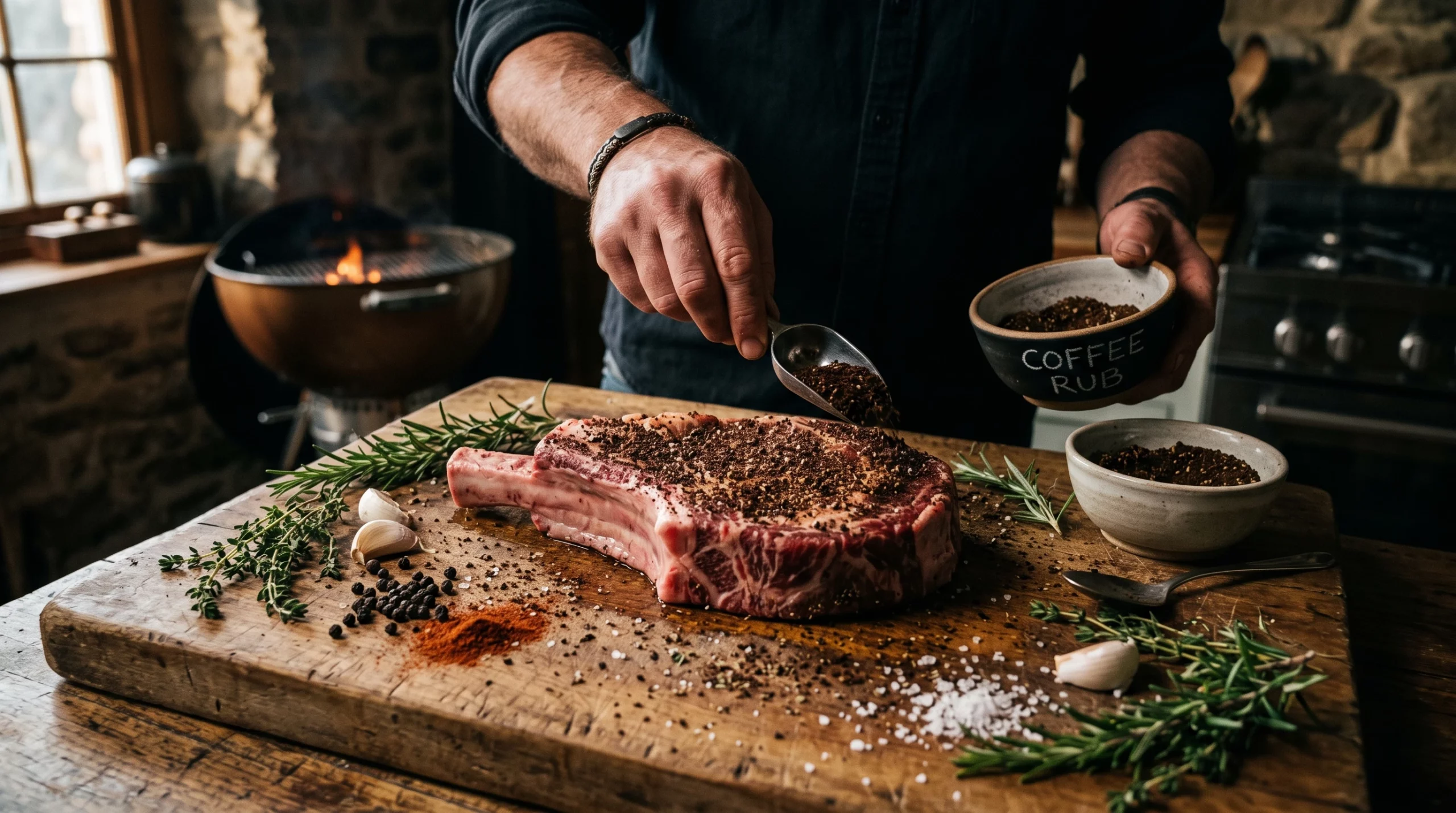
I’ll admit, I was a little skeptical the first time I used coffee in a steak rub. It just seemed like an odd ingredient. But after trying it on a couple of porterhouse steaks, I was genuinely amazed by the results. The coffee didn’t make the meat taste like coffee at all. Instead, it created a rich, flavorful crust that complemented the beef perfectly. If the idea sounds a little unusual, I’d still encourage you to give it a try. I certainly did, and now it’s something I’ll be doing again.
How Coffee Works Its Magic in Marinades and Rubs
Coffee is a pretty handy ingredient in the world of savory cooking, especially when used in marinades and dry rubs. It adds a smoky aroma, a little bitterness to offset sugars, and a richness that’s hard to get from anything else in your pantry. Instead of making your food taste like a cup of joe, it brings out a deeper, more balanced flavor profile. Think BBQ that feels a bit more gourmet, yet simple to pull off.
There’s real science behind this. Coffee’s natural acidity and enzymes help break down tough proteins, so it works well as a meat tenderizer. And when it hits hot grill grates or a searing skillet, coffee grounds pair with the sugars and proteins on the surface of your meat. This creates a crust that’s savory, caramelized, and visually eye-catching. It’s one of my favorite ways to give barbecue or even oven-roasted dishes that restaurant-level depth, making the whole meal pop with flavor.
The Best Ways to Add Coffee to Marinades
Using brewed coffee as the base for a marinade might sound bold, but it actually works great with a lot of classic flavors. I usually go for cooled, strong coffee—espresso strength if possible. You definitely want to let it cool, so you don’t accidentally cook your food while marinating.
- Liquid Mix-Ins: A little soy sauce, balsamic vinegar, or Worcestershire sauce mixes really well with coffee in a marinade. These add the umami and tang needed to round things out.
- Sweetness and Balance: Coffee’s bitterness can be a bit much by itself. A spoonful of brown sugar or honey will mellow things out and help create a sticky, shiny finish on the grill.
- Aromatics: Fresh garlic, chopped shallots, and herbs like thyme or rosemary are regulars in my mix. Red pepper flakes or a splash of hot sauce can also give it a kick.
- Timing: It’s important not to go too long with acidic marinades. With coffee marinades, two to four hours in the fridge is perfect for chicken or pork. Tougher cuts like brisket can take an overnight soak for extra tenderness. Always marinate food in the refrigerator and follow the USDA guidelines for safely marinating meat to reduce the risk of foodborne illness.
Brewed coffee works well with beef and lamb, but it also brings a lot of flavor to pork chops, chicken thighs, or even root vegetables if you roast them after a short soak. Remember to pat food dry before cooking, so you get a brown crust instead of a soggy finish.
Building a Coffee Rub for Grilling, Smoking, or Roasting
Dry rubs with ground coffee are trending for steak, brisket, ribs, and beyond. The secret is using the right grind—fine or medium-fine coffee grounds stick best and keep the texture pleasant. If you’re unsure which grind to use, my guide to using the right coffee grind size explains why finer grounds work better for rubs than coarse grinds.
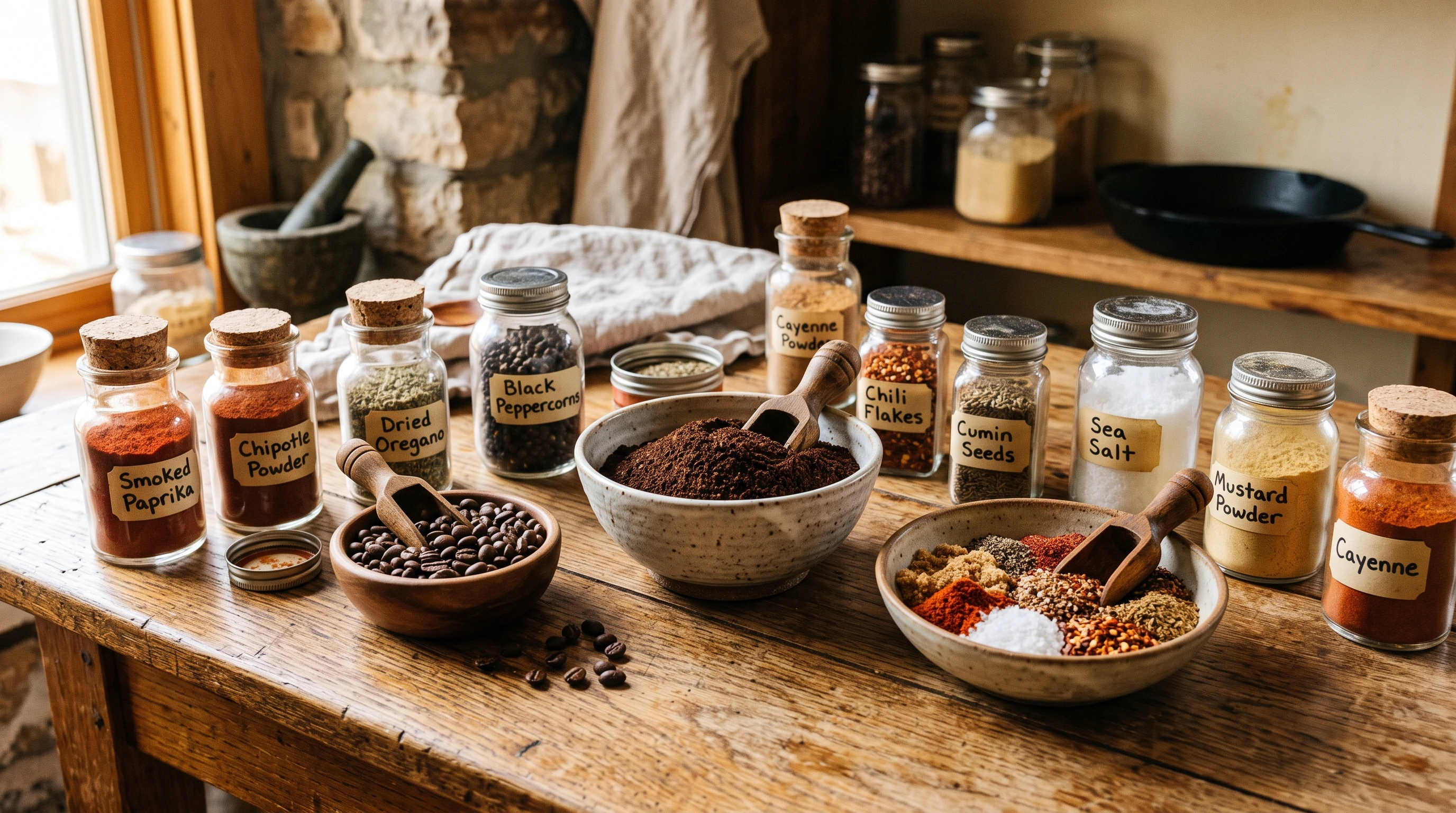
- Main Ingredients: Combine ground coffee, kosher salt, cracked black pepper, smoked paprika, garlic powder, and onion powder. I aim for a blend where coffee is a main note but doesn’t take over.
- Add a Touch of Sweet: Brown sugar caramelizes nicely with coffee and encourages a mouthwatering bark on smoked meats.
- Spice Levels: A pinch of cayenne or chili powder brings a little heat and balances out the richness.
- Application Tips: Coat meat generously, then tap off heavy excess. Let it rest for about 30 minutes so the spices settle and soak in.
This rub isn’t just for steak or brisket. Try it on portobello mushrooms or sweet potatoes before roasting for a next-level cool, smoky kick. It’s even tasty mixed with olive oil and brushed over tofu before grilling, adding depth to plant-based meals.
What Meats Work Best with Coffee Marinades and Rubs?
Coffee matches well with bold meats and even manages to make delicate proteins shine. Here’s a quick list of what works best:
- Beef: A classic combo. Coffee matches ribeye, brisket, short ribs, or burgers by making beef taste beefier and richer.
- Pork: Smoked pork shoulder, ribs, or tenderloin all benefit from coffee marinades or rubs. The mix of sugar and coffee produces an amazing bark in slow-smoked meals.
- Poultry: Chicken thighs or drumsticks become extra tasty after a quick coffee marinade, bringing subtle smokiness even when oven-roasted.
- Lamb: Coffee’s deep flavor stands up to robust cuts like lamb leg or chops. I add extra rosemary and black pepper here for balance.
- Veggies & More: Portobello mushrooms, eggplant, squash, and roasted root vegetables get a smoky edge with a coffee rub, which tastes especially good when finished over a flaming grill.
Mixing ground coffee into breadcrumbs or panko for crispy coatings on baked chicken cutlets is another great trick. It adds complexity, and even makes oven fries a fun twist.
Making the Most of Coffee in Savory Cooking
The coffee you choose matters. If you’re wondering whether bean selection affects flavor in cooking, here’s how single-origin vs. blended coffee compares when you’re looking for bold, roasted notes.Freshly ground beans always add more aroma, but you don’t need specialty espresso. A simple dark roast from the store is just fine. Stay away from flavored coffees as those extra notes usually don’t go with savory dishes.
If you’re concerned about your dish tasting too much like breakfast, use coffee as a background touch instead of a main flavor. Combine it with bold elements like garlic, black pepper, and smoked paprika; this helps it blend in and just gives the dish a boost in overall richness and complexity.
☕ Did You Know?
Coffee does not usually make meat taste like coffee when used in a rub or marinade. Instead, it works more like a background flavor booster, adding roasted depth, light bitterness, and a darker crust that pairs especially well with smoke, garlic, brown sugar, paprika, and black pepper.
Quick Troubleshooting and Extra Tips
- Only use cooled, brewed coffee for marinades. Hot coffee could start cooking your ingredients too soon.
- Don’t use very coarse grounds in rubs, or you might find gritty bits in your finished meal.
- Start small with the coffee—a little goes a long way. You can always add more next time, but it’s tough to tone down bitterness if you overdo it.
- Try coffee rubs on roasted vegetables or plant-based proteins to taste the flavor outside of meat dishes.
- Mixing in a little cocoa powder can give you a mole-style twist for steaks or ribs—coffee and cocoa get along well in savory dishes.
Wrapping Up
Cooking with coffee isn’t just for sweets or drinks. Marinades and rubs let you unlock a whole new side of this pantry staple, making your grilling nights or Sunday roasts extra memorable. I keep ground coffee ready just for savory recipes now. Whether you’re craving more complex flavors, tenderness, or simply something new for your usual dinner routine, coffee is a great addition to any marinade or dry rub mix.
The more you experiment, the more ideas you’ll stumble upon. Mistakes are rare, since coffee pairs well with most BBQ and roasting flavors. Your guests may not even pick up on the secret ingredient unless you spill the beans. That mystery is what makes it so much fun to play with in the kitchen. So next time you’re ready to try something different, reach for the coffee—you might just make your next meal unforgettable.
Frequently Asked Questions About Coffee Marinades and Rubs
Does coffee make meat taste like coffee?
Not usually. When used in moderation, coffee adds roasted depth, mild bitterness, and smoky richness without making the meat taste like a cup of coffee.
What kind of coffee works best for marinades?
Strong brewed coffee or espresso-style coffee works best. Let it cool completely before adding it to a marinade so it does not start cooking the meat too early.
What kind of coffee grounds work best for dry rubs?
Fine or medium-fine ground coffee works best because it sticks to the meat and creates a better crust. Very coarse coffee can leave the finished food gritty.
How long should meat sit in a coffee marinade?
Chicken and pork usually do well with two to four hours. Tougher beef cuts can handle a longer marinade, including overnight, as long as the recipe is balanced.
Can I use coffee rubs on vegetables?
Yes. Coffee rubs work well on portobello mushrooms, sweet potatoes, eggplant, squash, and roasted root vegetables, especially when paired with smoked paprika, garlic, and olive oil.
Is coffee better in a marinade or a dry rub?
Both work well, but they do different things. Brewed coffee adds moisture and depth in marinades, while ground coffee in dry rubs helps create a darker, flavorful crust.
Can I use flavored coffee in savory rubs?
It is better to avoid flavored coffee. Vanilla, hazelnut, or dessert-style coffees can clash with garlic, smoke, pepper, and other savory ingredients.
What meats pair best with coffee rubs?
Beef, pork, lamb, chicken thighs, ribs, brisket, and burgers all pair well with coffee rubs. Coffee is especially good with grilled, smoked, or roasted foods.