
The Beans, the Roast, and Why Coffee Never Tastes the Same Twice
Ever wonder why one cup of coffee tastes like blueberries and sunshine while another lands on your tongue like somebody set a cedar log on fire? That little miracle, or tragedy depending on the gas station involved, starts with the bean itself.
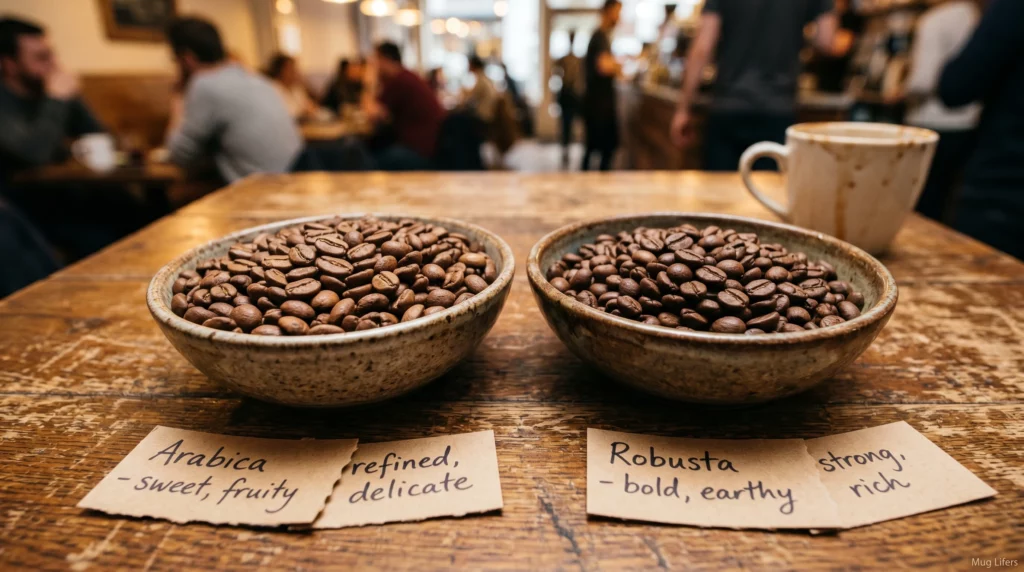
Most coffee in your mug comes from two species: Arabica and Robusta. Arabica is the fancy dinner guest of the coffee world. It likes high elevations, cooler temperatures, careful farming, and probably soft jazz playing somewhere nearby. In return, it gives you sweetness, fruit notes, chocolate, florals, all those flavors people write poetry about on expensive coffee bags.
Robusta? Robusta is the pickup truck with a dented bumper and mud on the tires. Tough stuff. Higher caffeine. Strong bitterness. Grows in rougher conditions and produces a cup that punches you directly in the forehead at six in the morning. Espresso blends often use it because it creates thick crema and adds body. Sometimes it tastes great. Sometimes it tastes like burnt walnuts and regret. Depends who roasted it.
Speaking of roasting, that’s where coffee starts acting less like agriculture and more like controlled culinary chaos.
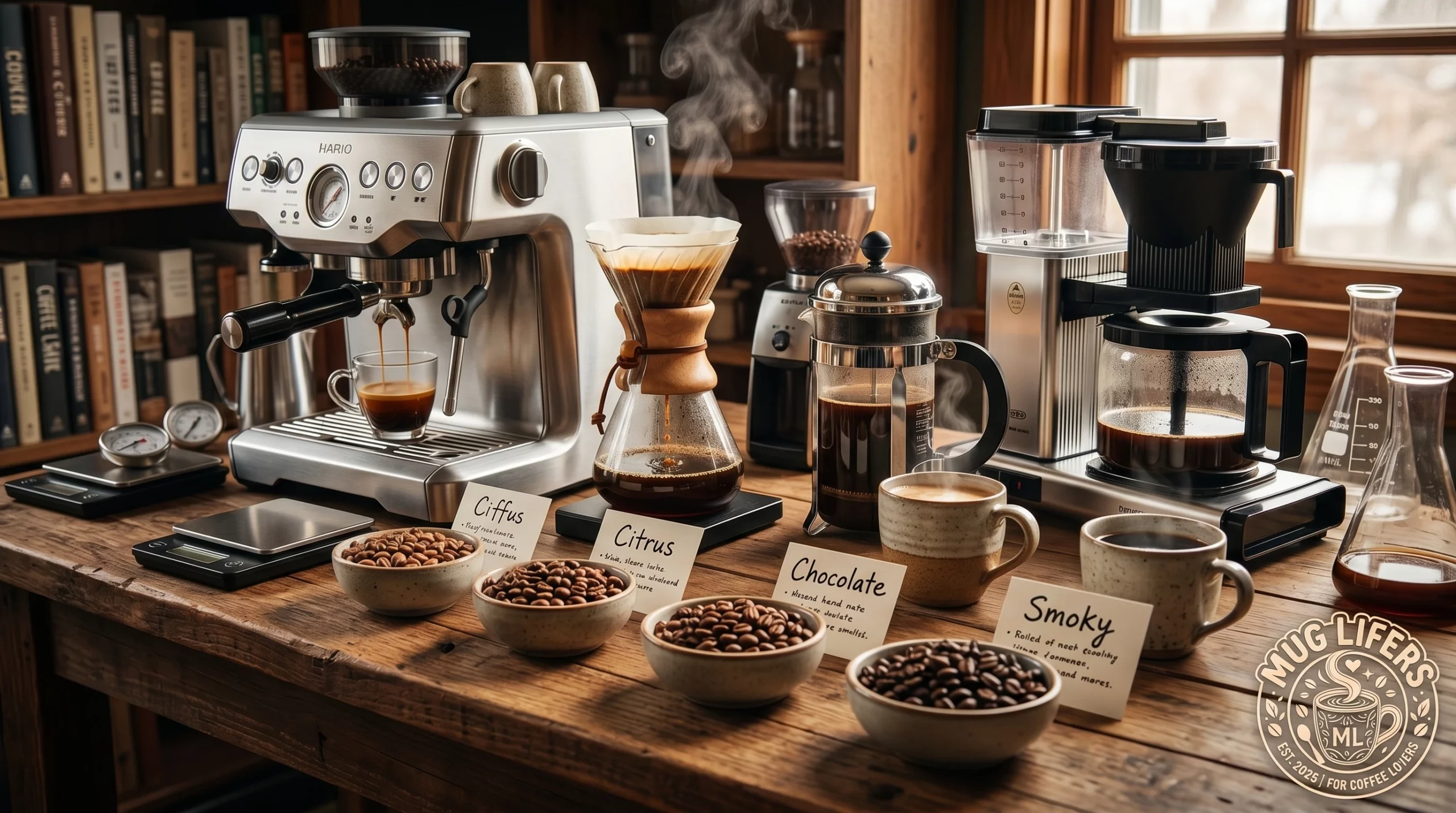
A light roast preserves more of the bean’s original character. Think citrus, berries, bright acidity, maybe even something that reminds you of tea. Medium roast balances sweetness with deeper caramelized flavors, kind of the Swiss Army knife of coffee. Then you hit dark roast territory, where sugars caramelize further, oils creep to the surface, and the flavor shifts toward smoke, cocoa, toasted nuts, and campfire memories. Push it too far and congratulations, you’ve invented charcoal.
Did You Know?
Dark roast coffee does not contain more caffeine than light roast coffee. That myth has been floating around coffee shops for years like a stale biscotti nobody wants to claim.
In many cases, light roast beans actually hold slightly more caffeine because they spend less time roasting. Dark roast tastes stronger because the flavors become deeper, smokier, and more intense during roasting.
So if you’re chasing caffeine, the roast color is only part of the story. Bean type, grind size, and brewing method can all shove the needle around more than people realize.
Brewing Coffee Is Basically Kitchen Chemistry With Better Smells
Brewing coffee, by the way, is not simply “adding hot water.” That’s like saying barbecue is just “warming up meat.” Temperature, grind size, contact time, water chemistry, and pressure all start elbowing each other for attention.
Drip coffee is dependable and steady, the sensible sedan of brewing methods. Pour-over gives you precision and control, allowing you to manipulate extraction like some caffeinated orchestra conductor. French press leaves oils and fine particles in the cup, creating a heavier body that practically chews back. Espresso uses pressure to force water through tightly packed grounds, producing a concentrated shot packed with flavor compounds, aromas, and enough intensity to make your eye twitch if you overdo it.

Now we get into the language coffee people throw around that makes newcomers feel like they accidentally walked into a chemistry lecture.
Acidity does not mean sour in the bad sense. Good acidity is brightness. Think apple, orange, grapefruit, maybe wine. Aroma is everything your nose catches before your mouth joins the conversation. Floral notes, spices, nuts, cocoa, and smoke. Body refers to texture and weight. Some coffees feel light and crisp like tea. Others coat your mouth like warm syrup.
And extraction? That’s where coffee either sings or collapses into disaster.
Under-extracted coffee tastes weak, sour, and oddly hollow because the water didn’t pull enough soluble compounds from the grounds. Over-extracted coffee tastes bitter, dry, and punishing because the water kept pulling long after the pleasant flavors left the building. The sweet spot lives somewhere in the middle, where sweetness, acidity, and bitterness all shake hands politely.
Espresso deserves its own chapter entirely. A ristretto uses less water for a tighter, sweeter shot. A doppio doubles the volume and doubles your chances of talking too fast. Somewhere in Italy, a barista is already judging how you ordered it.
Coffee Origin, Culture, and Why Geography Ends Up in Your Mug
Then there’s origin, which might be the closest thing coffee has to geography class with caffeine.
Ethiopian coffees often burst with berries, florals, and citrus. Colombian coffees tend to be caramel-sweet and balanced. Sumatran coffees can get earthy, herbal, and almost smoky. Soil, climate, elevation, rainfall, processing methods, all of it leaves fingerprints on the final cup. Coffee carries the flavor of where it came from in a way that’s honestly a little spooky when you stop and think about it.
And finally, coffee culture. Because humans, thankfully, turned this beverage into a ritual.
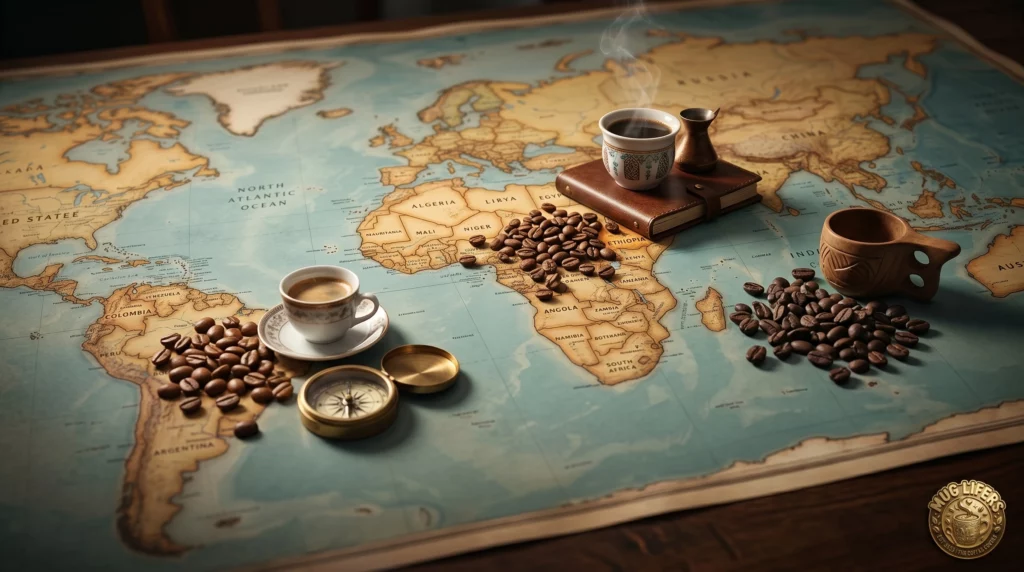
In Italy, espresso is a fast, standing-room-only business. In Finland, people pause for coffee and cake like it’s written into the constitution. Turkish coffee turns brewing into a ceremony. Japanese pour-over culture treats coffee with the precision of watchmaking.
So the next time somebody says coffee “just tastes like coffee,” hand them two different cups and let science do the arguing.
Need Better Beans to Actually Taste These Differences?
Most grocery store coffee tastes flat because the beans are old before you even open the bag.
Fresh roasted coffee changes everything. Fruity notes become brighter. Chocolate flavors get deeper. Even the aroma feels alive.
Try exploring fresh-roasted beans from brands that actually care about quality roasting and sourcing. My suggestion is Del Sol Coffee. Just so we are clear, your coffee maker can only do so much if the beans taste like cardboard.
Frequently Asked Questions About Coffee Terms
Coffee language can sound fancier than it needs to. These answers break down the common terms in plain English, without making you feel like you need a lab coat or a tiny mustache.
What does Arabica coffee mean?
Arabica is one of the main coffee bean species. It is often known for smoother, sweeter, and more complex flavors, including fruit, chocolate, floral, or nutty notes. It usually grows best at higher elevations and needs more careful growing conditions.
What does Robusta coffee taste like?
Robusta coffee usually tastes stronger, earthier, and more bitter than Arabica. It also has more caffeine. Some espresso blends use Robusta because it adds body, intensity, and thick crema.
What is the difference between light, medium, and dark roast coffee?
Light roast coffee keeps more of the bean’s original flavor and often tastes brighter or fruitier. Medium roast balances those original flavors with caramelized sweetness. Dark roast tastes deeper, smokier, and bolder, though it can hide some of the bean’s natural character.
What does acidity mean in coffee?
Acidity in coffee means brightness, not stomach-burning sourness. Good acidity can remind you of citrus, apples, berries, or wine. It gives coffee a lively taste instead of making it feel flat.
What does body mean in coffee?
Body describes how coffee feels in your mouth. A light-bodied coffee may feel clean and tea-like, while a full-bodied coffee feels heavier, richer, or almost syrupy.
What does extraction mean in coffee?
Extraction is the process of pulling flavor compounds from coffee grounds into water. Under-extracted coffee can taste sour and weak. Over-extracted coffee can taste bitter and dry. A balanced extraction gives you sweetness, flavor, and structure.
Why does coffee origin matter?
Coffee origin matters because soil, climate, elevation, rainfall, and processing methods all affect flavor. Ethiopian coffees may taste fruity or floral, Colombian coffees often taste balanced and sweet, and Sumatran coffees can taste earthy or herbal.