

A good cold brew waiting in the fridge makes a regular morning feel more organized. You pour, add ice, and you’re not standing there half-awake waiting for a kettle.
The cold brew concentrate water ratio matters more than most people expect. Too much coffee can taste heavy and harsh. Too little leaves you with brown water and disappointment. Start with 1 gram of coffee for every 8 grams of filtered water, then dilute the finished concentrate to suit your cup.
This post may contain affiliate links. If you make a purchase through these links, I may earn a small commission at no extra cost to you.
The best cold brew concentrate water ratio is 1:8, or 1 gram of coffee for every 8 grams of filtered water. That’s 125 grams of medium-coarse coffee per 1 liter of water. Steep for about 16 hours in the fridge, then dilute the concentrate 1:1 with water or milk before serving.
- Start with a 1:8 ratio, or 1 gram of coffee for every 8 grams of water.
- Use medium-coarse grounds and filtered water for a cleaner, sweeter brew.
- Steep in the refrigerator for about 16 hours before filtering.
- Dilute concentrate after brewing, beginning with equal parts coffee and water.
- Change one variable at a time when adjusting future batches.
Step-by-Step Guide to Cold Brew Concentrate Water Ratio
The dependable starting point is a 1:8 cold brew concentrate water ratio. That means 1 gram of ground coffee gets 8 grams of filtered water. It makes a strong base meant for dilution, not a finished glass of coffee.
For a practical batch, use 125 grams of medium-coarse coffee and 1 liter of filtered water. Since one liter of water weighs about 1,000 grams, the math lands right on that 1:8 mark. This same ratio is used in Sunday Table’s cold brew concentrate recipe, and it gives you plenty of room to adjust each serving later.
Use a scale if you have one. Coffee beans vary in size, so scoops and tablespoons can be all over the place. A scale keeps Monday’s cold brew from tasting nothing like Friday’s.
Choose the Right Coffee Grind and Water
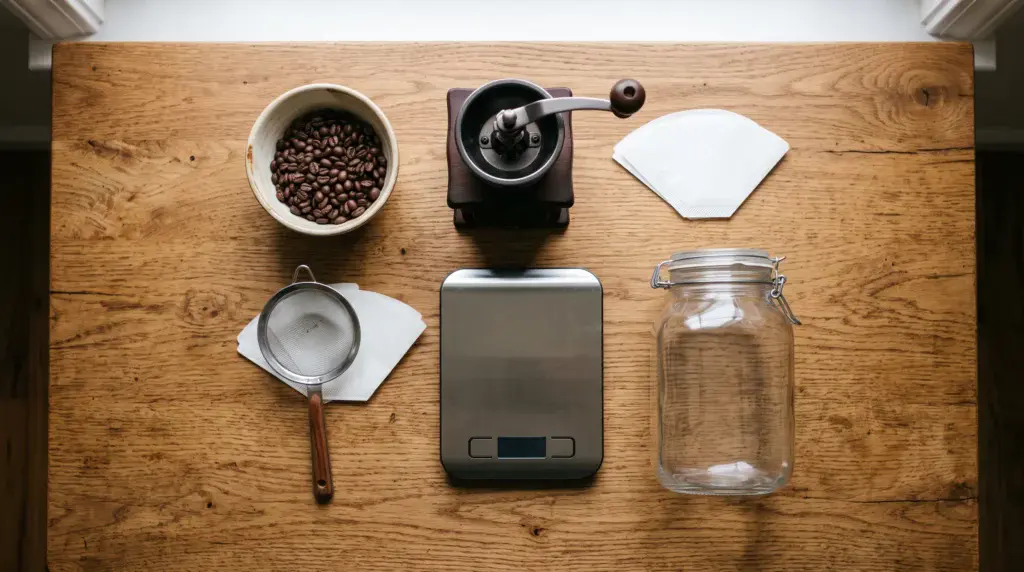
Gather whole beans, filtered water, a grinder, a kitchen scale, a large jar or pitcher, and a fine-mesh sieve. You’ll also need coffee filters or cheesecloth for straining.
Grind the beans medium-coarse, about the texture of kosher salt. Pre-ground coffee is often too fine for a long steep and can leave the brew bitter or muddy. A quick look at these coffee grinding mistakes explains why grind size can change the cup so much.
Wash and fully dry the brewing container, sieve, and anything else touching the coffee. Old soap smell and leftover fridge flavors have no business in a fresh batch.
Mix, Steep, and Filter the Concentrate
Add the grounds to your container. Pour in cold filtered water while stirring, then keep stirring until no dry pockets remain. Those floating clumps look harmless, but they make the batch less consistent.
Cover the container and refrigerate it for 14 to 20 hours. Start at 16 hours. Going past 24 hours often brings bitterness and a dry finish that no amount of ice can hide.
Line the sieve with a rinsed coffee filter and set it over a clean pitcher. Let the coffee drain on its own. It may take up to an hour. Cheesecloth or a French press lets more fine sediment through, which gives the brew extra body but less clarity.
Brewing Tip: Don’t squeeze the filter to hurry things along. The last sludgy bit carries fine grounds that can make a smooth batch taste rough.

How to Adjust the Cold Brew Ratio for Your Taste
There isn’t one perfect cold brew concentrate water ratio for every coffee drinker. Bean roast, grind, steep time, and how you take your coffee all matter. Make one batch, taste it after dilution, and adjust the next one with a single change.
When to Use 1:4, 1:6, 1:8, or 1:12
A ratio describes grams of coffee compared with grams of water. Here are four useful places to start:
| Ratio | What to Expect |
|---|---|
| 1:4 | A very strong concentrate for people who like intense coffee or use plenty of milk. |
| 1:6 | A bold concentrate with extra punch. Stronger than 1:8 but less intense than 1:4, and a good match for milk-heavy drinks. |
| 1:8 | A balanced concentrate that is strong, flexible, and easy to dilute. |
| 1:12 | A lighter brew that may be drinkable without making a separate concentrate. |
The 1:4 mix gives a smaller yield and asks for more dilution. The 1:6 mix splits the difference for anyone who finds 1:4 too aggressive. The 1:12 version can still be diluted if it tastes strong, but it won’t have the same concentrated base. For most kitchens, 1:8 is the sensible middle ground.
Dilute the Concentrate for a Smooth Glass
Begin with 1 part concentrate and 1 part filtered water. That 1:1 serving is smooth, strong, and usually right where cold brew should be.
Want it lighter? Try 1 part concentrate to 2 parts water. Want more punch? Use 2 parts concentrate to 1 part water. Milk, half-and-half, oat milk, or another plant-based milk can replace some or all of the water.
Add ice after you adjust the strength. Otherwise, melting ice can make a weak cup seem fine for five minutes, then turn it into a sad little puddle.
Cold brew concentrate isn’t just for iced coffee. Mix it with hot water instead of cold and you get a smooth, low-acid hot cup in about 30 seconds. Same batch, two completely different drinks.

Fix Common Cold Brew Ratio Problems Before Your Next Batch
Why the Brew Tastes Bitter, Weak, or Too Strong
Bitterness usually comes from grounds that are too fine, a steep longer than 24 hours, or an overly strong ratio. Use a coarser grind, shorten the steep, or move from 1:4 toward 1:8 next time.
Weak coffee may need one or two more hours in the fridge, better stirring at the start, or a slightly stronger coffee-to-water mix. If it tastes too strong, dilute the glass gradually with water or milk. For the next batch, try a 1:12 ratio or reduce steep time slightly.
How to Store Cold Brew Concentrate Safely
Pour filtered concentrate into a clean, covered carafe or pitcher and refrigerate it. The flavor is usually best within one week.
Keep the concentrate separate from dilution water. It gives you control over every glass, whether you’re pouring coffee before work or making a bigger batch for friends.

Cold Brew Frequently Asked Questions
Can I use dark roast beans for cold brew concentrate?
Yes. Dark roasts make a fuller, more chocolatey cold brew, though some can taste roasty after a long steep. Medium roasts are often an easy place to start if you want a balanced cup.
Should cold brew steep on the counter or in the refrigerator?
The refrigerator is the simpler choice for a home batch. It keeps the brew cold throughout the long steep and makes timing easier to repeat.
Can I make cold brew concentrate in a French press?
You can. Keep the same coffee-to-water ratio, then press after steeping. The metal filter leaves more oils and fine particles behind, so use a paper filter afterward if you want a cleaner cup.
Can I reuse the grounds for a second batch?
No. After a 16-hour steep, the grounds have given up nearly all their flavor. A second batch would taste weak and flat, so compost the grounds and start fresh.
A Better Batch Starts With One Good Ratio
A 1:8 ratio is a reliable place to begin, but your favorite batch will depend on the beans, grind, steep time, and dilution. Keep a quick note of what you change each week.
After a few batches, you’ll have a cold brew concentrate water ratio that tastes right in your own mug.