
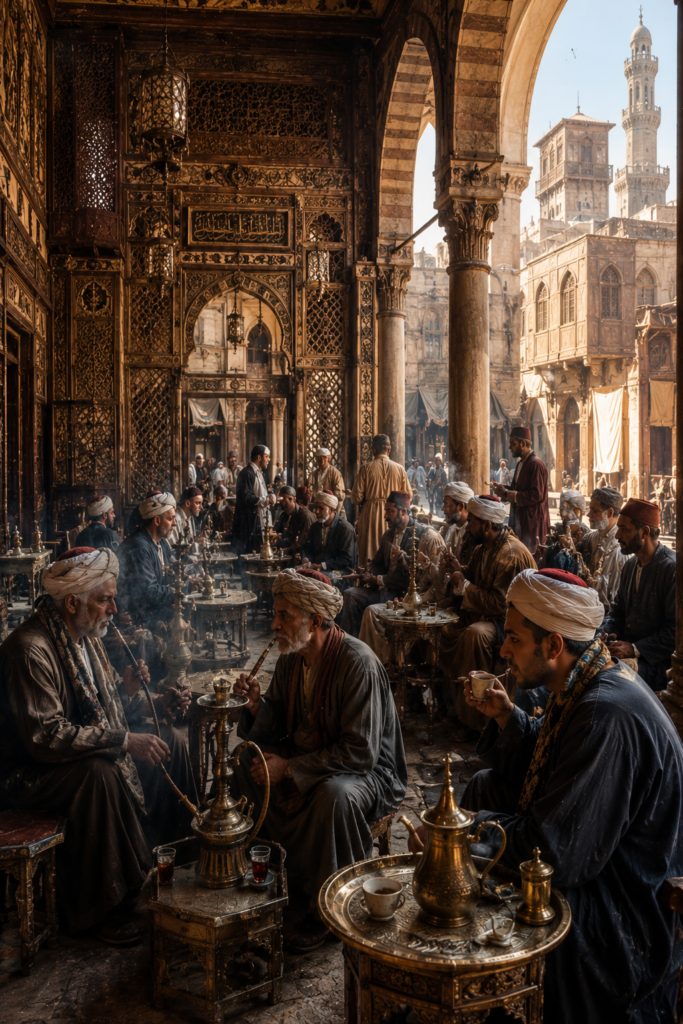
Step into a narrow Cairo lane in 1850, and the coffeehouse finds you first. You catch roasted coffee, hot tea, tobacco smoke, and a low wall of voices before you see the door.
This wasn’t a modern cafe built for privacy. It was a social room for cups, shisha, stories, jokes, and long conversation. If you want the feel of old Cairo, start here.
Why the Egyptian coffeehouse mattered in old Cairo
A Cairo coffeehouse was more than a place to sit and drink. It was part of the city’s daily rhythm, a stop for workers, traders, neighbors, and travelers. Later scholarship on Cairo’s coffeehouses shows how these spaces grew into urban hubs for public talk and politics, and those habits didn’t appear out of nowhere.
☕ Did You Know?
Many Cairo coffeehouses served as the unofficial news centers of their neighborhoods long before newspapers became common.
Storytellers, known as hakawati, often entertained customers with tales of heroes, history, and local legends while patrons sipped coffee and smoked shisha.
Authorities sometimes monitored coffeehouses because public opinion, political discussion, and neighborhood gossip often spread through these gathering places.
In 1850 Cairo, a coffeehouse wasn’t just somewhere to drink coffee. It was where the city talked to itself.
A place to talk, watch, and hear stories
Think of it as part living room, part sidewalk, part newsroom. Men gathered to trade gossip, hear street news, listen to storytellers, and argue over small things and big ones. People watched who came in, who stayed late, and what the mood of the neighborhood felt like. Rulers cared about coffeehouses for the same reason. Public opinion had a habit of showing up there.
Coffee, tea, and shisha in everyday life
Coffee mattered, of course, but it wasn’t alone. Tea and shisha helped set the pace. A cup gave you a reason to stay. A pipe slowed the room down. Time moved by talk, not by clocks.
How a Cairo coffeehouse in 1850 would have felt to visit
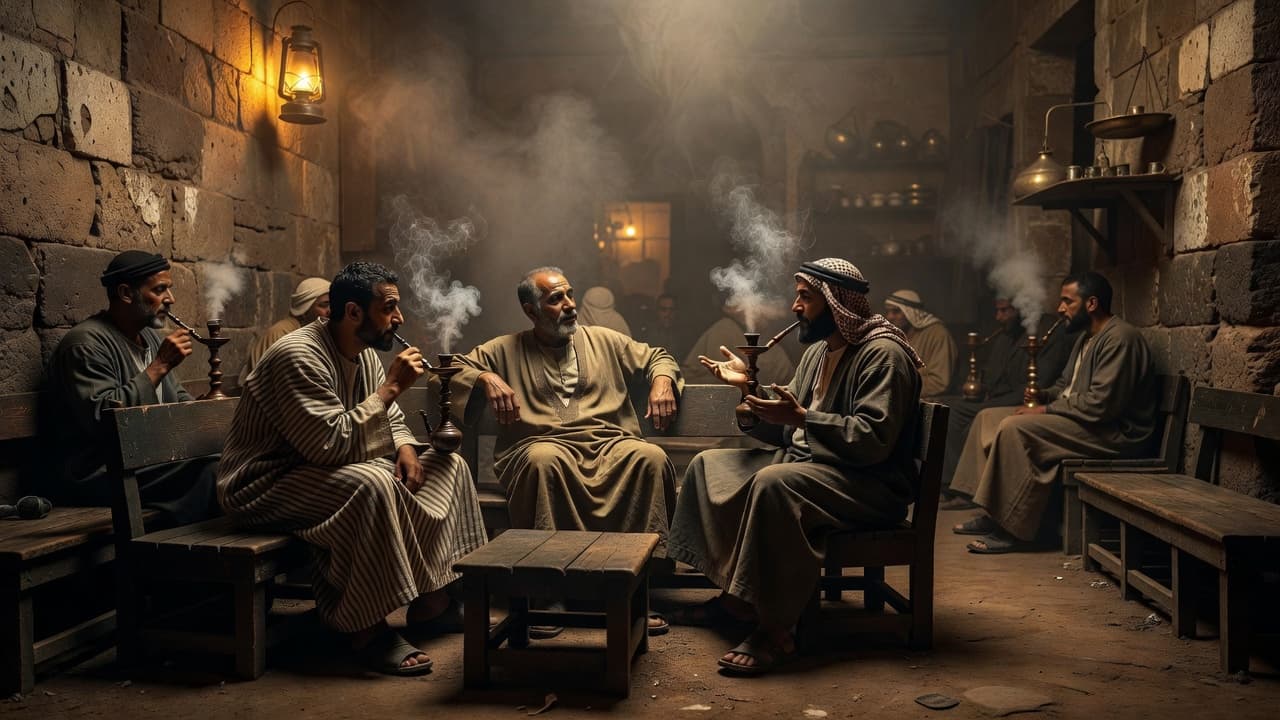
Don’t picture polished marble and hushed tables. Picture a modest room tucked into a busy quarter, close to the street and full of sound.
Simple, busy, and close to the neighborhood
Many of these places were plain. Low benches, worn floors, small tables, and little space between customers were normal. The point wasn’t comfort in the modern sense. It was familiarity. You came because people you knew were there, and because the room felt stitched into the block around it.
A male space that was slowly changing
In 1850, the coffeehouse was mostly a male space. That mattered, because class, age, and local status were all performed in public there. Cairo changed over time, though. By the later 1800s and early 1900s, some coffeehouses drew a broader crowd, including more women in some settings.
How Cairo coffeehouses connect to later coffee culture
The coffeehouse of 1850 helps explain the Cairo that came next. Many of the old cafes people think of today belonged to a tradition that was still taking shape. Later in the 19th century, these rooms became even more tied to entertainment, journalism, politics, and city identity. A cup wasn’t only a drink. It was part of how people met, argued, relaxed, and built routine. If that idea grabs you, Mug Lifers has a smart piece on how coffee rituals shape daily life.
Final Observation on Coffeehouses in 1850 Cario
That smoky room off a Cairo lane was small, but its role was big. It gave people a place between home and street, where news traveled, stories landed, and everyday life took shape.
Coffee lovers can read that history in the cup itself. In 1850 Cairo, the coffeehouse wasn’t background scenery. It was one of the city’s living rooms.
This post may contain affiliate links. If you make a purchase through these links, I may earn a small commission at no extra cost to you.
Frequently Asked Questions About Cairo Coffeehouses in 1850
What was a Cairo coffeehouse like in 1850?
A Cairo coffeehouse in 1850 was typically a modest gathering place filled with conversation, coffee, tea, and shisha. Customers sat on wooden benches or simple chairs while discussing news, business, local events, and daily life.
Why were coffeehouses important in old Cairo?
Coffeehouses served as community hubs where people exchanged information, socialized, listened to storytellers, and discussed current events. They functioned as informal centers of neighborhood life.
What drinks were commonly served?
Traditional Egyptian coffee was a staple, but tea was also widely enjoyed. Both drinks encouraged customers to stay longer and participate in the social atmosphere.
Was shisha popular in Cairo coffeehouses?
Yes. Shisha smoking was a common part of the coffeehouse experience. The slow pace of sharing a pipe often encouraged longer conversations and social interaction.
Who visited Cairo coffeehouses?
Workers, merchants, travelers, craftsmen, and local residents regularly gathered in coffeehouses. They attracted people from various social backgrounds who wanted a place to meet and talk.
Were women allowed in Cairo coffeehouses?
Most coffeehouses in 1850 Cairo were primarily male spaces. Over time, especially in the late nineteenth and early twentieth centuries, some establishments began attracting a more diverse clientele.
Did politics play a role in coffeehouse culture?
Yes. Coffeehouses often became places where public opinion formed and spread. Discussions about local issues, government actions, and current events made them important social spaces within the city.
Do traditional Cairo coffeehouses still exist today?
Yes. While modern cafés are common, Cairo still has traditional coffeehouses where visitors can experience elements of the city’s historic coffee culture, including coffee service, conversation, and shisha.