
Glitch Coffee Tokyo has earned its reputation the hard way: single-origin beans, light-roast philosophy, and a slow ordering process that forces you to pay attention. Some coffee shops want your money or your photo; Glitch wants you to actually taste the cup.
What you get here isn’t a souvenir stop with nice lighting and forgettable espresso. It’s a serious specialty shop with a point of view: single-origin beans, light roasting, a slow and slightly unusual order ritual, prices that can sting, and a stubborn belief that coffee should taste like where it came from.
That mix is why people line up, argue about the cost, and keep talking about the cup.
The Glitch Coffee story starts with one barista, one idea, and a refusal to play it safe
Glitch Coffee & Roasters opened in Jimbocho, Tokyo, in 2015. Founder Kiyokazu Suzuki had already put in serious time behind the bar, including work at Paul Bassett, and he didn’t open his own place to play it safe. He opened it to make coffee he could fully stand behind.
That meant no crowd-pleasing dark roasts for the sake of easy sales. It meant single-origin coffees, roasted in-house, with each lot treated like its own case file. Farm, region, process, altitude, flavor, all of it mattered.
The name says a lot. A glitch is a flaw, a bug, the small thing that isn’t supposed to happen. Suzuki flipped that idea on its head. In his view, a tiny irregularity can lead to a better result, if you’re paying attention. That attitude gave the shop its identity.
It also gave Japan’s coffee scene something a little sharper. Glitch didn’t chase sameness. It chased flavor with edges on it. That approach has since spread beyond Jimbocho, with shops in places like Ginza, Nagoya, and Osaka. A good first-hand take on that style shows up in this Tokyo review from Wandering Justin, which lands on the same point: the coffee tastes clean, distinct, and nothing like routine cafe fare.
Why Kiyokazu Suzuki built Glitch around light roast single origins
Light roasting is the whole argument in a cup. The idea is simple: roast less, hide less. Let the bean keep more of its own character.
That’s why blends are mostly out of the picture here. A blend smooths things over. Glitch wants the opposite. It wants you to taste the farm, the process, the fruit, the acidity, the weird little detail that makes one lot different from the next.
If a coffee smells like mandarin, peach, or red apple, that’s not a party trick. That’s the point.
Did You Know?
Glitch Coffee built its reputation around light-roasted, single-origin beans, which means the cup is designed to highlight where the coffee came from rather than covering it up with heavy roast flavor.
The “glitch” mindset turns imperfection into flavor
This is where the philosophy stops sounding like branding and starts sounding useful. Glitch doesn’t worship perfection as a fixed target. It treats roasting and extraction like live work, where small changes matter.
Data still matters. Recipes matter. But the cup gets the final vote.
A roast profile can shift. A pour can tighten up. A tiny surprise in the bean can become the best part of the drink. That’s the glitch mindset, less machine certainty, more human judgment.
What it is actually like to walk into Glitch Coffee
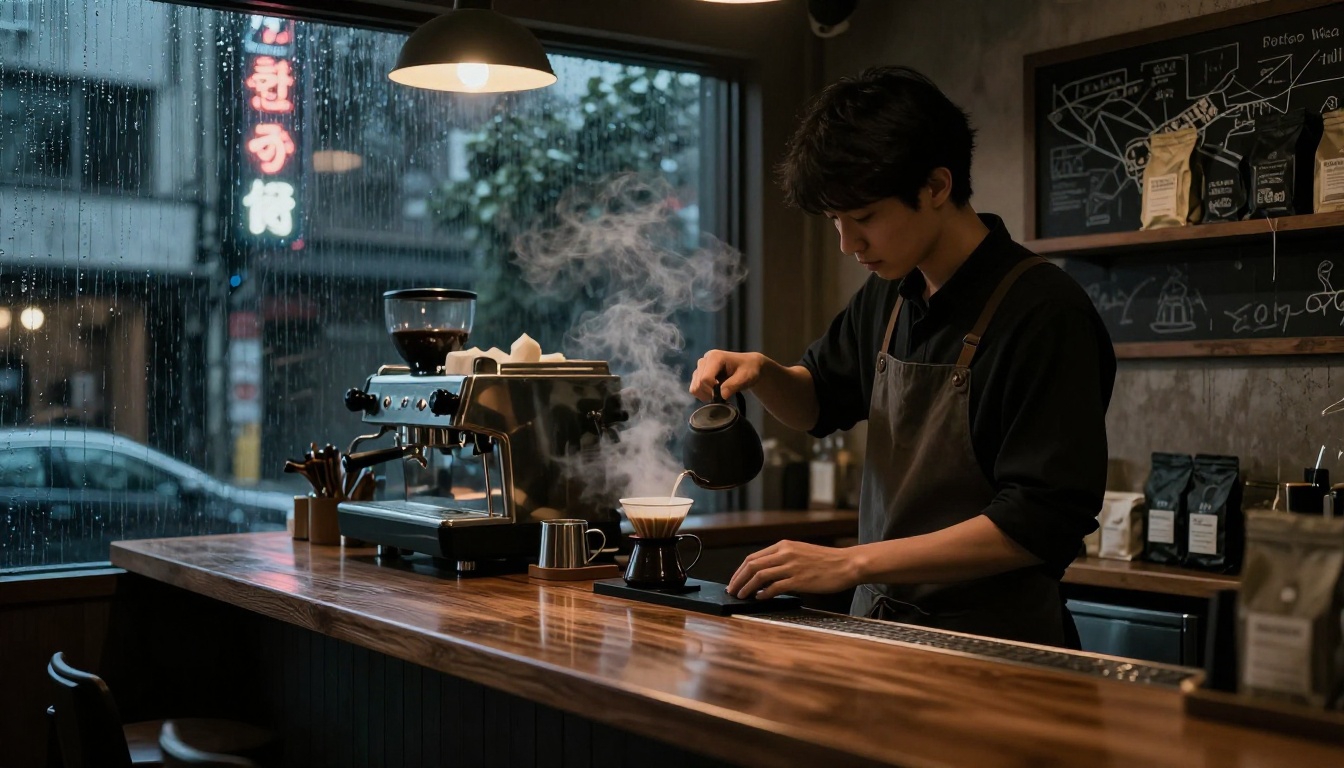
The first thing you notice is the pace. It moves slower than the line outside suggests it should. Nobody is rushing because rushing would kill the whole point.
The room usually feels compact, part cafe, part workshop. Seats are limited. Equipment takes up space. Staff members are focused, but not cold. If you know what you like, great. If you don’t, they’ll walk you through it without the usual coffee-snob theater.
This isn’t where you post up with a laptop for four hours and half-read emails. It’s where you wait, listen, smell the beans, and pay attention to what’s happening a few feet away.
Glitch is built for people who want to taste coffee, not hide behind it.
How the bean-first ordering system works
Ordering here isn’t hard, but it is slower than most people expect. First, you pick the drink style, pour-over, espresso, maybe a milk drink if that’s your lane. Then comes the real choice: the bean.
Staff usually ask what flavors you like. Fruity? Chocolatey? Floral? Cleaner and brighter, or softer and sweeter? From there, they narrow the field and guide you toward a few options.
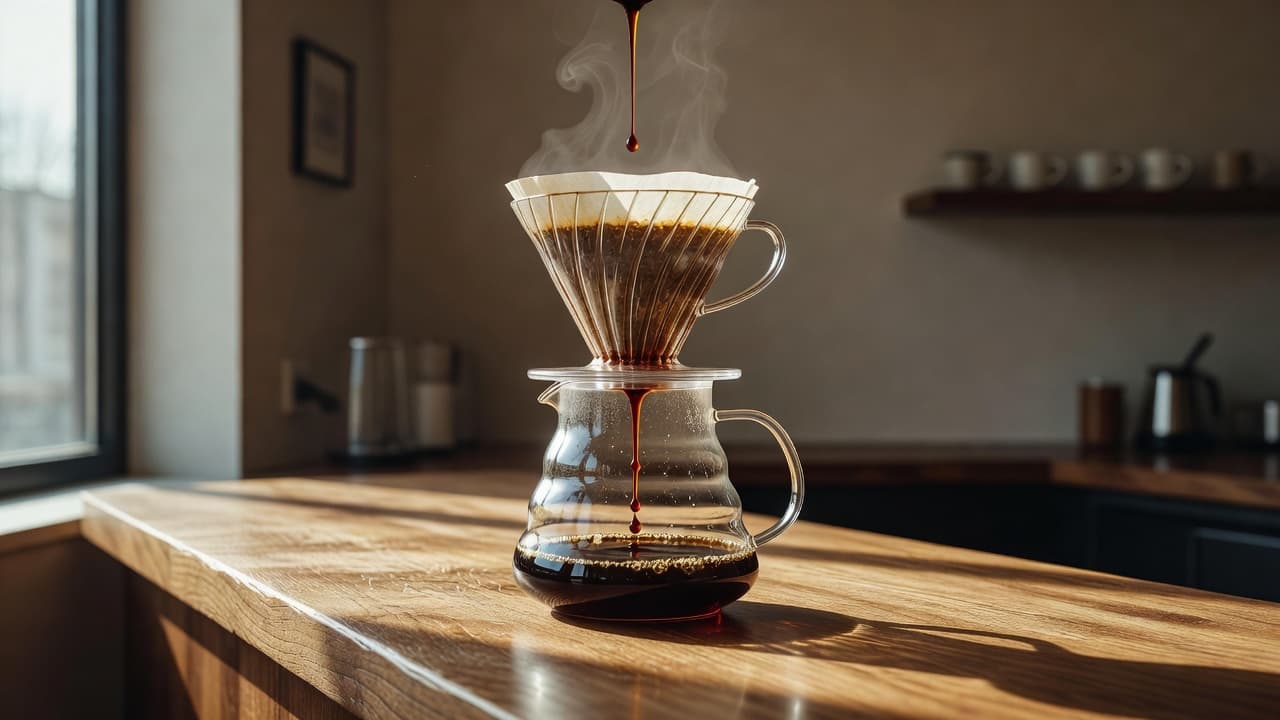
That’s smart, because the menu can get wide and the prices can climb. If this style grabs you, it’s worth learning how to brew pour over coffee at home, because Glitch’s whole method is built on clarity and control.
Why the room feels more like a coffee workshop than a cafe
Everything in the space pushes your focus back to the cup. The brewing gear is out front. The service is deliberate. Even the wait becomes part of the setup.
At some locations, there’s a low-key old-school feel, vinyl, wood, dim corners, serious tools. At others, the design is cleaner and more polished. Either way, the mood stays the same. This is a place for people who care what extraction tastes like.
The cup tells the whole story, from tasting notes to price
Then you drink it, and the sales pitch either lives or dies.
At Glitch, the coffees often come off bright, aromatic, and unusually clean. You might get strawberry in a cortado, chocolate and orange in a pour-over, or red apple and grape in a rare lot. Some milk drinks lean toward vanilla, rum, and milk chocolate. What you won’t get much of is blunt bitterness.
That clean finish is part of the appeal. So is the acidity, though that can throw people who came in expecting a heavy, dark roast punch.
Why a coffee flight makes more sense than ordering just one cup
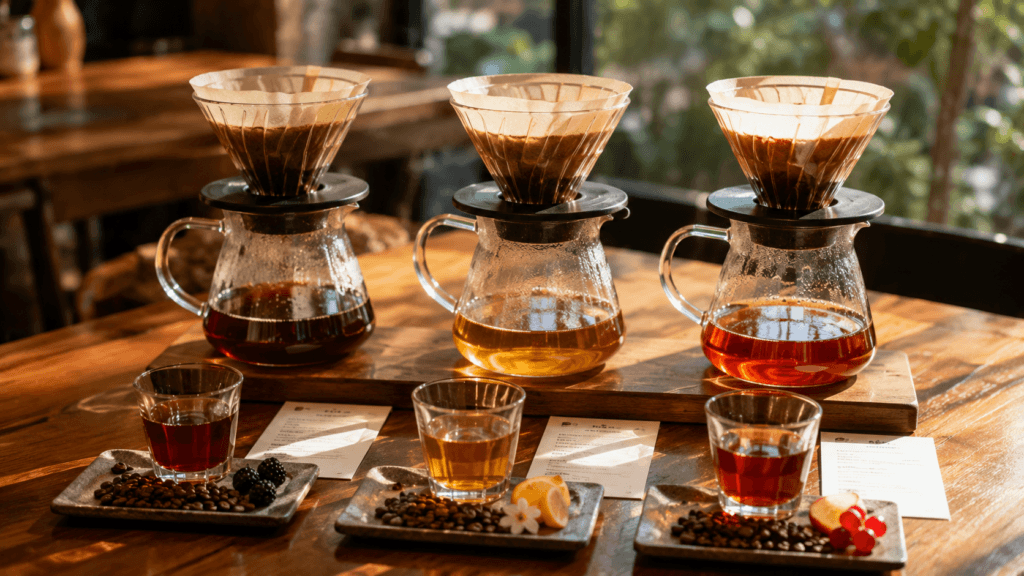
One cup can impress you. Two or three cups can teach you something.
When you taste beans side by side, you start catching the differences in aroma, sweetness, aftertaste, and structure. One might smell like citrus and finish dry. Another might feel rounder, softer, almost wine-like.
That’s why flights or shared orders make sense here, especially with prices that often start around 1,000 yen and can rise fast for rare lots. One visitor admitted in this Reddit post about Glitch in Tokyo that the place basically reset his idea of what fruity coffee could be.
What the flavors actually taste like in the cup
If you like coffee that tastes roasted first and coffee second, this may not be your spot. Glitch coffee is usually lighter on its feet.
Think bright fruit, crisp sweetness, a clear finish, and almost no burnt edge. If black pour-over feels like too much, a latte or cortado can soften the sharper angles without wiping out the bean.
Why Glitch Coffee matters beyond the cup
Plenty of cafes sell good coffee. Fewer try to build a stronger coffee culture around it.
Glitch has long pushed a share-roaster idea, working with smaller cafes, swapping knowledge, and treating coffee less like a private club and more like a craft that grows through shared standards. Former baristas have gone on to open their own shops, which says a lot about the place.
The share roaster model builds a stronger coffee community
Instead of hoarding technique, Glitch has a track record of teaching it. That includes training, advice, and support for people trying to start something of their own.
That’s good for the brand, sure. It’s also good for coffee.
A coffee shop that is proud to be Japanese without being old-fashioned
Glitch feels modern, but it doesn’t pretend Japan has nothing of its own to say about coffee. The careful pour-over work, the service, the design choices, the respect for detail, all of it feels local without turning into a costume.
That’s a big part of its appeal. It treats Japanese coffee culture like something current and worth being proud of.
Frequently Asked Questions About Glitch Coffee Tokyo
What is Glitch Coffee known for?
Glitch Coffee is known for light-roasted single-origin coffees, careful pour-over brewing, and a bean-first ordering experience that focuses heavily on flavor notes and origin.
Where is the original Glitch Coffee located?
The original Glitch Coffee & Roasters location opened in Jimbocho, Tokyo. The brand has since expanded to other areas, including Ginza, Nagoya, and Osaka.
Is Glitch Coffee expensive?
Yes, compared with a regular cafe, Glitch Coffee can feel expensive. Prices often reflect rare beans, careful sourcing, and the slow, detailed brewing process.
Is Glitch Coffee good for dark roast drinkers?
It may not be the best fit for someone who wants heavy, smoky, dark-roast coffee. Glitch leans brighter, cleaner, fruitier, and more delicate.
Should I order a pour-over or espresso at Glitch Coffee?
If you want to taste the bean clearly, start with a pour-over. If you prefer something stronger or shorter, espresso is a good choice. Milk drinks can soften the acidity while still showing off the coffee.
Is Glitch Coffee worth visiting in Tokyo?
For serious coffee drinkers and curious travelers, yes. It is not the cheapest or fastest cafe stop, but it offers one of Tokyo’s most memorable specialty coffee experiences.
Final Glitch
Glitch Coffee is for people who care about flavor more than comfort. Serious coffee drinkers will get it fast. Curious travelers usually do too, once the cup lands.
Yes, it’s expensive. Yes, you may wait longer than you want. But the place earns its reputation because it asks more of the bean, and more of you.
If you’re willing to slow down and pay attention, Glitch shows how much beauty can hide inside a small imperfection.
This post may contain affiliate links. If you make a purchase through these links, I may earn a small commission at no extra cost to you.