
Some coffee goes dull before it even cools. Pour over coffee fixes that with a cleaner cup, more control, and flavor that tastes like the beans instead of the machine.
And no, it doesn’t need a countertop full of gadgets. This method rewards attention more than money, which is part of the charm.
What makes pour over coffee taste so clean and bright?
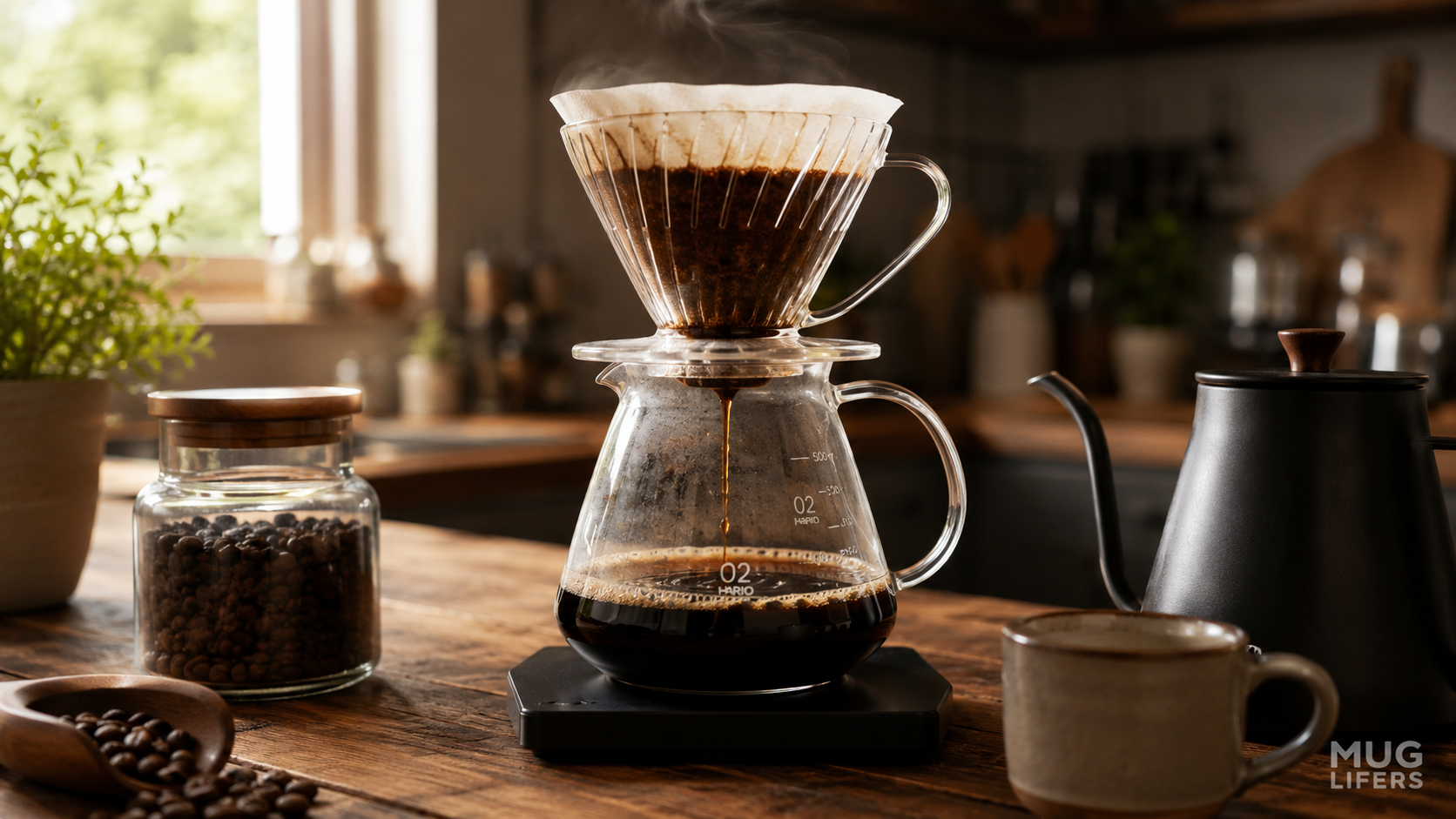
Hot water passes through ground coffee and a paper filter, then gravity pulls it into the cup. The filter catches more oils and fine grit than many brewers, so the result tastes clearer than standard drip coffee.
How slow brewing changes the flavor in the cup
A steady pour wets the grounds evenly. That helps sweetness, acidity, and aroma show up in balance, instead of one note taking over. Think of it like simmering a sauce instead of blasting it on high.
Why water temperature and grind size matter
Water around 195 to 205 F works well for most beans. Too hot can taste bitter. Too cool can taste weak. A medium-fine grind keeps the flow steady, with most brews landing around 2 to 4 minutes.
The Specialty Coffee Association brewing standards recommend a brewing range often close to what many home brewers use for balanced extraction and flavor.
The basic setup you need for a better brew
You don’t need much, only a setup you can repeat.
Choose a dripper, filter, scale, and kettle
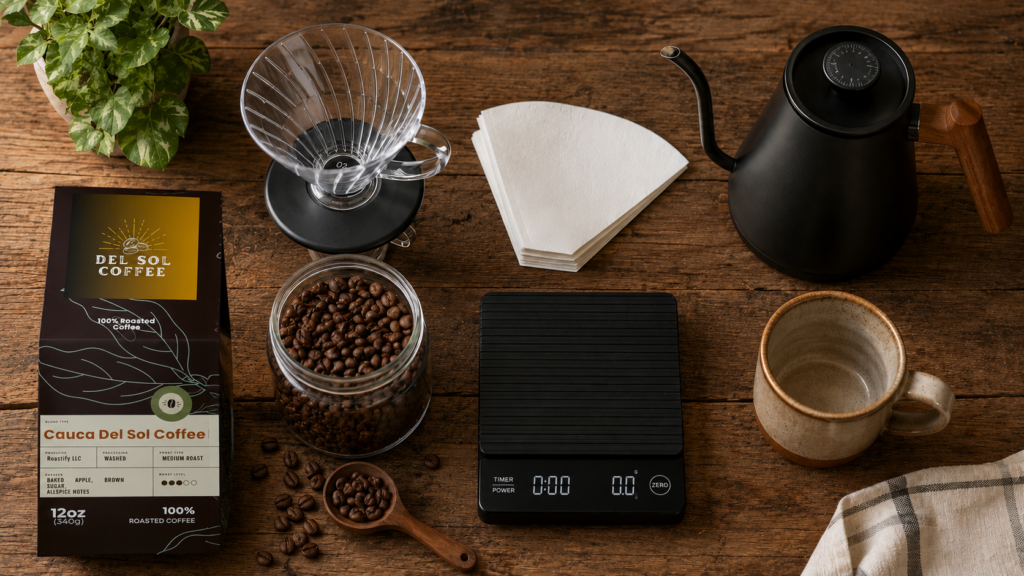
A dripper holds the bed of coffee. Paper filters keep the cup bright. A scale keeps your ratio honest, and a gooseneck kettle makes the pour easier to control. If you’re shopping for one good grinder, this beginner coffee grinder guide helps.
Start with fresh beans and the right grind
Fresh beans matter as much as the brewer. Old coffee goes flat fast. Grind right before brewing if you can, and aim for even particles. When the grind is all over the place, the flavor usually is too.
How to brew pour over coffee without overcomplicating it
Rinse the filter first, then add your grounds. Start with a repeatable coffee-to-water ratio and stick with it for a few brews before changing anything.
Bloom the grounds before the main pour
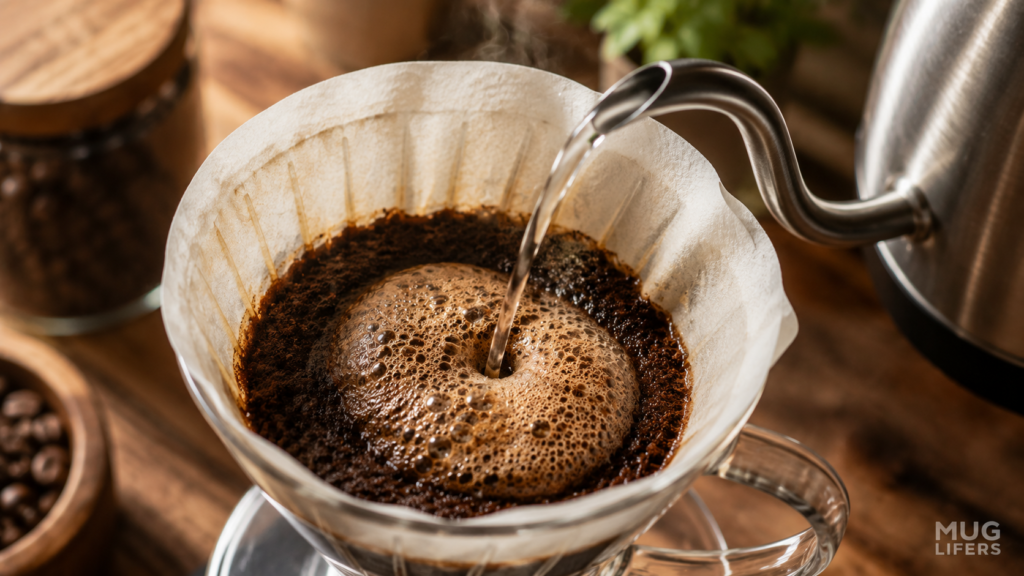
Begin with a small first pour, enough to wet all the grounds. Wait 30 to 45 seconds. That bloom lets trapped gas escape, which helps water soak the coffee more evenly.
Pour in circles and keep your pace steady
After the bloom, pour slowly in small circles. Keep the water level calm, not flooded. Consistency matters more than speed. You’re trying to brew the whole bed evenly, not show off your wrist.
Know when to stop and taste before changing anything
A good cup should finish in a reasonable window, often 2 to 4 minutes, and taste balanced. If it seems sour, go a little finer or slower. If it tastes bitter, go a little coarser or lower the temperature. Change one thing at a time.
Better Coffee Starts With Paying Attention
Pour over coffee isn’t about being fussy. It’s about paying attention.
Once grind, water, and pace start making sense, the cup gets better fast. Brew it a few times, taste honestly, and let your hands learn the rhythm.
This post may contain affiliate links. If you make a purchase through these links, I may earn a small commission at no extra cost to you.
Frequently Asked Questions About Pour Over Coffee
Is pour over coffee hard to make at home?
No. Pour over coffee is simple once you repeat the same steps a few times. The main things to control are grind size, water temperature, coffee ratio, and pouring pace.
What grind size works best for pour over coffee?
A medium-fine grind usually works best. It should feel finer than drip coffee but not as fine as espresso. If the coffee tastes sour, try grinding a little finer. If it tastes bitter, go slightly coarser.
Why does pour over coffee taste cleaner?
Pour over coffee often tastes cleaner because the paper filter catches oils and fine coffee particles. That gives the cup a brighter, clearer flavor than many immersion or metal-filter brewing methods.
Do I need a gooseneck kettle for pour over coffee?
You do not need one, but it helps. A gooseneck kettle gives you better control over the pour, which makes it easier to wet the grounds evenly and keep the brew consistent.
How long should pour over coffee take?
Most pour over brews finish in about 2 to 4 minutes. If it runs too fast, the coffee may taste weak or sour. If it takes too long, it may taste bitter or heavy.


