

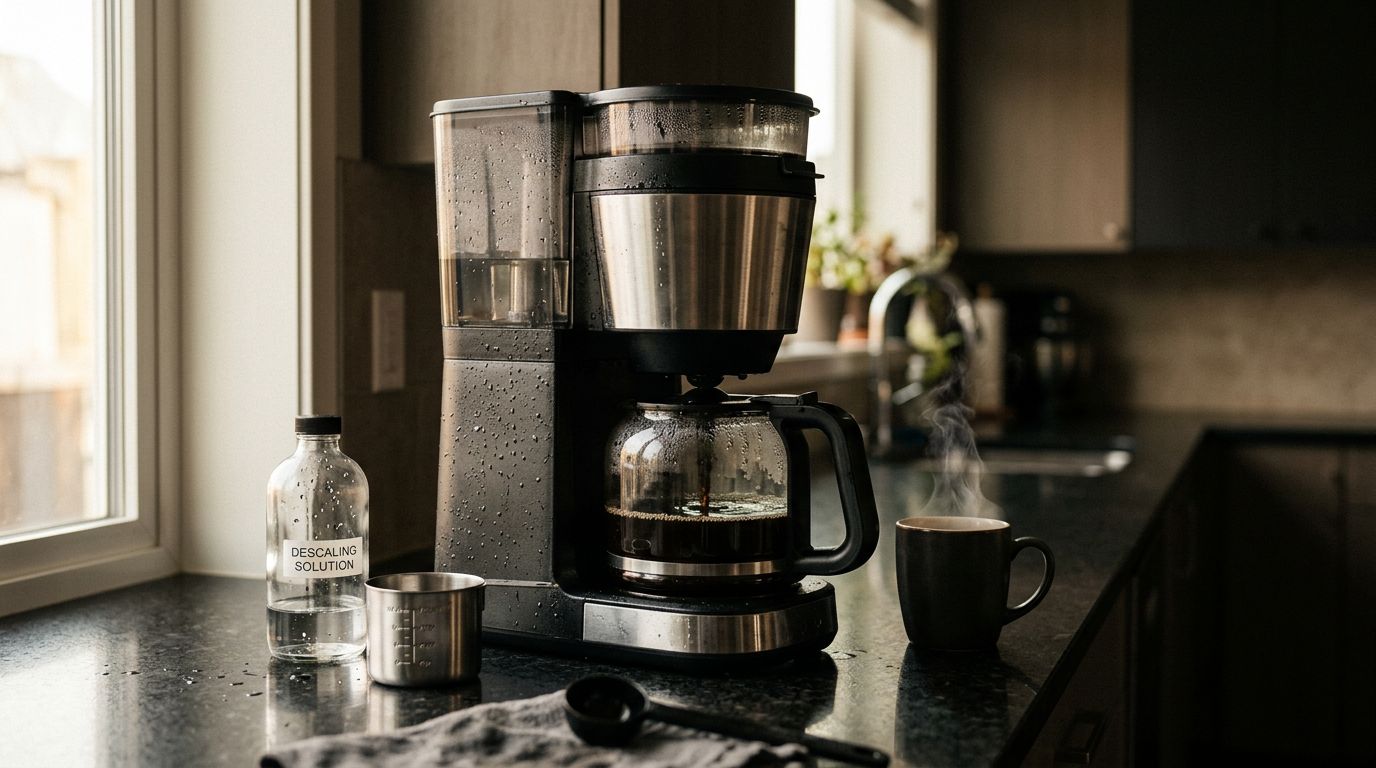
If your coffee maker takes forever, wheezes like an old radiator, or turns good beans into a dull, sad cup, scale is probably the thug in the room. Descaling your coffee maker is not fussy coffee theater. It’s basic maintenance.
Most home brewers should descale every 1 to 3 months, but that range gets tighter if you brew daily or have hard water. The trick is knowing where you land on that spectrum, before your machine starts acting like it hates you.
The honest schedule for most home coffee makers
Here it is, plain and simple: if you brew coffee every day, start with every 2 to 3 months. That’s the safe middle ground for most homes.
If your water is hard, cut that down to every 4 to 8 weeks. Hard water is loaded with minerals, and those minerals don’t vanish when the water heats up. They stick around, line the inside of your machine, and slowly choke the works.
This quick guide keeps it sane:
| Your setup | Good descaling rhythm |
|---|---|
| Daily brewing, filtered or average tap water | Every 2 to 3 months |
| Daily brewing, hard water | Every 4 to 8 weeks |
| A few brews per week, softer water | Every 3 months |
| Single-serve or espresso machine with alert light | Follow the alert, or sooner if symptoms show up |
That’s the baseline. Then you watch the machine.
If your kettle gets a chalky ring fast, your coffee maker is on the same road. If your showerhead, faucet, or dishwasher spots like crazy, same deal. Water tells on itself.
A lot of people wait for the machine to flash a warning light. That’s fine if your brewer has one. If it doesn’t, you’re driving without a dashboard.
If brew time gets longer, don’t wait for a blinking light. The machine is already talking.
Brand manuals often land around the three-month mark, and that works for plenty of people. But manuals can’t see your sink, your habits, or the mineral crust growing in real time. Your kitchen does not care what the pamphlet said.
Why scale sneaks up on you
Scale is boring until it isn’t. It builds slowly, then all at once your morning brew starts crawling, sputtering, and coming out lukewarm. That’s not drama. That’s mineral buildup messing with heat and water flow.
When water heats, minerals like calcium and magnesium can settle inside the machine. They coat heating parts, clog narrow channels, and make the pump work harder. Your coffee maker isn’t a cast-iron skillet. It does not get better with crust.
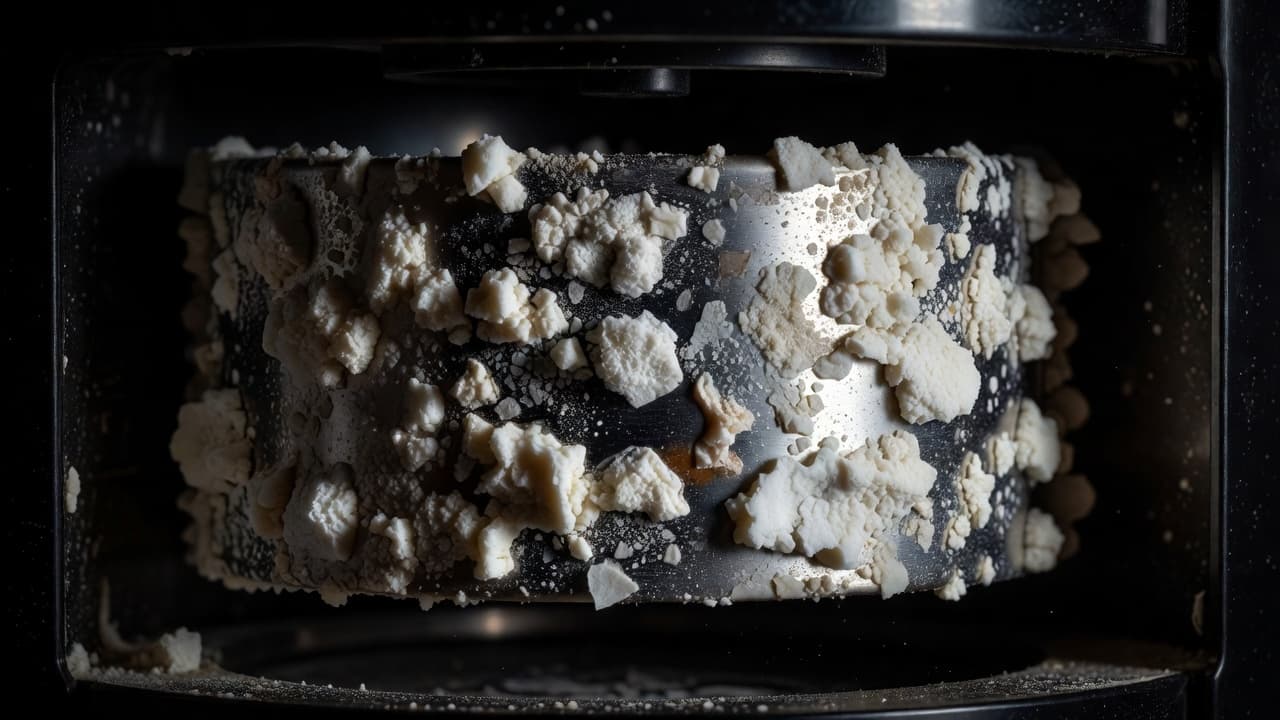
That buildup does three ugly things. First, it slows the machine down. Second, it knocks water temperature off course. Third, it can shorten the machine’s life. Coffee hates all three.
Flavor changes are often the first clue people miss. Maybe the cup tastes flat. Maybe it leans bitter. Maybe it has that vague “off” note you can’t pin down. If the water isn’t moving right or heating right, extraction goes sideways.
You’ll also see mechanical signs. The brew cycle drags. The machine makes more noise. The water output drops. In single-serve machines, flow can turn weak or uneven. In drip brewers, the basket may fill strangely or the pot takes forever.
And no, descaling doesn’t fix everything. If the machine is clean but the coffee still tastes muddy, keeping your coffee grinder clean matters too. Old oils and stale grounds can ruin a cup all by themselves.
☕ Did You Know?
A layer of mineral scale just a fraction of an inch thick can reduce heating efficiency inside a coffee maker. As scale builds up, your machine must work harder to heat water and push it through internal tubes, which can lead to slower brew times, lower brewing temperatures, and coffee that tastes flat or under-extracted.
How to descale without making a mess of it
The best descaling method is the one your machine’s manual approves. If the brand sells a descaling solution, that’s the easy route. It works, and it cuts the guesswork.
White vinegar is the old-school home fix, and plenty of people use it. But some manufacturers don’t love it, mostly because residue and smell can linger, and some machines are picky. Check the manual first. If it says no vinegar, don’t get cute.
The process is usually simple:
- Empty the machine and remove any pod, coffee, or paper filter.
- Fill the reservoir with descaling solution mixed as directed, or a vinegar mix if your machine allows it.
- Run a brew or descale cycle. If the manual says to pause halfway, do that.
- Rinse with 2 to 3 full reservoirs of clean water until the smell is gone.
For a drip coffee maker, that’s often the whole story. For a single-serve machine, run the cleaning cycle with no pod inside. For espresso machines, follow the brand’s steps closely, because those machines pack more plumbing into a smaller box.
A few habits stretch the time between deep cleans. Use filtered water if you can. Empty standing water from the reservoir. Wash removable parts often. Wipe the spray head and carafe. None of that replaces descaling, but it keeps the machine from turning into a swamp with a heating element.
If you want one easy rule, use this: mark the date when you descale, then do it again before the machine starts begging. Maintenance works best when it feels boring. Boring is how you keep coffee tasting good.
Frequently Asked Questions
How often should I descale my coffee maker?
Most home coffee makers should be descaled every 1 to 3 months. If you brew daily or have hard water, every 4 to 8 weeks is usually safer.
How do I know if my coffee maker needs descaling?
Common signs include slower brewing, louder operation, weak water flow, lukewarm coffee, or coffee that tastes flat, bitter, or slightly off.
Can I use vinegar to descale my coffee maker?
Some coffee makers allow white vinegar, but not all brands recommend it. Always check your manual first because vinegar can leave odor, taste, or residue in some machines.
Is descaling the same as cleaning a coffee maker?
No. Cleaning removes coffee oils, grounds, and surface grime. Descaling removes mineral buildup inside the water lines, heating parts, and internal channels.
Does filtered water reduce how often I need to descale?
Filtered water may slow mineral buildup, especially if it reduces hardness. It does not eliminate the need to descale, but it can help stretch the time between deep cleanings.
What happens if I never descale my coffee maker?
Scale can slow brewing, reduce water temperature, affect flavor, strain the pump, and shorten the life of the machine.
A clean machine makes better coffee
Most people don’t need a lab schedule. They need a decent rule and a little attention. For most homes, that means descaling every 1 to 3 months, then tightening the gap if hard water or heavy use starts piling on the crud.
The machine always tells the truth. If brewing slows down, taste slips, or the water flow turns strange, don’t ignore it. A clean coffee maker runs hotter, faster, and makes a cup that tastes like the beans you paid for, not the mineral deposit hiding inside the pipes.
This post may contain affiliate links. If you make a purchase through these links, I may earn a small commission at no extra cost to you.