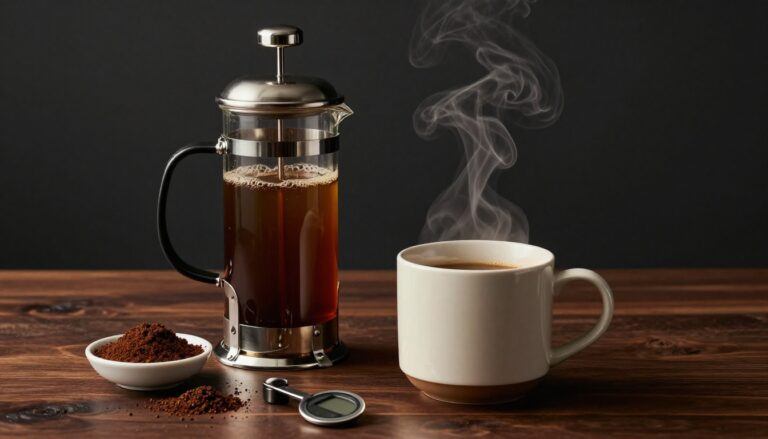

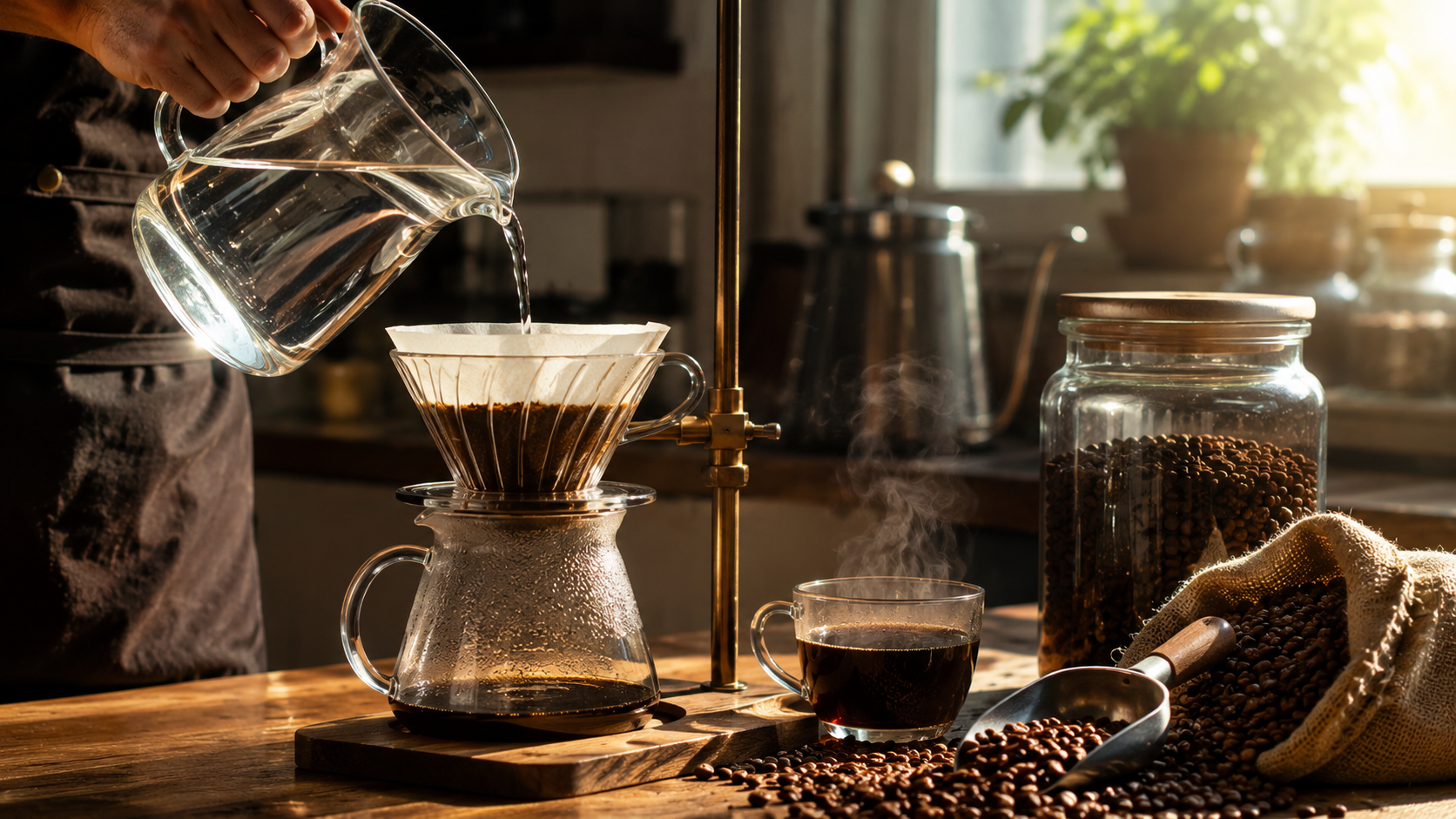
You can buy beautiful beans, grind them right, hit the temperature, and still get a mug that tastes like wet cardboard. Most people blame the coffee. A lot of the time, the problem is the water for coffee.
For home brewing, you don’t need laboratory grade perfection. You need water that tastes clean, has some minerals in it, and doesn’t flatten or brutalize the cup. Get that part right, and a whole lot of coffee brewing confusion disappears.
Key Takeaways
Since coffee is mostly water, off-flavors like chlorine or metallic notes can ruin even the most expensive beans.
Magnesium and calcium help extraction, but high alkalinity can smother bright, acidic notes and leave the cup tasting flat.
Try a simple side-by-side brew with tap, filtered, and bottled water before blaming your grinder, brewer, or coffee beans.
Paper-filtered brewers like the V60 need clean, balanced water, while espresso machines need mineral control to help prevent scaling and damage.
Most bad cups blamed on beans are really water
Coffee people love talking about grinders, burr sets, roast curves, and brew ratios. Fine. But coffee is mostly water, so the water for coffee coming out of your tap gets a vote in every single cup.
If that water smells like chlorine, metal, sulfur, or hot pennies, the brew carries it straight into the mug. No expensive dripper fixes that. No rare microlot hides it for long.
Then there is the sneaky problem. Some water tastes decent on its own but behaves badly with coffee. Water with almost no minerals can leave a cup thin, sharp, and oddly empty. Water loaded with general hardness and alkalinity can turn lively coffee into something flat and sleepy.
When we look at water chemistry, general hardness is not mysterious. It is mostly calcium and magnesium, the minerals that help drive extraction by pulling flavor from the grounds. Alkalinity is the buffer that pushes back against acids. If you have too much alkalinity, those bright notes get smothered before they ever hit your tongue. Carbonate hardness also plays a role in this balance, as it acts as the primary source of alkalinity in your water.
Think of it as a tug-of-war. Calcium and magnesium are vital for extraction, but the alkalinity (or carbonate hardness) determines how much of that acidity survives the brewing process. That is why the same washed Ethiopian can taste like peach tea in one kitchen and damp cereal in another. Same beans, same brewer, different water. If you want the plain-English version of that acid-and-buffer tug-of-war, Scott Rao’s breakdown of coffee water is worth reading.
None of this means you need to turn your kitchen into a chemistry lab. It means the water matters earlier than most people think. Before you buy another gadget, pay attention to the thing filling the kettle.
Did You Know?
Coffee is typically 98–99% water, which means the quality of your brewing water has a bigger impact on flavor than most people realize. A simple switch from heavily chlorinated tap water to clean filtered water can dramatically improve sweetness, clarity, and aroma without changing your beans, grinder, or brewer.
What good coffee water actually looks like
Good water for coffee at home usually isn’t exotic. According to the Specialty Coffee Association, ideal water for coffee brewing should be clean, odor-free, low in chlorine, and contain a moderate mineral profile. You want water that is neither stripped bare nor loaded with minerals like liquid rock.

You can judge the first half of this equation without any gadgets. Smell the cold water and taste it. Boil some in a clean kettle and taste it again after it cools. If it smells like a pool, a coin jar, or the inside of a garden hose, start with filtration.
The mineral side takes a little more attention, but the clues are still right there in your kitchen. White crust in the kettle means scale, which indicates hard water. Hard water is not always awful, but an excess of it can mute acidity and make the cup taste broad, dull, and chalky. On the other end of the spectrum, distilled water and other forms of ultra-stripped water often lead to coffee that tastes hollow, sour, and lifeless.
Basic carbon filters, such as those found in pitchers and faucet units, are helpful for improving water quality by removing chlorine and stale odors. However, they are not miracle workers. If your tap water is significantly hard, a basic pitcher may make it smell better while leaving most of the mineral problem behind.
A quick side-by-side test tells the truth fast. Brew the same coffee three ways: using straight tap water, filtered tap water, and plain bottled water. Skip sparkling water and avoid heavily alkaline wellness water with aggressive branding. Instead, use a basic bottled water with a modest mineral profile and see what happens. When you compare these samples, you will see how the specific mineral profile of your water influences the final cup.
That little comparison teaches more than a month of forum arguing. As Coffee Chronicler’s guide to brewing water makes clear, clean, balanced water beats purity theater every time, even if you are using distilled water as a baseline for your experiments.
When filtered tap water is enough, and when it isn’t
Most people do not need complex reverse osmosis systems, mineral packets, or a ritual involving tiny spoons. If your tap water tastes decent, does not reek of chlorine, and does not cause significant limescale buildup in your kettle after a week, filtered tap water is probably enough for drip, AeroPress, French press, and many pour over methods.
That is the unglamorous answer, and it is the right one more often than coffee marketing would have you believe. A simple carbon filter can knock out the obvious off-notes and give the coffee room to breathe.
Where it stops being enough is also easy to spot. Bright coffees keep tasting dull no matter how you adjust your grind. Your kettle grows a white ring like a bad motel bathtub, or your espresso machine starts collecting scale. Because city water shifts with the season, the water quality can fluctuate, making one month’s brew taste sweet while the next tastes like chalk dissolved in toast.

A cheap meter for total dissolved solids can help, but do not worship the number. Total dissolved solids only tell you how much stuff is dissolved in the water. It does not tell you if that stuff is helpful magnesium or a pile of buffer that is flattening the cup. Your tongue, your kettle, and your brew consistency still matter more.
If your tap water is rough, there are sane next steps. Better filtration under the sink is one option, and many people find that reverse osmosis systems provide a consistent baseline for experimentation. Bottled spring water is another solid test bench. If spring water suddenly makes your coffee taste clearer and sweeter, the beans were not the issue.
Home brewers chasing lighter roasts and cleaner cups usually notice water flaws faster. Paper-filtered brews do not hide much, and that is part of why understanding how water quality affects coffee extraction matters so much. Water changes what gets pulled from the grounds during extraction, what gets muted, and what winds up lingering in the finish.
Start simple. Fix the obvious problem first. Do not buy a chemistry set because one cup went sideways on a Tuesday.
Match the water to the brew method, not the hype
Not every brewer reacts the same way to water. A French press can hide a little roughness under body and oils, while a V60 highlights every flaw. One method puts imperfections in a trench coat, while the other drags them under bright light. Understanding your water chemistry is the key to matching your liquid to the specific needs of your brew method.
For pour over and other paper-filtered brews, moderate minerals and low chlorine matter fast. These methods highlight acidity, aroma, and separation, meaning they show bad water with zero mercy. If you are chasing florals or crisp stone fruit, the water balance must be precise. Cleaner brews leave nowhere for rough water to hide, which is why tips for brewing clean pour over coffee matter so much.
Espresso is where water stops being just a flavor issue and becomes a machine concern. Hard water leads to limescale buildup, which wrecks boilers and clogs passages. To avoid this, you need to manage your water’s alkalinity and pH level. While calcium carbonate is often necessary for extraction, too much leads to internal scale. If you pull espresso every day, you might consider using distilled water as a base and creating your own brew water recipes.
Never brew with straight distilled water unless you are adding minerals back. Pure distilled water is a blank slate, and coffee requires specific minerals to facilitate proper extraction. To build your own brew water recipes, start with distilled water and add magnesium sulfate (often found as food-grade Epsom salt) for flavor clarity, and baking soda to manage the alkalinity. While calcium carbonate helps stabilize the brew, be careful with the dosage to prevent machine damage. Maintaining a neutral pH level in your water will ensure that your machine stays healthy and your espresso tastes bright rather than flat.
Americanos deserve their own warning. People obsess over the shot, then top it with whatever hot water is nearby. That top-up water makes up half the drink or more. If you care about the finish, use the same high-quality water you brewed with, and pay attention to recommended hot water amounts for americano coffee.
This quick table gives you a solid starting point for your water selection:
Water Recommendations by Brew Method
| Brew Setup | Good Starting Water | What It Does in the Cup |
|---|---|---|
| Pour Over, Light Roast | Filtered tap or plain spring water | Keeps brightness alive without turning sour |
| French Press, Darker Roast | Clean filtered tap | Gives body without making the cup muddy |
| Espresso Machine | Softened or remineralized water | Balances extraction and helps keep scale under control |
| Americano | Good espresso water plus fresh hot dilution water | Keeps the drink from tasting thin or stale |
Mug Lifers Tip: If your coffee suddenly tastes off, test your water before changing beans, grinders, or brew settings. Water is often the hidden culprit.
Use the table as a starting point, not scripture. The cup always gets the final say.
The Best Water Final Thoughts
Using good water for coffee isn’t glamorous. It doesn’t need a luxury label or some mountain-mystic backstory. It simply needs to taste clean, carry a balanced level of minerals and alkalinity, and stay out of the way of your beans.
If your tap water is decent, filter it and move on. If it smells rough, scales your kettle, or keeps muting the flavor profile of your roast, fix the water before you blame your beans. Quality coffee brewing relies on these simple foundations, not complex science.
Brew one cup of coffee tomorrow with your usual water, then brew it again with filtered tap or plain spring water. One side-by-side taste test will settle the argument faster than a hundred opinions.
This post may contain affiliate links. If you make a purchase through these links, I may earn a small commission at no extra cost to you.
FAQ: Best Water for Coffee Brewing
Does water really change the taste of coffee?
Yes. Coffee is mostly water, so chlorine, metallic flavors, or poor mineral balance can make even good beans taste flat, bitter, or strange.
Is filtered tap water good for coffee?
Filtered tap water is often a great starting point. It removes many off-flavors while still keeping enough minerals to help coffee extract properly.
Should I use distilled water for coffee?
Plain distilled water is usually not ideal because it lacks minerals. Coffee brewed with it can taste thin, dull, or underdeveloped.
What water is best for espresso machines?
Espresso machines do best with water that has controlled mineral content. Too much hardness can cause scale, while water that is too soft can hurt extraction.
How can I test if my water is hurting my coffee?
Brew the same coffee three ways: tap water, filtered tap water, and bottled spring water. If one cup tastes noticeably better, your water is probably part of the problem.