
Common Coffee Grinding Mistakes That Ruin Flavor
A great bag of beans can still brew a bad cup if the grind is off. Many people blame the brewer, the roast, or the water first, but grinding coffee is often where flavor slips.
Small grinding mistakes can make coffee taste weak, bitter, sour, or flat. The good news is that most of them are easy to fix at home. Once you spot the problem, your cups get more steady fast.
Why the grinder can make or break your coffee
Your grinder shapes how water moves through coffee. When the grounds are close to the same size, water extracts them more evenly. When the particles are all over the place, the brew gets confused. Some bits give up flavor too fast, while others barely give up anything.
That is why the grinder matters so much, even when your beans are fresh and your method is solid. A blade grinder chops beans into mixed pieces. A burr grinder crushes them between two burrs, which gives you a more even result and better control.
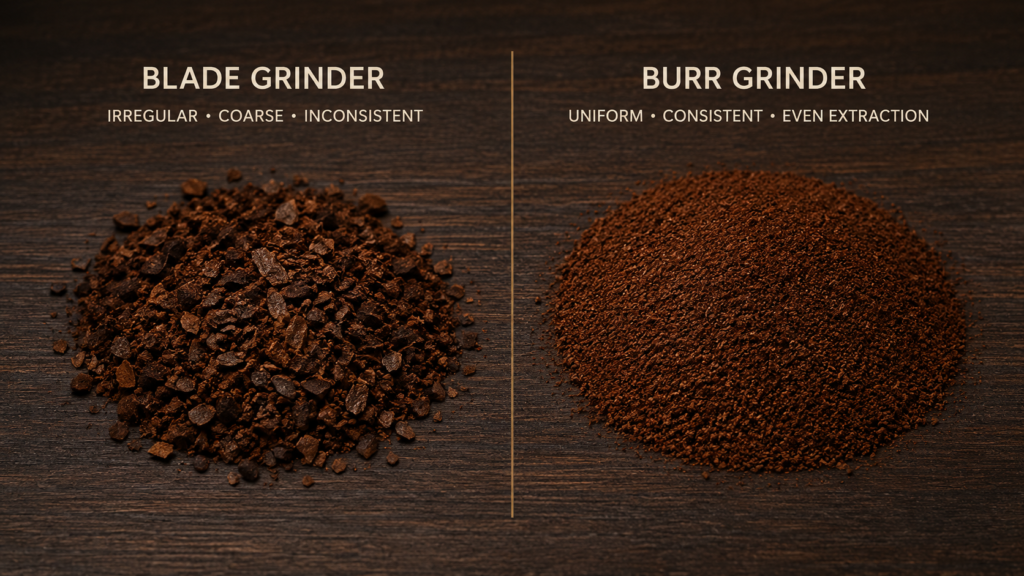
Why blade grinders usually lead to uneven coffee
Blade grinders act more like tiny choppers than true grinders. Because the beans bounce around, some pieces turn to dust while others stay chunky.
That uneven mix causes uneven extraction. The fine bits can turn harsh and bitter, while the bigger chunks stay weak and sour. If your coffee tastes both sharp and muddy, the grinder may be the reason.
Why burr grinders give you more control
Burr grinders make the grind more even, and that gives you repeatable flavor. They also let you adjust settings for different brew styles, whether you want espresso, drip, or French press.
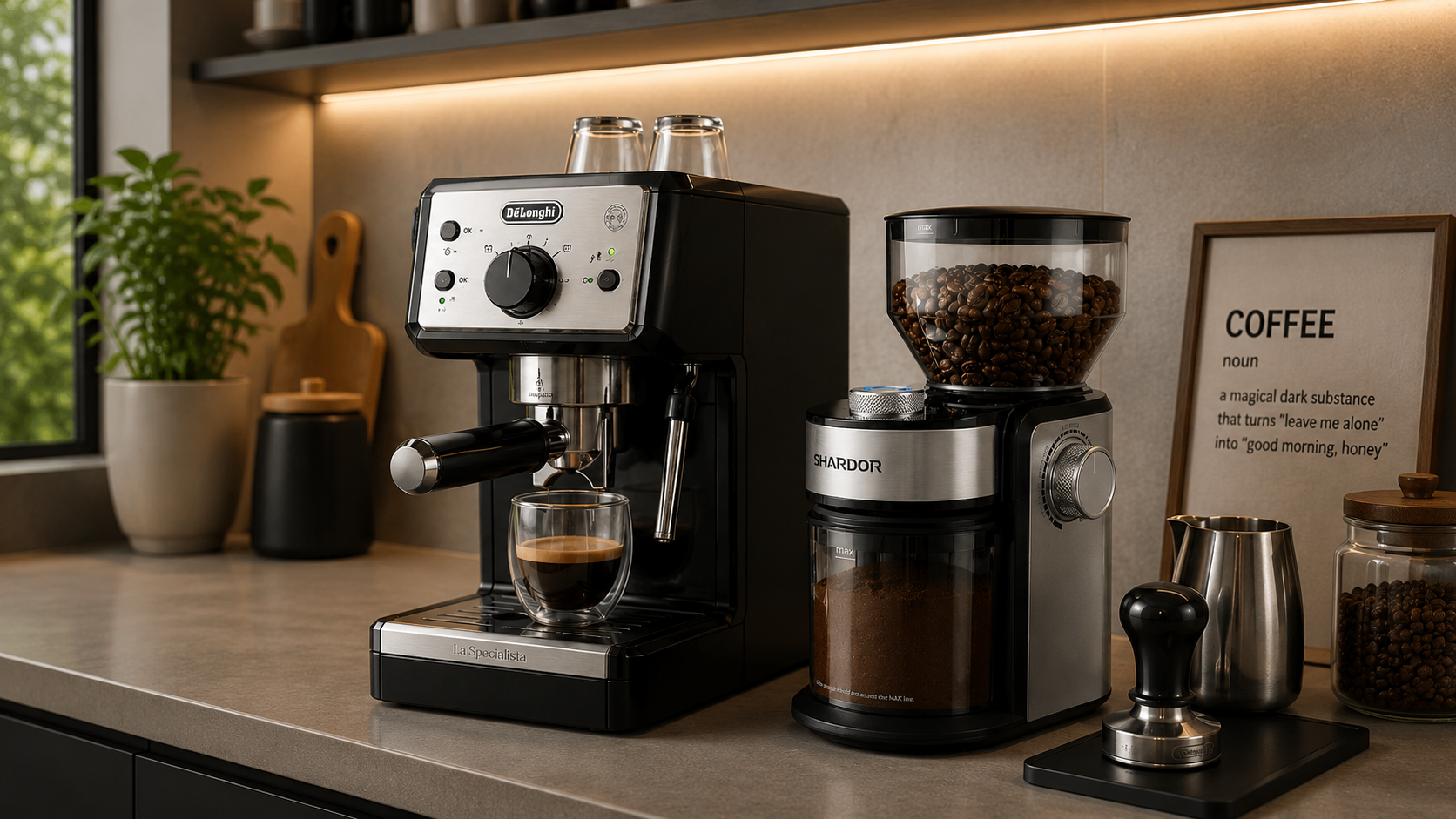
If you are comparing best coffee grinders for beginners, start with an adjustable burr model. A grinder like the SHARDOR Electric Burr Coffee Grinder can make life easier for new home brewers because it offers multiple grind settings and better day-to-day control.
The most common grinding mistakes that hurt flavor
Most bad cups come from a handful of repeat mistakes. Fixing them does more than chasing a fancier coffee bean ever will.
Choosing the wrong grind size for your brew method
Grind size should match the way you brew. Coarse, medium, and fine grounds are not interchangeable.
This quick guide keeps it simple:
Coffee Grind Size by Brew Method
| Brew Method | Best Grind Size | What Goes Wrong If It’s Off |
|---|---|---|
| Cold brew | Extra coarse | Too fine can taste bitter |
| French press | Coarse | Too fine can taste muddy |
| Drip coffee | Medium | Too coarse can taste weak |
| Espresso or moka pot | Fine | Too coarse can taste sour |
If you brew by hand often, this pour over grind size guide can help you dial things in.
A grind that is too coarse often leads to under-extraction. The cup tastes thin, weak, and sometimes sour. Too fine, and you get over-extraction, which shows up as bitterness, dryness, and a rough finish.
If your coffee tastes thin and sour, go a little finer. If it tastes bitter and harsh, go a little coarser.
Grinding too early and letting coffee go stale
Whole beans hold onto aroma better than ground coffee. Once you grind them, more surface area hits the air, and flavor starts fading fast.
That is why coffee smells so strong right after grinding. Those aromas are escaping. For the best cup, grind right before brewing whenever you can. Even a good coffee can taste dull if it sat ground on the counter for hours.
Affiliate Disclosure
A Quick Note About Links on Mug Lifers
Some links on MugLifers.com may be affiliate links. That means I may earn a small commission if you click a link and make a purchase, at no extra cost to you. I only recommend coffee products, tools, and resources that make sense for this site and its readers.
Your support helps keep Mug Lifers running, fueled, and slightly over-caffeinated.
Eyeballing the amount instead of measuring it
Guessing the dose is one of the easiest ways to get random results. One morning the coffee tastes too strong, and the next day it tastes watery.
A small kitchen scale helps a lot. Even a one or two gram change can shift the cup, especially with smaller brews. If you want less fuss, a grinder with dose control can help keep your recipe steady.
Grinding too much coffee at once
Grinding a big batch may feel efficient, but the extra coffee starts going stale right away. Then you are stuck with leftovers that smell flat and brew flat.
Smaller batches work better for freshness. Grind only what you plan to use, and cleanup gets easier too. You will waste less coffee, and your next cup will taste brighter.
Check out my article on coffee storage.
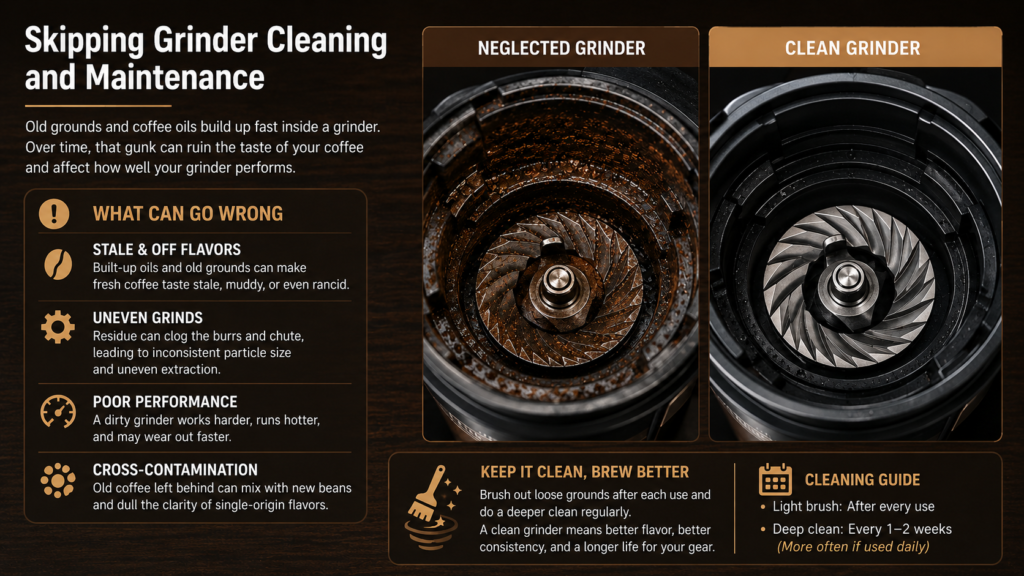
Skipping grinder cleaning and maintenance
Old grounds and coffee oils build up fast inside a grinder. After a while, those leftovers can add stale, muddy, or even rancid notes to fresh beans.
They can also affect how the grinder feeds and how evenly it grinds. A quick brush-out after use helps. Then do a deeper clean on a regular schedule, especially around the burrs and chute. Clean gear makes cleaner-tasting coffee.
☕ Did You Know?
Coffee oils can begin building up inside a grinder after just a few uses. Over time, those oils turn stale and coat the burrs, chute, and grinding chamber. The result is coffee that may taste muddy, dull, or slightly rancid, even when you’re using fresh beans. Regular cleaning helps preserve flavor, improves grind consistency, and can extend the life of your grinder.
A few small habits that make grinding coffee easier every day
Good grinding habits are simple. Keep beans whole until brew time, store them in an airtight container, and make small changes instead of big jumps.
Make one change at a time so you can taste the difference
When coffee tastes off, resist the urge to change everything at once. If you adjust grind size, dose, and brew time together, you will not know what fixed it.
Change one setting, brew again, and taste carefully. That slow approach helps you find the sweet spot for each coffee. It also makes it easier to repeat a great cup later.
Choose tools that help you stay consistent
A grinder should be easy to adjust and easy to live with. Clear settings, low mess, and even grinding matter more than flashy extras.
If your current grinder gives you powder and pebbles in the same dose, an adjustable burr grinder is a smart next step. The SHARDOR Electric Burr Coffee Grinder with Adjustable Settings is a helpful option for home brewers who want more control without making the morning routine harder. If your grinder runs warm during long sessions, grind in smaller batches and give it a short break.
Final Thoughts on Coffee Grinding Mistakes
Great coffee starts before the water hits the grounds. A better grinder, the right grind size, a measured dose, fresh grinding, and regular cleaning all lead to a better cup.
Most grinding mistakes are small, but they show up fast in flavor. Fix a few of them, and coffee that once tasted flat or harsh can turn balanced, clear, and much more enjoyable.
Frequently Asked Questions About Common Coffee Grinding Mistakes That Ruin Flavor
Why does grind size change coffee flavor so much?
Grind size controls how fast water pulls flavor from the coffee. Smaller particles extract faster, so a fine grind can go bitter if it’s too fine for the brew method. Larger particles extract more slowly, which can leave the cup weak or sour if the grind is too coarse.
How do I know if my coffee is ground too fine or too coarse?
Taste gives you the clearest clue. If the cup is bitter, dry, or harsh, the grind is probably too fine. If it tastes thin, sour, or underdeveloped, go a little finer next time.
Are blade grinders really that bad for coffee?
Blade grinders can work in a pinch, but they usually chop beans into a mix of dust and chunks. That uneven grind causes uneven extraction, so one sip can taste harsh while the next tastes flat. A burr grinder gives you much better control and a more even cup.
When should I grind coffee beans for the best flavor?
Grind right before brewing whenever you can. Once coffee is ground, it loses aroma and flavor much faster because more surface area is exposed to air. Even a good bag of beans can taste dull if the grounds sit around for hours.
How often should I clean my coffee grinder?
Brush out leftover grounds after use, then do a deeper clean on a regular schedule. Old coffee oils and trapped grounds can make fresh coffee taste stale or muddy, and they can affect how evenly the grinder works. If you use the grinder daily, a quick cleanup habit goes a long way.
Is measuring coffee worth the trouble?
Yes, because guessing the dose makes your results jump around. A small change in coffee amount can shift strength and balance, especially in smaller brews. A kitchen scale keeps the recipe steady, so when the cup tastes off, you can fix the real problem instead of chasing it.