
☕ Did You Know?
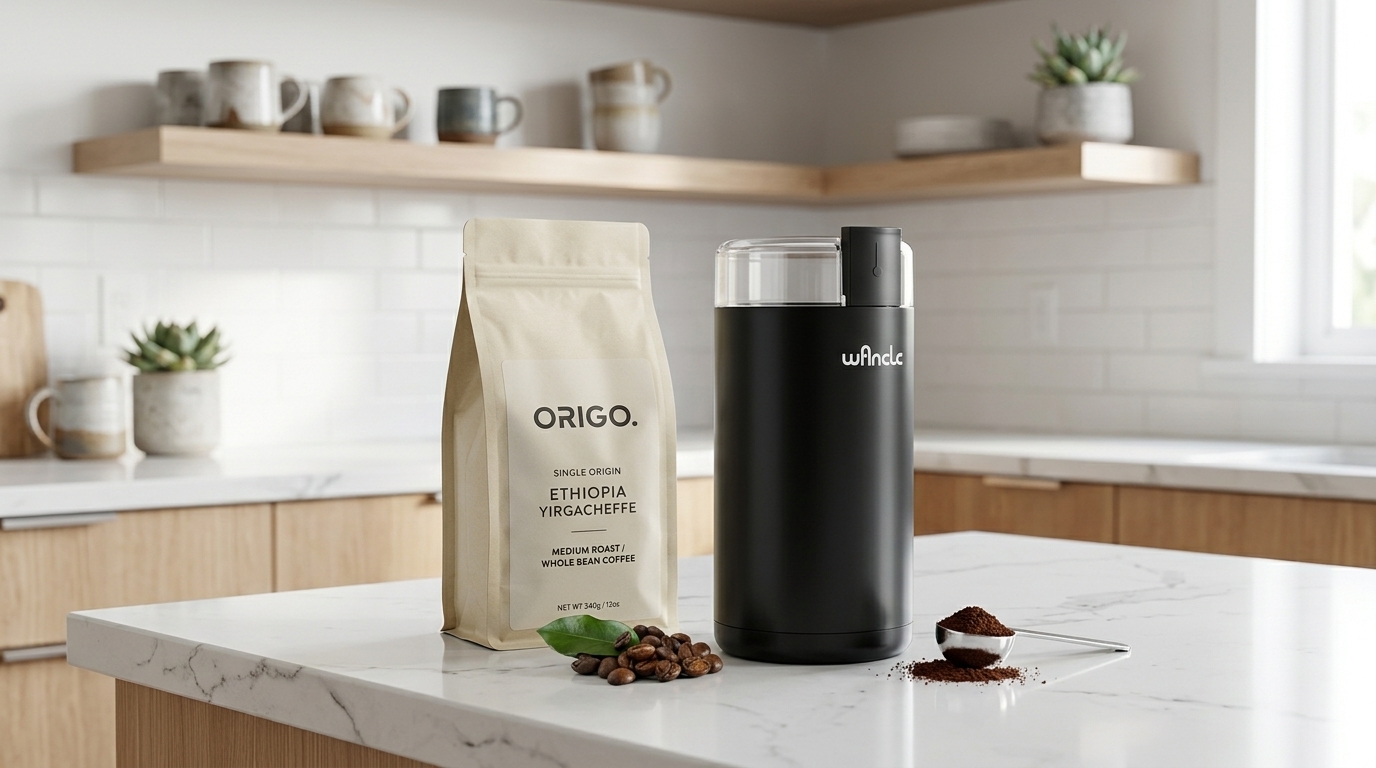
Coffee begins losing aroma and flavor almost immediately after it is ground. According to coffee industry research, many of the volatile compounds responsible for coffee’s smell and taste start dissipating within minutes. That’s why a simple grinder and fresh whole beans can create a dramatically different cup compared to coffee that was ground weeks or months earlier.
I am 51 years old, and for more than half my life, coffee was simply part of the morning routine. My father swore by Maxwell House. My grandfather preferred Folgers. Naturally, I bought Folgers too.
Then about 10 years ago, I discovered whole bean coffee for the first time. A simple grinder and a fresh bag of beans completely changed how I viewed coffee. What I thought was just a hot caffeinated drink suddenly became something far more interesting.
The moment those beans hit the grinder, the smell stopped me in my tracks. It was richer. Fresher. More complex than anything I had experienced from a can of pre-ground coffee.
Then I brewed it.
That first cup wasn’t just different. It completely changed the way I thought about coffee.
Why Whole Bean Coffee Tastes Different
Before that day, I honestly thought coffee came in two categories:
- Good enough
- Bad
That was about the extent of my coffee knowledge.
Then I started noticing things I had never noticed before.
Some coffees tasted chocolatey.
Some tasted nutty.
Some had fruit notes.
Others had a sweetness that didn’t require a single packet of sugar.
At first, I thought people were exaggerating when they described coffee this way.
Turns out they weren’t.
I simply had never tasted fresh coffee before.
The Rabbit Hole Begins
Once you discover whole bean coffee, it doesn’t stop there.
You start learning about grind size.
You learn that a coarse grind tastes different than a fine grind.
You discover that the same coffee can taste completely different depending on whether it’s brewed in a French press, pour-over, drip machine, or espresso maker.
Then someone mentions water temperature.
And before you know it, you’re standing in your kitchen talking about extraction like you’ve been doing it your whole life.
It happens fast.
A Little Respect For The Classics
Now, this isn’t a post about bashing Maxwell House or Folgers.
Those brands fueled generations of coffee drinkers.
My dad drank Maxwell House.
My grandfather drank Folgers.
Millions of people still enjoy them every day.
There is absolutely nothing wrong with that.
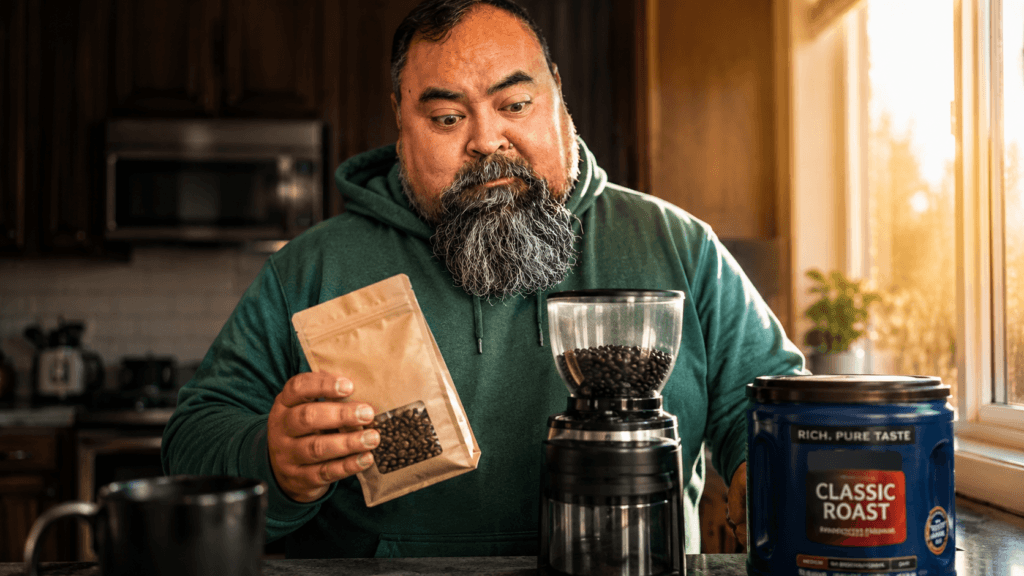
But once I experienced freshly ground coffee, I realized there was a whole world I didn’t know existed.
It wasn’t that the old brands suddenly became bad.
My expectations had simply changed.
What Coffee Means To Me Today
These days, I enjoy trying different beans, brewing methods, and roast profiles.
I still love the ritual of making coffee in the morning.
That part never changed.
What changed is that coffee became more than a caffeine delivery system.
It became something worth exploring.
Something worth paying attention to.
Something worth slowing down for.
And honestly, that’s one of the reasons Mug Lifers exists.
Coffee isn’t just a drink.
It’s stories.
It’s memories.
It’s traditions passed down from parents and grandparents.
And sometimes, it’s a grinder and a bag of beans that completely change the way you experience your morning cup.
No BS Takeaway
If you’ve only ever bought pre-ground coffee, do yourself a favor.
Buy a small bag of quality whole beans and a simple grinder.
You don’t need expensive equipment.
You don’t need to become a coffee snob.
Just make one fresh cup.
You might discover what I discovered 10 years ago:
The biggest upgrade in coffee isn’t usually the coffee maker.
It’s the bean before it ever reaches the brewer. ☕️
Question for fellow Mug Lifers: What was the moment that changed the way you looked at coffee? Was it whole beans, a French press, espresso, pour-over, or something else? Let me know in the comments.
Whole Bean Coffee FAQ
Is whole bean coffee better than pre-ground coffee?
Whole bean coffee usually tastes fresher because the beans hold onto aroma and flavor longer before grinding. Once coffee is ground, it starts losing those qualities much faster.
Do I need an expensive grinder to start using whole bean coffee?
No. A basic grinder is enough to get started. A burr grinder gives better consistency, but even a simple grinder can show you the difference fresh grinding makes.
Why did freshly ground coffee taste so different to me?
Freshly ground coffee releases more aroma and flavor right before brewing. That is often the first big “wait a minute” moment for people who grew up drinking canned coffee.
What grind size should I use for regular drip coffee?
For most drip coffee makers, a medium grind works best. Too fine can taste bitter, and too coarse can make the coffee weak or flat.
Does whole bean coffee make you a coffee snob?
Not at all. It just means you found another way to enjoy coffee. You can still respect the old-school brands and enjoy better beans at the same time.
How long do whole coffee beans stay fresh?
Whole beans are usually best within a few weeks after opening. Keep them sealed, away from heat, light, and moisture for the best flavor.
Can the same beans taste different with different brew methods?
Yes. A French press, pour-over, drip machine, and espresso maker can all bring out different parts of the same coffee. That is part of the rabbit hole.
What is the easiest way to try whole bean coffee?
Buy a small bag of fresh whole beans, grind only what you need, and brew it the same way you normally make coffee. Keep it simple at first.