
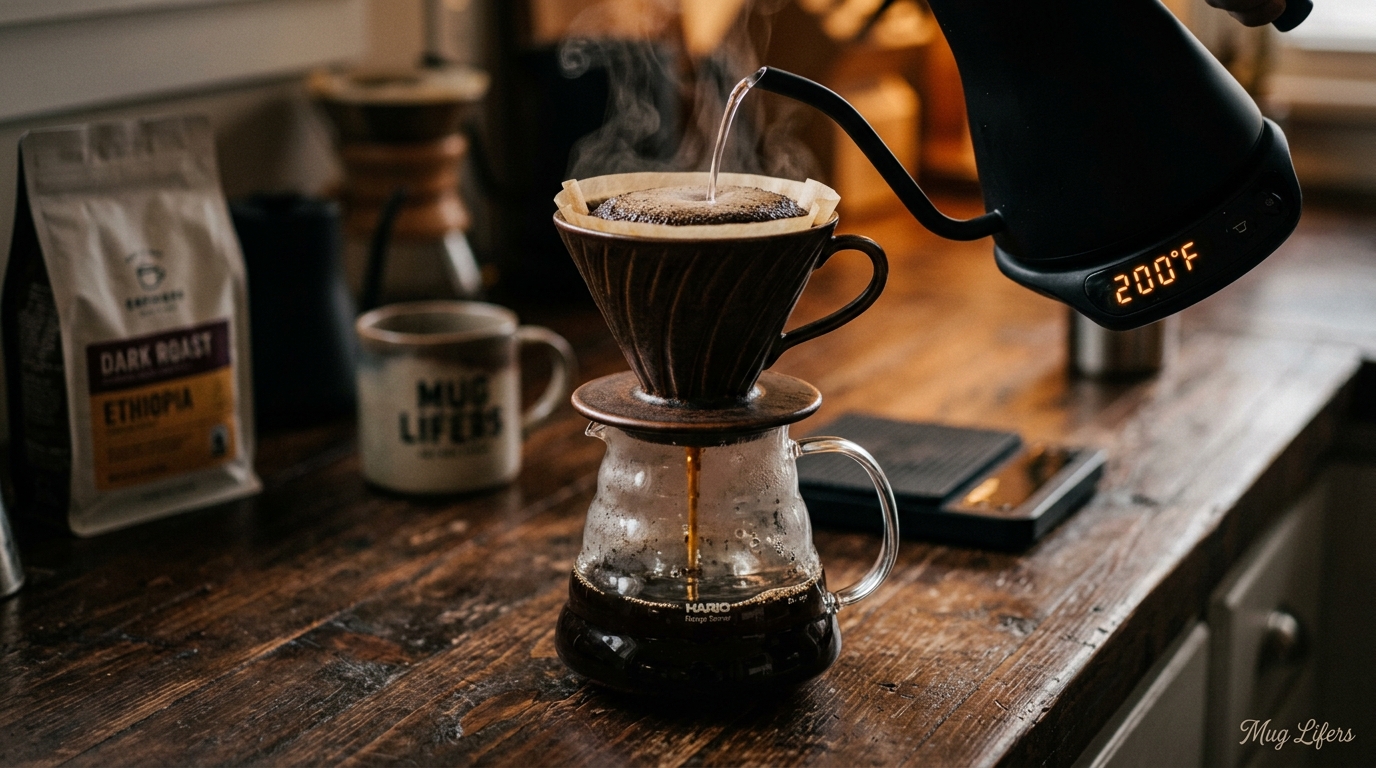
Dark roast brewing temperature changed my coffee more than a new grinder ever did. I kept brewing the same beans and getting the same disappointing result, bitter or flat. Then I lowered my water from 201°F to 200°F, and the cup finally started tasting balanced.
How Dark Roast Coffee Extracts Faster
Dark roasts extract fast. The longer roast makes the beans more porous, so hot water gets in quickly and pulls out flavor early. That can mean rich body, but it can also drag out bitter, smoky notes before sweetness has room to show.
The Dark Roast Brewing Temperature Change That Worked
A medium-roast recipe can push dark beans too hard. The problem often isn’t the coffee. It’s extraction speed, because darker beans give up soluble material faster.
Testing Dark Roast Brewing Temperature at Home
One degree won’t rewrite a bad brew. It can, however, shift the balance of flavors in your cup. More heat typically draws out extra roast notes and adds weight to the body. On the other hand, dropping the temperature by a single degree can soften sharp edges or acidity.
You might think this adjustment is too minor to matter, but coffee extraction is a sensitive process. Small changes to your water temperature change how quickly oils and acids dissolve. Test this by brewing two batches at slightly different settings. You will likely notice a change in the finish and overall sweetness. Keep your records consistent so you know exactly which temperature produces your favorite results.
Best Dark Roast Brewing Temperature for Smoother Flavor
My usual pour-over sat at 201 F. With this dark roast, that last bit of heat kept tipping the cup into bitterness. I lowered the water to 200 F and changed nothing else.

How the cup tasted before the change
Before the drop, the coffee hit with a burnt edge. The finish felt dry and a little hollow, like the good flavors had been squeezed out too soon.
How the cup tasted after the change
At 200 F, the bitterness backed off. I tasted cocoa, a heavier middle, and a cleaner finish. It still tasted dark, but no longer rough.
Did You Know?
Dark roast coffee usually extracts faster than lighter roasts because the beans become more porous during roasting. That means small temperature changes can make a bigger difference than expected. A one-degree drop may not sound like much, but it can soften bitterness, bring out cocoa notes, and make the finish taste cleaner.
How to test your own dark roast without wasting coffee
Keep your tests small and boring. Complex experiments often hide errors behind a wall of noise. A simple test forces you to look at the data without any distractions. It is easier to spot a failure when the variables are limited. You might worry that simple tests ignore the big picture; however, a basic test validates the core mechanics first. Once the foundation is solid, you can add more pieces to the puzzle. Start with one clear goal to find the truth of your work. Clear results help you make better decisions for your next cup.
Make one change, then taste again
Brew two cups side by side if you can. Change only temperature, by 1 degree, and leave dose, grind, and brew time alone. Jot down bitterness, sweetness, and body. For a simple baseline, see this pour over brewing temperature guide.
Want another opinion? Check out A guide to coffee brewing temperature by Breville
When to go hotter, and when to back off
If your cup tastes weak, watery, or thin, try increasing your water temperature by a few degrees. Hotter water extracts more solids, which often fixes a flat flavor profile. Conversely, back off the heat if the coffee tastes ashy, rough, or leaves a drying sensation on your tongue. High heat can pull out bitter compounds that overwhelm the delicate notes you want to taste. Adjusting temperature is only one part of the process, however.
Your grind size and brew time still influence the final cup more than heat alone. Don’t blame your kettle if your coffee is over-extracted or sour. Dial in your grind and timing first, then use temperature as a final tool to refine the balance. Focus on one variable at a time to keep your results consistent.
Trust the Cup, Not the Numbers

One degree sounds silly until it’s in your mug. With dark roast, that small drop can separate bold and balanced from bitter and blunt.
Trust your taste buds more than rigid rules. If the cup feels off, change one thing, sip again, and let the coffee tell you what it wants.
This post may contain affiliate links. If you make a purchase through these links, I may earn a small commission at no extra cost to you.
Frequently Asked Questions About Dark Roast Brewing Temperature
What is the best dark roast brewing temperature?
A good starting point for dark roast brewing temperature is around 200°F. Some dark roasts taste better slightly lower, especially if they come out bitter, smoky, or dry.
Why does dark roast coffee taste bitter?
Dark roast coffee can taste bitter because darker beans extract faster in hot water. If the water is too hot, it can pull harsher roast notes before the sweeter flavors settle into the cup.
Can one degree really change coffee flavor?
Yes, one degree can change the balance of the cup, especially with dark roast coffee. It may not fix a bad brew, but it can soften bitterness and help cocoa, body, and sweetness come through more clearly.
Should I brew dark roast coffee hotter or cooler?
Brew dark roast coffee cooler if it tastes ashy, bitter, or drying. Try a slightly hotter temperature if the cup tastes weak, thin, or dull.
How should I test dark roast brewing temperature?
Change only the water temperature first. Keep the same beans, dose, grind size, and brew time. Start with 200°F, then move up or down one degree at a time based on taste.


