

Do you know how to properly store coffee beans? You crack open a fresh bag of coffee and the room smells like promise. A week later, the cup tastes tired. Same coffee beans, same brewer, different story.
That is the dirty little truth about freshly roasted coffee. Once the bag is open, freshness starts leaking out. It does not happen all at once, or in some dramatic collapse, but steadily, like a good song fading under bad bar noise. The fix is simple if you learn how to properly store coffee beans without overthinking it.
Key Takeaways
Prioritize Airtight Storage
Protect your beans from oxygen, light, and heat by using a high-quality opaque canister kept in a cool, dark place.
Keep Beans Whole
Grinding exposes more surface area to air, which speeds up staling. Grind only right before you brew.
Avoid the Fridge
Coffee beans absorb moisture and food odors from the refrigerator, which can damage the flavor of your brew.
Buy Smaller Batches
Buy only what you can drink within a few weeks so every cup tastes fresh, lively, and worth the money.
What ruins coffee once the bag is open
The main enemy is oxygen. The second fresh-roasted coffee beans meet air, they undergo an oxidation process that strips away the volatile compounds responsible for those sweet, floral, and nutty notes. That is the good stuff. Lose enough of it, and your cup goes flat.
Heat and direct sunlight help oxygen do its dirty work even faster. If you leave your coffee beans in a clear jar on a sunny counter, you have built a tiny retirement home for flavor. It might look nice on Instagram, but it tastes like regret.
Did You Know?
Coffee beans are natural odor absorbers. They can pull in smells from nearby foods and surrounding air. If your beans sit beside onions, garlic, spices, or inside a refrigerator, your morning coffee can slowly pick up those unwanted flavors.
Your coffee might be drinking the fridge before you drink the coffee.
Moisture is also a major concern. Coffee beans are inherently hygroscopic, which means they act like little sponges that pull in humidity and surrounding odors with alarming enthusiasm. That is why the fridge is a bad move. More on that in a minute.

Many people think the presence of stale beans means the product has expired. Usually, they are not rotten; they are simply tired. The life has gone out of them, and the vibrancy of the roast date has faded. Think less like spoiled milk and more like bread left uncovered overnight.
Grinding accelerates this decline significantly. Whole bean coffee holds up much better because the surface area remains protected. Ground coffee, however, has all its edges exposed to the elements. If you want the shortest version of this whole article, here it is: store whole bean coffee, grind right before brewing, and keep air away as much as possible.
The best place and container for opened beans
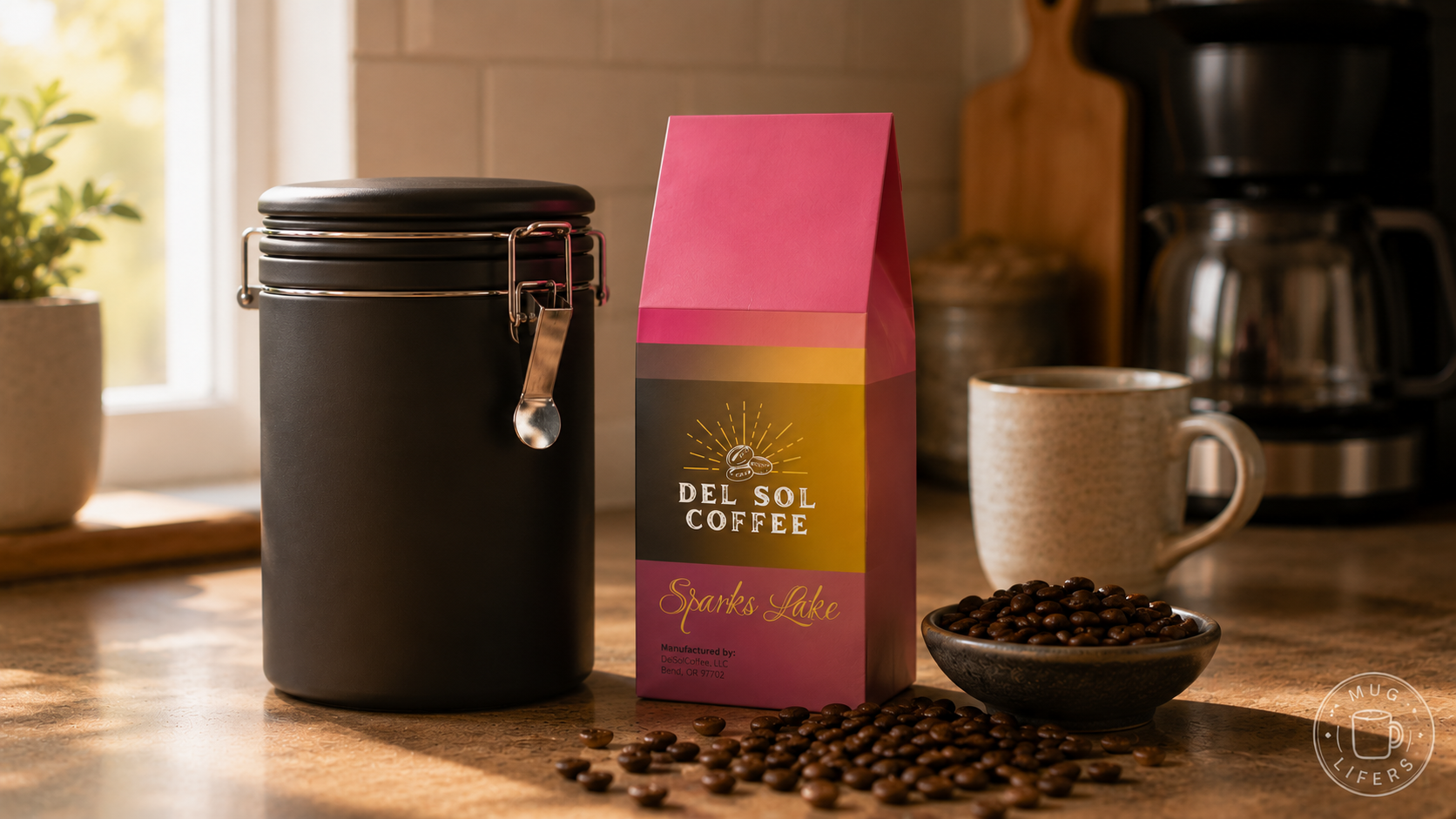
If you want to store coffee beans properly after opening the bag, use an airtight container and opaque containers to shield them from environmental stressors. Keeping them in a cool dark place is the golden rule of effective coffee storage. That is the whole playbook. No mysticism. No gadget shrine.
A high-quality canister beats a folded bag clipped shut. That said, not every piece of original packaging is useless. Many coffee bags are built with a one-way valve, which allows coffee beans to degas and release carbon dioxide without letting oxygen inside. If the packaging seals well, you can keep the coffee beans in it, squeeze out excess air, and place it inside your pantry. If the packaging is flimsy, torn, or will not close, move them to a better vessel.
If your coffee beans live in a clear jar beside the stove, you are aging them in public.
The best storage spot is boring, which is exactly what you want. A cupboard away from the oven works, as does a clean, dry drawer. The top of the espresso machine does not work. Neither does the windowsill, or the shelf over the toaster, or anywhere near a dishwasher belching steam.
Temperature matters, but stability matters more. Room temperature is ideal. In fact, it is better than bouncing coffee beans between warm and cold environments. Coffee likes a calm life after roasting.
One more thing people often forget: do not store beans in the grinder hopper unless you will finish them quickly. A grinder hopper sits in light and air all day. It is a convenience move, not a freshness move. Leave only what you will use soon in the device, and keep the rest sealed.
If you care about the cup, storage is only part of the story. Water matters too, and why clean water and fresh beans matter shows up fast once you start paying attention.
Fridge, freezer, and buying more than you need
Let’s address the fridge first, because this bad habit refuses to die. Do not refrigerate your coffee beans. The fridge is full of moisture and odors; since coffee is porous, it will happily absorb both. Nobody wants a cup of coffee with a faint memory of onions and last night’s leftovers.
The freezer is a different story. It is not for daily use, but it can be a helpful tool if you bought more coffee than you can finish quickly. The trick is portioning. Split your coffee beans into small, airtight amounts, ideally using a vacuum seal bag to keep them fresh. Freeze these portions once, then pull one out only when you are ready to use it.
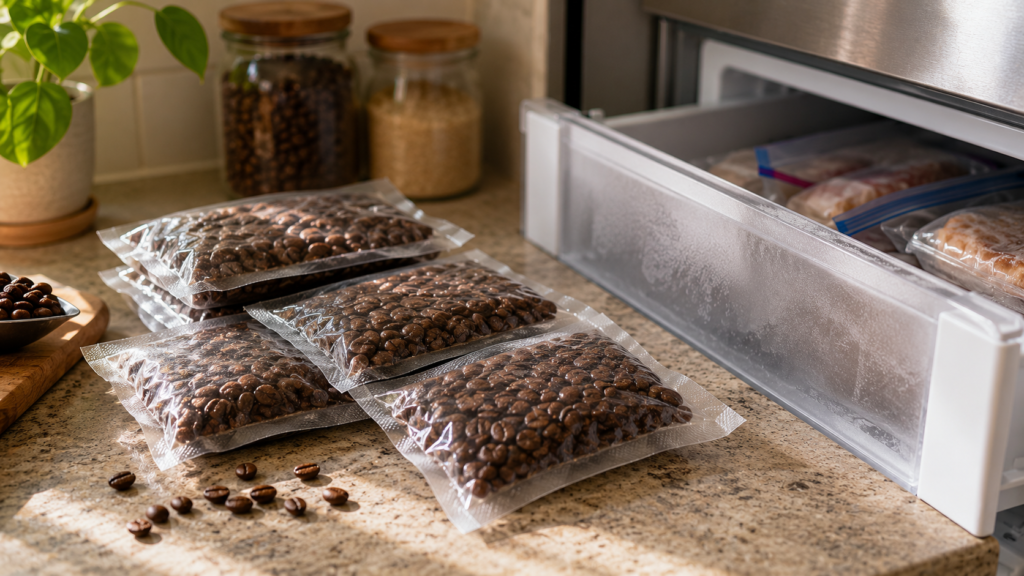
The rule is simple: thaw the sealed portion completely before opening it. If you open the bag while it is still cold, condensation can land on the beans. That is the moisture problem again, wearing a different hat. What you want to avoid is the same bag going in and out of the freezer every morning. Repeated temperature changes are the enemy of freshness.
A smarter move is buying smaller batches of coffee at a time. By sourcing your beans from a local specialty coffee roaster, you can ensure you are getting the freshest product possible. Most coffee beans taste their best within a couple of weeks after opening, though your specific roast level and storage methods make a big difference. Dark roasts often lose their punch sooner, while lighter roasts can hang on a bit longer. Either way, if you are buying a giant bag for one person and taking a month to get through it, the final cups will lose that vibrant, aromatic quality you paid for.
A simple routine works better than fancy gear. Put a manageable amount into your daily canister, keep the rest sealed tight, and store it in a dark, cool place. Grind only what you need, and pay attention to the cup. If the flavor starts tasting hollow, your beans are telling you that they have reached the end of their life.
Give Your Coffee Beans a Fighting Chance
Good coffee does not ask for much. It wants less air, less light, less heat, and none of your refrigerator’s nonsense. Give it that, and your coffee beans will stay fresh and lively for much longer after you break the seal.
The best approach to coffee storage is not particularly glamorous. Simply keep your supply in an airtight container tucked away in a cool dark place, like a pantry or kitchen cabinet, and practice the discipline of only buying what you can realistically drink within a few weeks. Learning how to store coffee beans properly is not about coffee snobbery. It is simply about giving your daily brew a fighting chance to taste as good in your cup as it did the day you bought it.

This post may contain affiliate links. If you make a purchase through these links, I may earn a small commission at no extra cost to you.
Frequently Asked Questions
Can I keep my coffee beans in the freezer?
Yes, but only for long-term storage. Portion the beans into small airtight or vacuum-sealed bags and thaw only what you need. Repeated temperature changes and opening the container while cold can create condensation that damages freshness and flavor.
Is it better to keep coffee in the original bag or a canister?
If the original bag is high quality, has a one-way valve, and seals tightly, it can work well. If the bag is flimsy, torn, or no longer seals properly, move the beans to an airtight opaque canister to reduce oxygen and light exposure.
Does grinding coffee ahead of time ruin the flavor?
Yes. Coffee loses flavor faster after grinding because more surface area is exposed to oxygen. For the best taste, keep beans whole and grind them right before brewing.
Where is the best place to keep my daily coffee supply?
A cool, dark cupboard or pantry works best. Keep coffee away from windows, stovetops, ovens, toasters, and cabinets above warm appliances where light and heat can shorten freshness.


