
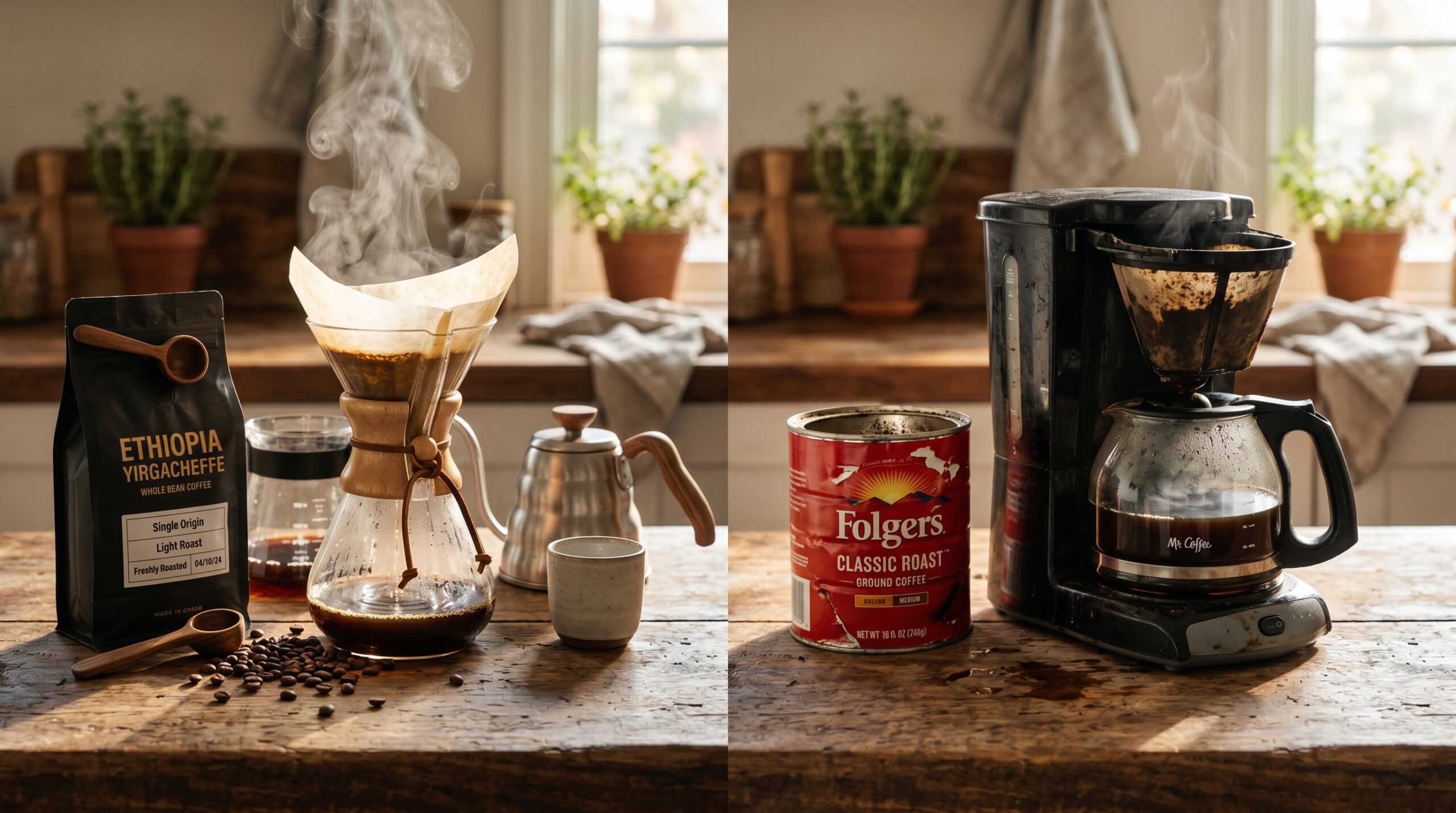
If you care about the taste of your morning brew, you’ve probably wondered whether quality coffee is worth the money or if cheap coffee is good enough for a daily cup. Quick definition: quality coffee means specialty-grade beans, roasted fresh and traceable to the farm, while cheap coffee means commodity-grade beans built for volume, shelf life, and low price. Whether you’re grinding beans at home or grabbing a quick cup on the go, it’s not just about price. Flavor, sourcing, and even how you feel after each cup can be different.
Quality coffee usually means specialty-grade beans, careful sourcing, and freshly roasted batches. Cheap coffee often relies on mass production, lower-grade beans, and cost-cutting everywhere possible. If you want to know what you’re really getting in your cup and which choice works best for your needs, I’ve got you covered with side-by-side comparisons of what matters most.
Coffee Comparison
Quality Coffee Pros & Cons
Quality coffee can taste cleaner, fresher, and more interesting. But it also asks a little more from your wallet and your morning routine.
Pros
Cons
The Basics: What’s Behind Each Kind?
What is Quality Coffee?
Quality coffee usually means beans graded as “specialty” by industry standards. These beans come from known origins, are carefully harvested, and are roasted with a lot of attention to detail. Most come from small batch roasters. A big part of the appeal is knowing who grew your coffee and how it got to your cup. You can often trace the farm of origin or the process used to develop its flavor, giving you much more insight into your drink.
Who Finds Quality Coffee Worth It?
- Coffee lovers who enjoy unique or complex flavors
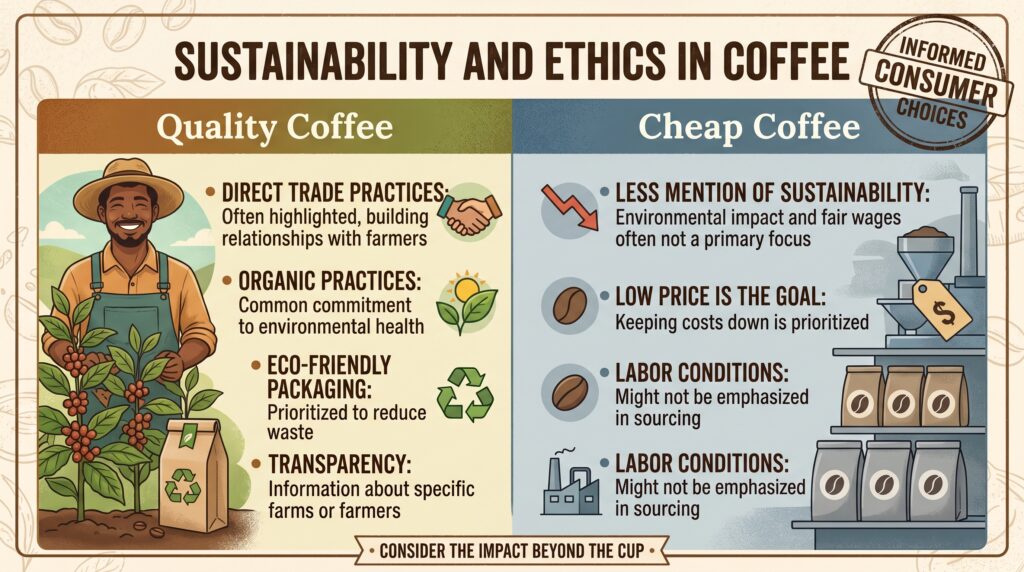
- People who like supporting sustainable or fair trade practices
- Anyone who brews at home and wants exact freshness
What is Cheap Coffee?
If you want a quick definition, cheap coffee is usually made from commodity-grade beans and is found everywhere from diners to grocery store shelves. This coffee is all about volume: huge batches, long shelf life, and low prices are the goal. Traceability and unique flavors are rare. You’ll often see things like “100% coffee” without more detail. Sometimes, the beans are roasted very dark to create a consistent product and mask any imperfections.
For a rundown of specific grocery-store brands that cut these corners, check out this list of coffee brands to avoid.

Who Buys Cheap Coffee?
- Busy people looking for affordable caffeine
- Large offices or events where price trumps flavor
- Anyone who just needs a hot cup, fast and cheap
Coffee Comparison
Cheap Coffee Pros & Cons
Cheap coffee wins on convenience and price. The tradeoff is usually flavor, freshness, and transparency about what is actually in the bag.
Pros
Cons
How Does the Taste Stack Up?
- Flavor Profiles
Why It Matters: Flavor is usually the first thing people notice. A really fresh, quality bean delivers notes—think fruit, chocolate, nuts—that cheap beans rarely match.
Quality Coffee: Often has distinct flavors, with brightness or sweetness that stands out. These flavors reflect growing region, bean type, and roast level.
Cheap Coffee: Usually more bitter, less aromatic, and lacks unique notes. The taste can be “flat” or overly roasted to mask defects.
Which Stands Out: Quality coffee, especially if you drink it black or enjoy tasting different origins. - Freshness
Why It Matters: Coffee loses freshness quickly. The closer you brew to the roast date, the better it tastes.
Quality Coffee: Often bought fresh, roasted to order, or marked with roast dates. You get to taste it at its best.
Cheap Coffee: May sit on a shelf or in a warehouse for months. Often preground for maximum convenience, which hurts flavor.
Which to Pick: Quality coffee if you care about peak freshness. But if convenience rules, cheap coffee still delivers caffeine. - Ingredients
Why It Matters: What goes into your cup can affect taste and even digestion.
Quality Coffee: Usually just “100% Arabica coffee” or single origin beans, sometimes with more transparency on where and how it’s grown.
Cheap Coffee: Often blends different low cost beans (like Robusta), which pack more caffeine but less flavor. Fillers or additives might be present in ultra cheap instant versions.
Which Feels Cleaner: Quality coffee, especially if you want simple ingredients and transparency.
Price, Value, and Where the Money Goes
- Price Points
Quality Coffee: Ranges widely, but expect $14 to $25 per 12-ounce bag for specialty beans. Comes from independent roasters, usually online or in specialty shops.
Cheap Coffee: Regular supermarket options might be as little as $5 to $9 per standard can or bag, especially in bulk or as preground coffee.
Who Gets Paid: Quality coffee often means better pay for farmers and producers because roasters buy direct and seek ethical sources. Cheap coffee typically comes from long supply chains focused on lowering costs. - Brewing at Home vs. On the Go
Brewing quality coffee at home means you need a good grinder and maybe a scale to nail down recipes. Cheap coffee is quick: just scoop, brew, and you’re out the door. If you love tinkering with brewing methods, specialty beans stay exciting. For a hassle-free cup, cheap coffee is about as easy as it gets.
What Other People Are Saying
- Quality Coffee: Fans talk about the excitement of stumbling upon new flavors or favorite roasters. Comments often praise complexity and freshness. Some compare tasting specialty coffee to sampling fine wine or craft beer, since the flavor notes can be really eye-catching.
- Cheap Coffee: Most feedback is about the value or convenience. Some people mention consistent taste for the price, and others note that they can drink more cups without worrying about cost. There are fans who genuinely prefer the basic, reliable flavor for daily use.
Overall Vibe: Choosing between the two comes down to what you want. Interesting flavors and ethics, or something cheap and dependable for a caffeine boost.
Bottom Line: Which Coffee Fits Your Life?
If great taste, freshness, and sourcing matter, quality coffee is worth checking out, especially for anyone who likes experimenting with brewing at home. It’s a cool way to support small businesses and feel good about your purchase. If you care more about price and just want your caffeine fix on a budget, cheap coffee is practical and gets the job done without fuss.
You might enjoy quality coffee if you:
- Like exploring new tastes and coffee origins
- Want ethically sourced or eco-friendly coffee
- Make pourover, French press, or espresso at home
Cheap coffee works best if you:
- Don’t need fancy flavors and stick to milk or sugar
- Are stocking up for an office, event, or big family
- Value convenience and a low price above all else
I’m always curious where people land on this spectrum. Have you found a cheap coffee you actually enjoy, or does nothing beat the fresh stuff? Let me know your favorites!


As an avid black coffee drinker I can appreciate bold flavors that are clean and don’t linger on my tongue.
I’m definitely going to check out those small batch roasters to get my wife and I started on valuable coffee. Do you recommend any particular brand to begin with? Look forward to hearing your thoughts
All the best,
Shannon
I am into darker roast. For me at the currently, I am liking the Black Rifle Coffee Company Freedom Fuel Dark Roast Ground Coffee. I test many, I have favorites, but I am really enjoying this one at them moment.
Thanks for weighing in.