
Coffee starts losing flavor the minute you open the bag. Not all at once, but fast enough that a great coffee can turn dull before you finish it.
The good news is this: better coffee storage doesn’t need gadgets or a science lab. A few smart habits can keep beans tasting fuller, sweeter, and more like the roast you paid for.
What makes coffee beans go stale so fast?
Once coffee is roasted, it’s on the clock. Opening the bag speeds things up, because the beans are now exposed to air, light, heat, and moisture.
Whole beans hold up better than ground coffee because less surface area is exposed. Grind those same beans, and flavor escapes much faster.
If you can, keep the beans whole and grind right before brewing. Even a decent grinder helps more than people think. If you’re new to grinding your own beans, check out our guide to the best coffee grinder for beginners.
Air is the biggest freshness killer
If one thing ruins coffee first, it’s oxygen. Air reacts with the oils and aromatic compounds in the beans, and that fresh smell starts fading almost right away.
That’s why stale coffee often tastes flat, papery, or a little lifeless. You can’t stop time, but you can slow it down by limiting how much air reaches the beans after each use.
Heat, light, and moisture make the problem worse
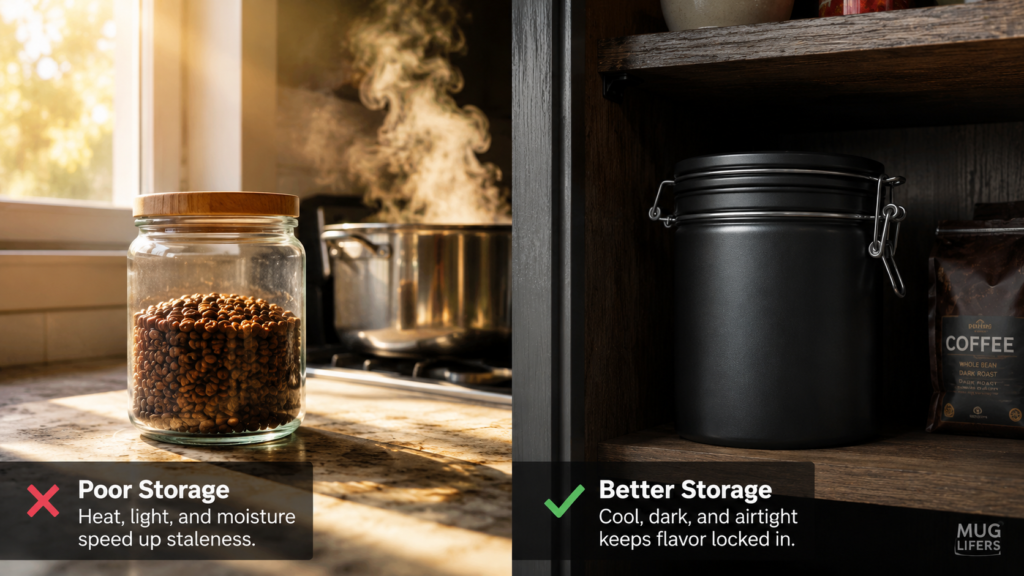
Air does the most damage, but heat, light, and moisture speed things along. Warm temperatures push flavor out faster. Sunlight adds heat and light exposure at the same time. Moisture is worse, because coffee absorbs it and loses its clean taste.
So the kitchen counter isn’t always a good spot, even if it looks nice there. Near the stove, next to the dishwasher, or by a sunny window is even worse.
The best way to store coffee beans at home
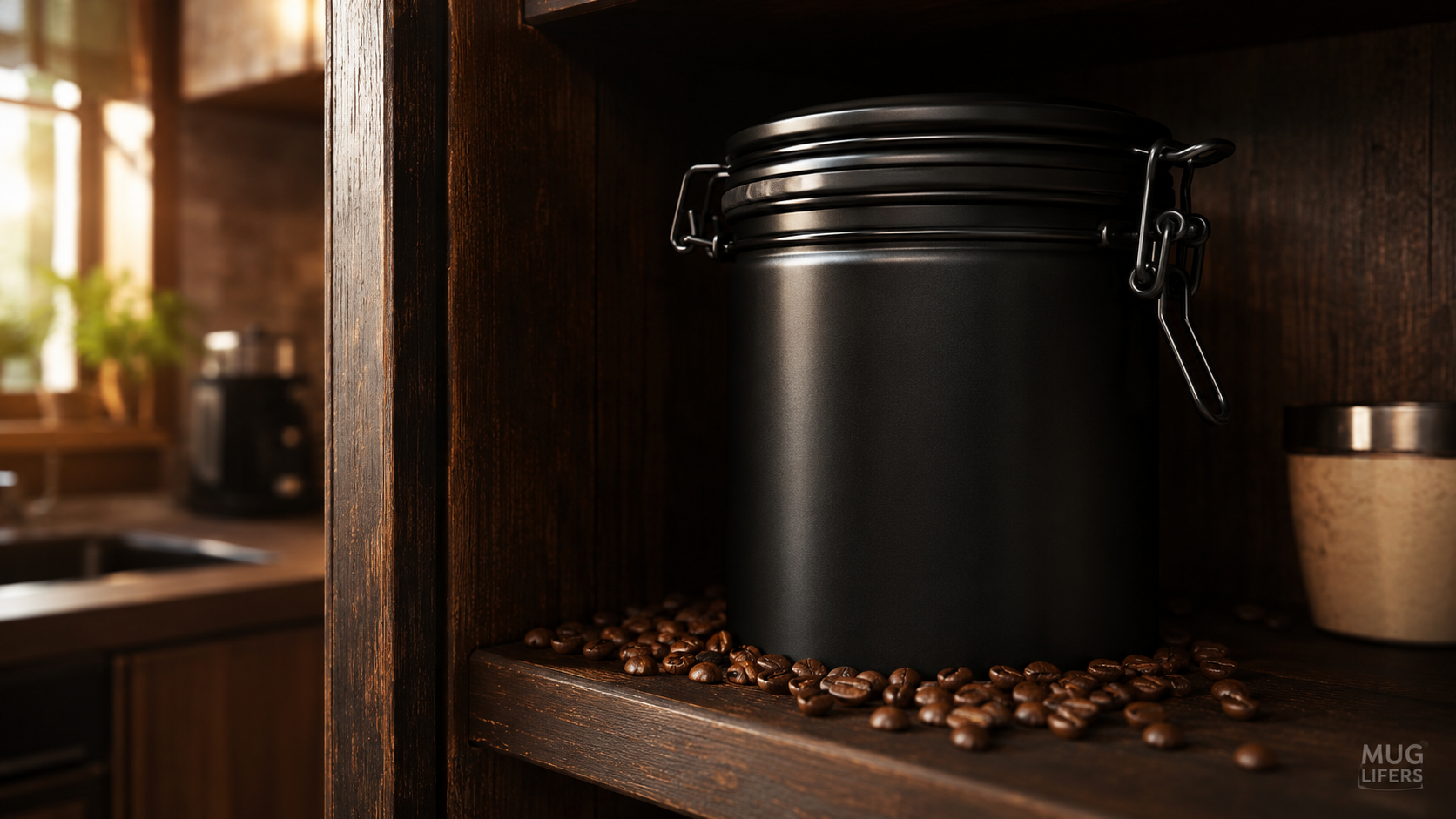
For most homes, the best setup is simple: keep whole beans in an airtight, opaque container, then store that container in a cool, dark, dry cupboard. That’s the sweet spot.
Use an airtight container instead of the original bag
A good container cuts down air exposure every time you open and close it. Ceramic or stainless steel works well, and a tight-fitting lid matters more than fancy features.
Clear containers are less ideal because light gets in. Opaque is better. If your coffee came in a thin bag with a weak zipper, move it out after opening. The bag did its job on the shelf, but it usually isn’t the best long-term home once you start dipping into it.
Recommended Coffee Storage Upgrade: Fellow Atmos Vacuum Coffee Canister which is available on Amazon
Keep beans in a cool, dark, dry cupboard
The right container still needs the right location. A cupboard or pantry away from heat is better than an open shelf near daily cooking steam.
Think about what sits nearby. Ovens, dishwashers, toasters, and windows all create heat, moisture, or both. If the spot gets warm every day, pick another one.
Did You Know?
Coffee beans are not actually beans. They are seeds from the fruit of the coffee plant, often called coffee cherries. The roasting process transforms those pale green seeds into the dark aromatic coffee beans most people recognize. Freshness starts changing immediately after roasting, which is why proper storage makes a noticeable difference in flavor.
Buy smaller amounts more often
Coffee tastes best when it’s used within a fairly short window after roasting and opening. If you buy a huge bag to save money, part of it may sit around getting older while you work through it.
A better move is buying only what you’ll finish in a few weeks. Less coffee sitting around means more coffee drinking at its best.
Should you refrigerate or freeze coffee beans?
This trips up a lot of people. The fridge sounds smart because it’s cool, and the freezer sounds even better because it’s colder. For everyday storage, though, neither is the first choice.
Why the fridge is usually a bad idea
Refrigerators bring two problems coffee hates: moisture and odors. Beans can absorb both.
Open the container in a humid fridge, then move it back to room temperature, and condensation can creep in. Add in the smell of leftovers, onions, or yesterday’s takeout, and your coffee can pick up flavors you never wanted in the cup.
For daily use, a cupboard beats a fridge almost every time.

When freezing can help, and when it can backfire
Freezing is only worth considering for long-term storage, not for the beans you’re using every morning. If you bought more coffee than you’ll use soon, freezing unopened portions can help slow flavor loss.
The catch is handling. Beans need to be sealed well, ideally in small portions, so you only thaw what you’ll use next. Repeatedly taking a bag out, opening it, and putting it back invites moisture and extra air. That’s when freezing starts doing more harm than good.
Simple habits that keep every cup tasting better
Storage isn’t only about where the beans live. A couple of small daily habits protect flavor, too.
Grind only what you need right before brewing
Ground coffee loses freshness much faster than whole beans. Once the bean is broken apart, a lot more surface area is exposed to air.
That’s why pre-ground coffee fades so quickly after opening. If you can, keep the beans whole and grind right before brewing. Even a decent grinder helps more than people think.
Avoid opening the container more than needed
Every time you open the lid, air and a little moisture get in. That doesn’t mean you need to treat coffee like a rare artifact, but it does mean slower is better than constant exposure.
Open the container, scoop what you need, and close it right away. Use a clean, dry scoop.
Better storage also works best with decent water and good timing, because even fresh beans can’t save a bad brew. How you make coffee changes more than taste, and your brewing process affects the final cup more than many people realize.
Coffee Storage FAQ
Quick answers to common questions about keeping coffee beans fresh longer.
Should coffee beans be stored in the fridge?
No. Refrigerators introduce moisture and odors that coffee beans can absorb. A cool, dark cupboard usually works much better for everyday storage.
Is freezing coffee beans a good idea?
Freezing can help if you bought more beans than you will use soon. Divide them into sealed portions and avoid repeatedly thawing and refreezing them.
What type of container keeps coffee fresh longest?
An airtight opaque container works best. Ceramic or stainless steel containers with a tight lid help reduce exposure to air and light.
How long do whole coffee beans stay fresh after opening?
Whole beans often taste best within two to four weeks after opening, though storage conditions can extend or shorten that window.
Should coffee beans stay in the original bag?
The original bag works for shelf storage before opening. Once opened, moving beans to an airtight container usually protects freshness better.
Fresh coffee starts with one easy change
If you remember one thing, make it this: store whole beans in an airtight container and keep that container in a cool, dark cupboard. That’s the setup that gives you the best shot at a better cup.
Small changes matter here. Swap the counter for a cupboard, stop using the fridge, or buy a smaller bag next time. Start with one of those today, and your coffee will likely taste better by tomorrow morning.


