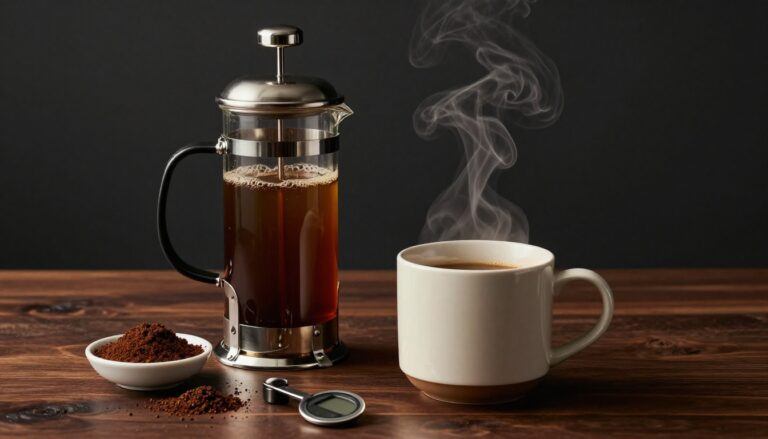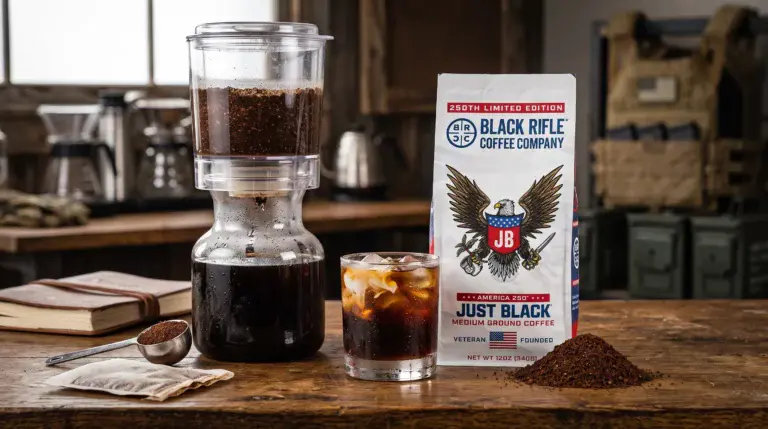


Should your morning coffee be rich and heavy, or clean and bright? The French Press Vs. Chemex choice comes down to what you want to taste in the cup, not which brewer looks better on the counter.
Neither method wins for everyone. Body, acidity, clarity, roast level, and the coffee itself all matter. One holds onto oils and texture. The other lets delicate flavors come through without much clutter.
This post may contain affiliate links. If you make a purchase through these links, I may earn a small commission at no extra cost to you.
Key Takeaways
- French press coffee is fuller, heavier, and richer because a metal mesh keeps oils and fine particles in the cup.
- Chemex coffee is cleaner and brighter because its thick paper filter removes much of that oil and sediment.
- Dark, nutty, and chocolatey coffees often suit a French press.
- Light-roast, fruity single origins often show more detail in a Chemex.
- Good grind size and fresh beans matter more than fancy equipment.
French Press Vs. Chemex: How Each Method Shapes Coffee Flavor
A French press is an immersion brewer. Ground coffee sits fully in hot water, then a metal mesh plunger pushes the grounds down. A Chemex is gravity-fed pour-over coffee. Water moves through the grounds and a thick paper filter into the carafe.

The filter is the biggest reason the cups taste so different, though grind size, contact time, and technique still matter. French press coffee keeps more natural oils and tiny particles. Chemex filters catch much of both, leaving a clearer cup.
How Each Brewer Changes the Cup
The same coffee beans can taste surprisingly different depending on whether you brew with a French press or Chemex.
| Flavor Detail | French Press | Chemex |
|---|---|---|
| Mouthfeel | Thick, round, and full-bodied | Light, clean, and tea-like |
| Acidity | Often less distinct, with a rounder presentation | Brighter, clearer, and easier to notice |
| Flavor Clarity | Blended, dense, and rich | More separated and nuanced |
| Great Coffee Styles | Chocolatey, nutty, bold, and medium-dark roasts | Floral, citrusy, fruity, and light-roast single origins |
Why French Press Coffee Tastes Richer and Heavier
Those retained oils give French press coffee its substantial texture. It has weight. You notice it on your tongue, especially with a medium-dark roast or a coffee with cocoa, toasted almond, or earthy notes.

That extra material can taste wonderful, but it needs some care. Too fine a grind, overly hot water, or a long steep can bring harsh bitterness and a gritty finish. Nobody wants the final sip to feel like coffee-flavored sand.
Why Chemex Brings Out Bright, Clean, Delicate Notes
Chemex paper filters are thick, and they remove much of the oil and sediment that a press lets through. The result is a cup where floral aromas, berry-like sweetness, and citrus acidity have more room to show up.

A washed Ethiopian coffee or bright Kenyan coffee can be a different drink in a Chemex. The clean profile is lovely with light roasts and single origins. Still, it may feel a little thin if you want coffee that tastes like it could stand up and argue with you.
Brewing French Press and Chemex Coffee for the Best Flavor
For French press, start with a coarse grind, water around 195 to 205 degrees Fahrenheit, and a four-minute steep. A starting ratio of 1 gram of coffee for every 16 grams of water is sensible. Plunge slowly, then pour it out soon after. Leaving coffee on the grounds keeps extraction going.
Chemex needs a medium-coarse grind, a rinsed paper filter, and water in that same 195 to 205 degree range. Give the grounds about 30 seconds to bloom, then pour slowly in small circles. Most brews finish in about three to five minutes.
A scale helps keep your ratio honest, and clean water makes more difference than people expect. For more help with the pouring side, this pour over coffee guide covers the useful basics. Change one variable at a time. Otherwise, you won’t know what fixed the cup.
Simple Adjustments That Fix Bitter, Weak, or Muddy Coffee
Bitter French press coffee usually needs a slightly coarser grind, cooler water, or a shorter steep. If it tastes weak, use more coffee first. A small grind adjustment can help too, but don’t turn coarse grounds into powder.
A Chemex that drains too slowly often needs a coarser grind and gentler pouring. A flat-tasting cup may need fresher beans, better water, or a tighter ratio. Rinse the Chemex filter well, and wash both brewers often. Old coffee oil can ruin a good bag of beans.
Which Coffee Maker Fits Your Taste, Routine, and Budget?
Pick a French press if you value body, richness, and low-fuss brewing. It makes several servings without much equipment, and cleanup is simple, though disposing of wet grounds can be a little messier than lifting out a Chemex filter. There are no paper filters to buy.
Choose a Chemex if you enjoy a slower ritual and want a clean cup with clear flavor separation. It also looks good on the table when friends stay for another cup. You will need filters on hand, and a gooseneck kettle makes pouring easier, though it isn’t mandatory.
Both brewers cost far less than many electric coffee makers. The French Press Vs. Chemex decision is mostly about your palate. French press enhances flavor when depth and texture matter most. Chemex enhances flavor when brightness and delicate notes are what you came for.
French Press and Chemex FAQs
A few final answers for dialing in the cup you want, without turning your kitchen into a coffee lab.
Does a Chemex make coffee with less caffeine?
Not by default. Caffeine depends more on your coffee dose, bean type, extraction, and how much you drink than on the brewer itself. A French press can taste stronger because it has more body and oils, but that does not automatically mean it contains more caffeine.
Can I use regular paper filters in a Chemex?
Chemex filters are made for the brewer’s shape and thickness. Regular filters may fit poorly or change the drain time. Use Chemex filters when possible for a more predictable cup.
Do I need a scale for French press or Chemex coffee?
No, but it makes repeatable coffee much easier. A scoop can get you close, while a scale lets you adjust the ratio without guessing every morning.
Can I make coffee ahead with either method?
You can, but fresh coffee tastes better. If you need to hold it, transfer it off the grounds right away and keep it in a thermal carafe rather than on a hot plate.
The Cup You Want Matters Most
French press and Chemex coffee don’t make the same beans stronger or weaker. They bring different parts of those beans forward. The press keeps the oils, body, and weight. The Chemex clears the way for brightness and detail.
Try the same fresh coffee in both brewers. A full-bodied cup may become your everyday comfort, or you may prefer the clean snap of a Chemex. Either way, the best brewer is the one that makes you want another cup.