
TL;DR: Use coarse grounds, measure your coffee and water, steep for about four minutes, and pour as soon as you plunge. Those few choices can make your coffee richer and less bitter.
If your first mug tastes good but the last one tastes rough, the brewed coffee may be sitting on the grounds too long. These French Press Tips give you a starting point you can repeat. Once you’ve tried it, your own taste can guide the adjustments.
This post may contain affiliate links. If you make a purchase through these links, I may earn a small commission at no extra cost to you.
Key Takeaways
- Start with a coarse grind and a 1:16 coffee-to-water ratio, then adjust to suit your taste.
- Water around 195 to 205°F and a four-minute steep give you a useful baseline.
- Press gently and pour right away so the last mug doesn’t sit on the grounds.
- If a brew tastes off, change one thing at a time.
Mastering the French Press: French Press Tips for a Better Cup
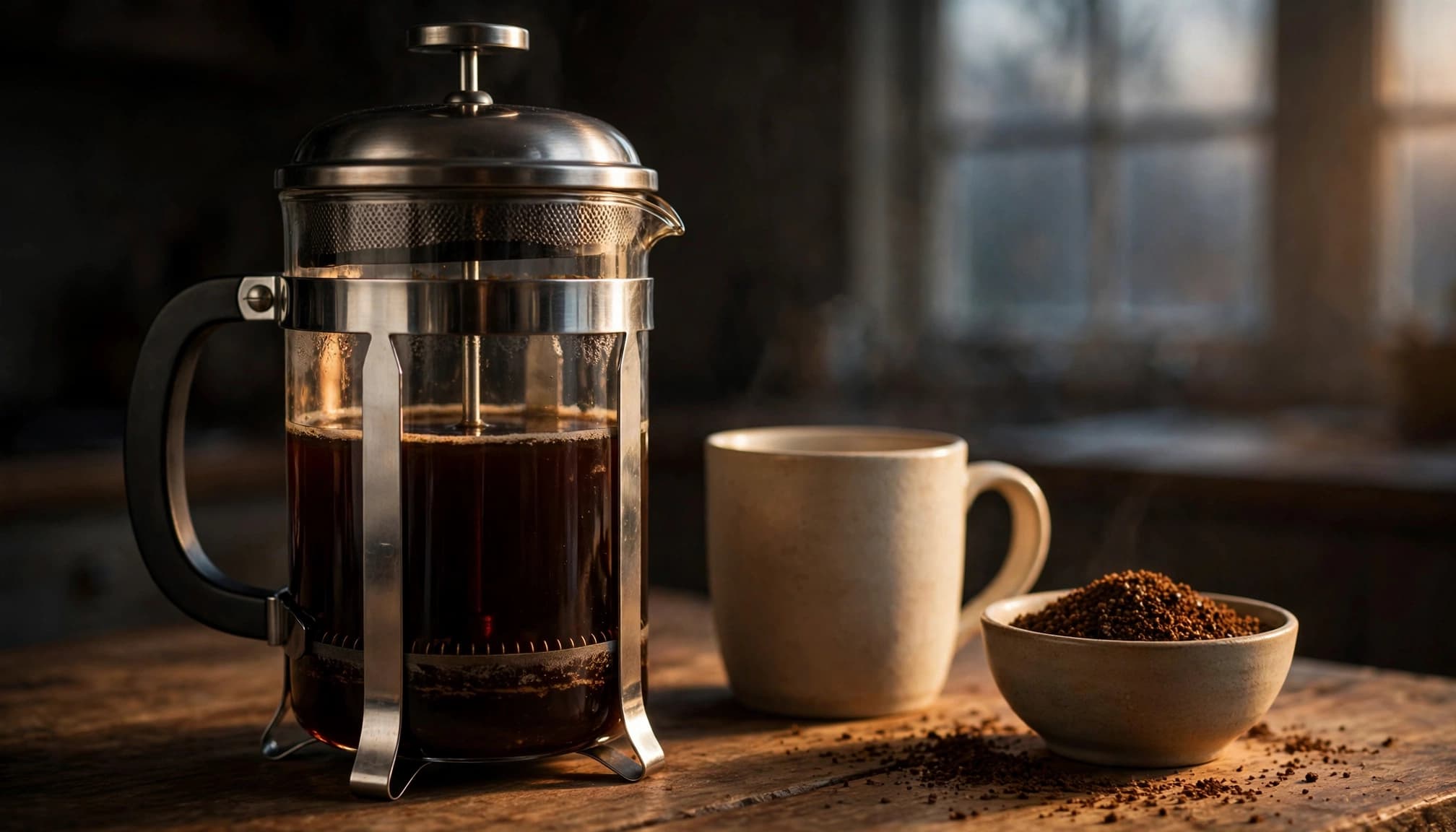
A French press uses full immersion: coffee grounds sit in hot water until a metal mesh plunger separates them from the drink. That mesh lets more oils and fine particles through than a paper filter, which helps explain the heavier texture. If you’re curious about that difference, see how French press coffee compares with Chemex.
Start With a Coarse, Even Grind
Set your grinder for a coarse grind size rather than the fine grind you’d use for espresso. Fine particles pass through the mesh more easily, leaving more grit in your mug. They can also make a long-steeped cup taste rough.
A burr grinder gives you more control over grind size. The Baratza Encore is one example. If your press produces a muddy cup, common coffee grinding mistakes are a useful place to look before changing the beans.
Use a Steady Coffee-to-Water Ratio
Start with one gram of coffee for every 16 grams of water. For a small batch, that’s 15 grams of coffee and 240 grams of water. A digital kitchen scale makes it easy to repeat a cup you liked instead of guessing with scoops.
Prefer more intensity? Try 1:15 on your next brew. The National Coffee Association’s French press guide gives a range of ratios, so treat your starting recipe as a reference, not a rule you can’t change.
Control Water Temperature and Steep Time
Use water around 195 to 205°F and begin with a four-minute steep time. Start the timer once you’ve added all the water. A bloom technique is optional: wet the grounds with a small initial pour, then add the rest before starting the timer. If you don’t have a temperature-controlled kettle, let boiling water settle before pouring.
The National Coffee Association recommends approximately four minutes, while ROCC’s French press guide offers a coarse-grind recipe at 203°F. The James Hoffmann method is an alternative: after four minutes, break the crust, let the grounds settle, then plunge and pour. If your cup tastes thin or sharp, note the time before making your next adjustment.
Plunge Slowly, Then Pour Right Away
Lower the French press plunger with steady, gentle pressure. Forcing it down can stir up the grounds you’ve spent four minutes trying to separate.
Then pour into mugs or a glass carafe if you’re serving the coffee promptly. Coffee left in the press remains in contact with the grounds, so the second cup may taste harsher than the first. A thermal carafe keeps the batch off the grounds when you’re saving some for later.
Dial In Your French Press and Fix Common Problems
Keep your starting recipe the same for a few brews. When something tastes off, change one variable at a time and make a quick note. If you adjust the grind, dose, and steep together, you won’t know which change helped.
Make Bitter, Weak, or Muddy Coffee Taste Better
Over extraction, often caused by prolonged contact between brewed coffee and grounds, can make a cup bitter or dry. Try a slightly coarser grind on the next batch. You could also test cooler water or a shorter steep, but make each change separately. That way, a better cup tells you something useful.
If it tastes weak, try a little more coffee. If it’s still thin, a modest grind adjustment is another option. When the problem is grit, focus on a coarser, more even grind and a gentler plunge. A French press won’t have the clarity of a paper-filtered brewer, but the bottom of the mug shouldn’t be packed with sludge.
Keep the Brewer Clean and the Beans Fresh
Grind fresh roasted coffee shortly before brewing when you can. Ground coffee loses aroma faster, so a careful recipe can’t restore flavor that’s already faded. Good coffee bean storage habits help you get more from each bag.
To keep a clean French press, discard the grounds and rinse the brewer after pouring. Take apart the plunger as its maker recommends, then clean the mesh and other pieces where coffee collects. Let everything dry before you put it back together.
Frequently Asked Questions
Can I use pre-ground coffee in a French press?
Yes. If you’re buying it ground, ask for a coarse grind meant for a French press. A finer bag may leave more sediment in the cup, so pour gently and see how it tastes before changing anything else.
Should I stir the coffee while it steeps?
A gentle stir after adding water can wet any dry grounds floating on top. Then leave the brew alone until it’s time to press. Repeated stirring isn’t part of the starting recipe.
How long can French press coffee sit before it tastes bitter?
There’s no exact minute that fits every batch. Empty the press soon after brewing because the coffee stays in contact with the grounds until you pour it out. If you’re making more than one mug, use a thermal carafe.
How do I reduce fine sediment in my cup?
Use a coarse, even grind and plunge gently. When you pour, stop before tipping the press far enough to disturb the grounds at the bottom. Some fine particles can still slip through a metal mesh filter.
A Better Cup Starts With a Repeatable Brew
French press coffee gets easier to improve when you know what went into the mug. Start with a measured dose, coarse grounds, and a timed steep. Pour promptly, then pay attention to the taste.
If the next batch needs work, change one thing. Your favorite cup matters more than following anyone else’s recipe exactly.