
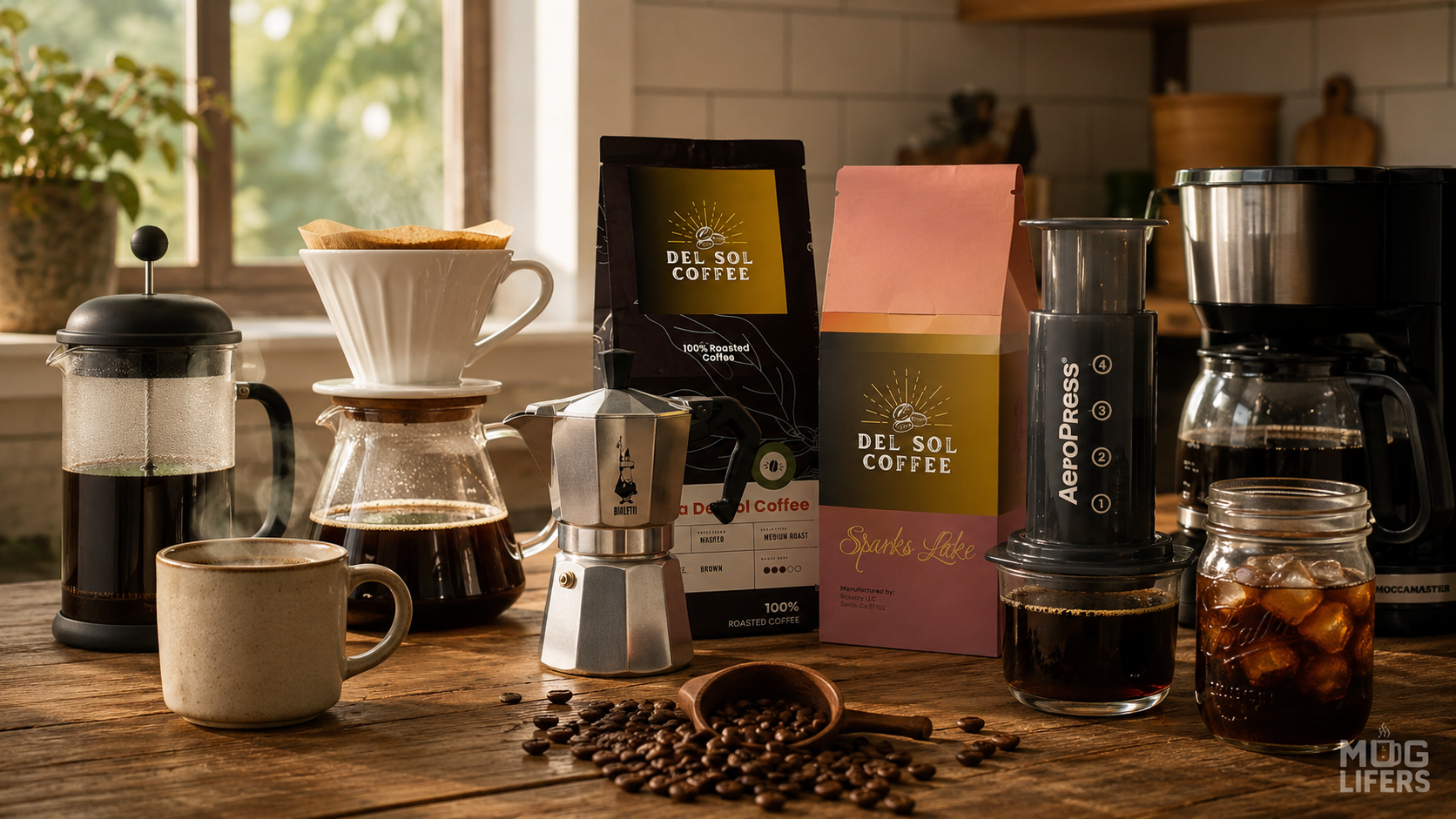
Coffee is either fuel or ritual. Most mornings, it’s both. You stumble into the kitchen for survival, or you take ten slow minutes and treat the whole thing like church, only with better smells.
The brew method changes more than people think. The same beans can taste crisp, muddy, syrupy, or flat depending on how water meets coffee. Body, strength, cleanup, cost, all of it shifts. Bad coffee has been made in fancy kitchens and bad hotel rooms alike.
You don’t need a lecture or a laboratory kettle. This guide breaks down coffee brewing methods in plain English, so you can pick the one that fits your taste and your mornings.
What really changes from one brew method to another
Most arguments about brew method come down to a few plain variables: grind size, water temperature, brew time, filter type, and ratio. Change one, and the cup changes with it. In 2026, the smarter home coffee crowd is paying more attention to grinders and technique than flashy gadgets.
Why grind size matters more than people think
Grind size controls how fast water pulls flavor out. Coarse grounds extract slower. Fine grounds extract faster. Too fine for the method, and the cup turns bitter. Too coarse, and it tastes sour or hollow.
A good bean can’t outrun a bad grind. That’s why how to choose your first coffee grinder matters more than another shiny brewer. French press likes coarse. Drip and pour-over want medium. Espresso needs fine, but not dust.
Good beans won’t survive bad grinding.
How filters, pressure, and steep time change the cup
Filters change texture. Paper catches oils and fine grit, so drip and pour-over taste cleaner. Metal lets more through, which gives French press more weight and a little sediment.
Pressure changes the cup too. Espresso forces hot water through fine coffee fast, so it comes out concentrated. Full immersion, like French press or cold brew, keeps grounds in water longer and builds body. For most hot brewing, water around 195 to 205 F is the safe zone. Too hot tastes rough. Too cool tastes sleepy.
Ratio matters as well. Around 1:15 or 1:16 is a solid starting point for filtered coffee.
The most common coffee brewing methods, from simplest to strongest
Now for the brewers most people actually live with. Each one has its own mood, and some are better company on a Monday than others.
Drip coffee and pour-over for a cleaner cup
Drip coffee is the reliable old sedan. Water, grounds, button, done. A decent machine makes a clean, dependable cup with little fuss. It’s good for busy mornings, shared kitchens, and people who don’t want a hobby before breakfast.
Pour-over uses the same basic idea, but your hands run the show. You control the pour and timing, so you get more say over flavor. The result is often brighter and clearer. It asks for attention, but it pays you back in clarity.
French press, moka pot, and espresso for a bolder hit
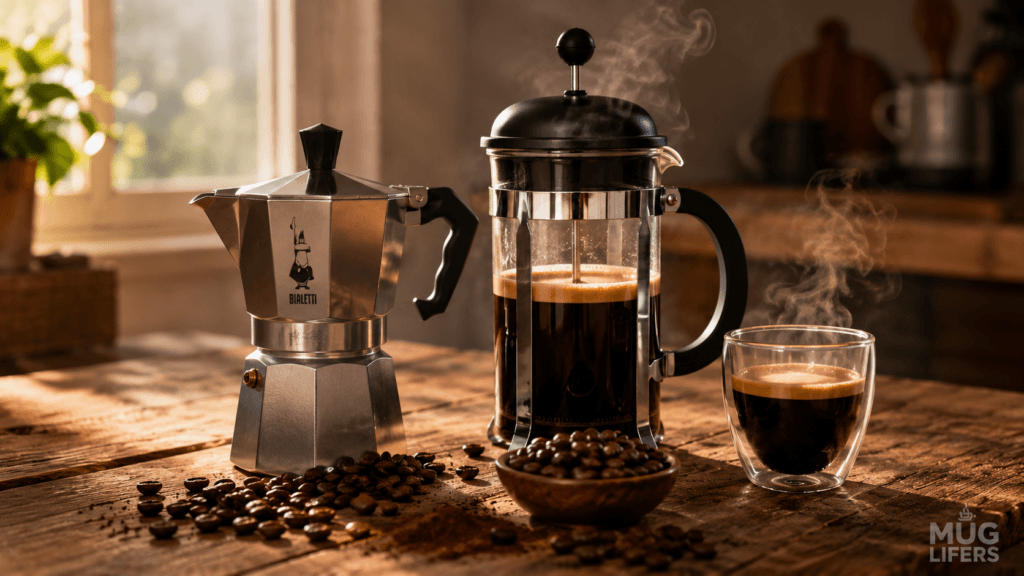
French press is bold, full-bodied, and forgiving. The grounds steep in hot water, then a mesh plunger pushes them down. You get more oils, more heft, and often a little grit at the bottom. Some people hate that. Some of us think that’s part of the point.
Moka pot makes strong stovetop coffee by forcing water up through the grounds. It’s rich and intense, great when you want something close to espresso without buying a machine. Close is the key word. It isn’t true espresso.
Espresso is short, concentrated, and demanding. Done right, it’s sweet, dense, and powerful. Done badly, it’s a sharp little punishment.
AeroPress and cold brew for flexibility and smoothness
AeroPress is one of the most flexible coffee brewing methods around. It’s quick, portable, and forgiving. You can brew something strong, or stretch it into a cleaner mug with more water. It also travels well, which matters if you’ve ever made coffee in a motel room and regretted your life choices.
Cold brew is the opposite mood. Coarse grounds sit in cold water for 12 to 24 hours, then you strain the concentrate. The cup is smooth, low-acid, and built for ice. If you want another plain-English side-by-side on how brewing methods affect flavor, this one is worth a read.
How to pick the right brewing method for your routine
Choosing the right brewer has less to do with status and more to do with the life you’re living. Fancy gear won’t rescue a method that annoys you before 7 a.m.
Choose based on flavor, not hype
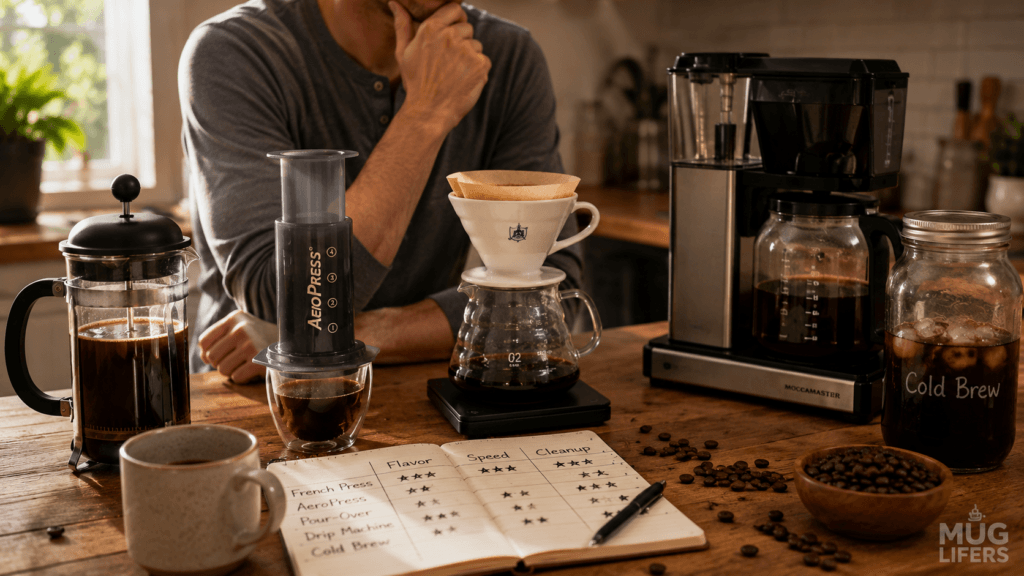
Start with the cup you want every day. If you like clean and bright, go drip or pour-over. If you want rich and heavy, try French press or moka pot. If you want a short, powerful hit, it’s espresso.
Trends are fun until they aren’t. Manual brewing is still popular in 2026, but hype is cheap. Pick the method that makes you want a second sip, not the one that looks best on a shelf.
Match the method to your schedule and gear
Some brewers need your attention. Pour-over asks you to stand there and mean it. Espresso wants money, maintenance, and patience. Others are easier. Drip is mostly set-it-and-forget-it. AeroPress is fast to brew and fast to clean. Cold brew takes forever, but almost none of that time is active.
Cleanup counts. So does price. A French press or moka pot usually costs far less than an espresso setup. If you’re comparing methods with the same beans, Del Sol Coffee is an easy bag to keep in rotation.
The brewer that fits the morning
Coffee can be a rushed necessity or a small ritual. The best method changes with that mood. There isn’t one champion among these coffee brewing methods, only the cup that fits the moment.
Method changes flavor, texture, strength, and effort. That’s the whole deal. Try a couple, keep what works, and let the rest go.
Good coffee doesn’t need a sermon. It needs the right tool and a morning worth showing up for.
This post may contain affiliate links. If you make a purchase through these links, I may earn a small commission at no extra cost to you.
Coffee Brewing FAQs
Everything you wanted to know before the first sip.
What are the most common coffee brewing methods?
The most common coffee brewing methods include drip coffee, pour-over, French press, moka pot, espresso, AeroPress, and cold brew. Each one changes flavor, strength, texture, and body.
Which coffee brewing method makes the strongest coffee?
Espresso creates the most concentrated coffee. Moka pots also produce a rich and strong cup, while French press creates a heavier body with more oils.
Which brewing method works best for beginners?
Drip coffee, French press, and AeroPress are beginner friendly choices because they are easy to use and do not require a large amount of equipment.
Does grind size matter with coffee brewing methods?
Yes. Grind size changes extraction speed and flavor. French press uses coarse grounds, drip and pour-over use medium grounds, and espresso requires a fine grind.
Which coffee brewing method creates the smoothest cup?
Cold brew often creates the smoothest and least acidic cup because it uses cold water and long steep times.
What is the best coffee brewing method for daily use?
The best method depends on your routine. Drip coffee works well for speed, French press creates a richer cup, and AeroPress combines fast brewing with easy cleanup.


