
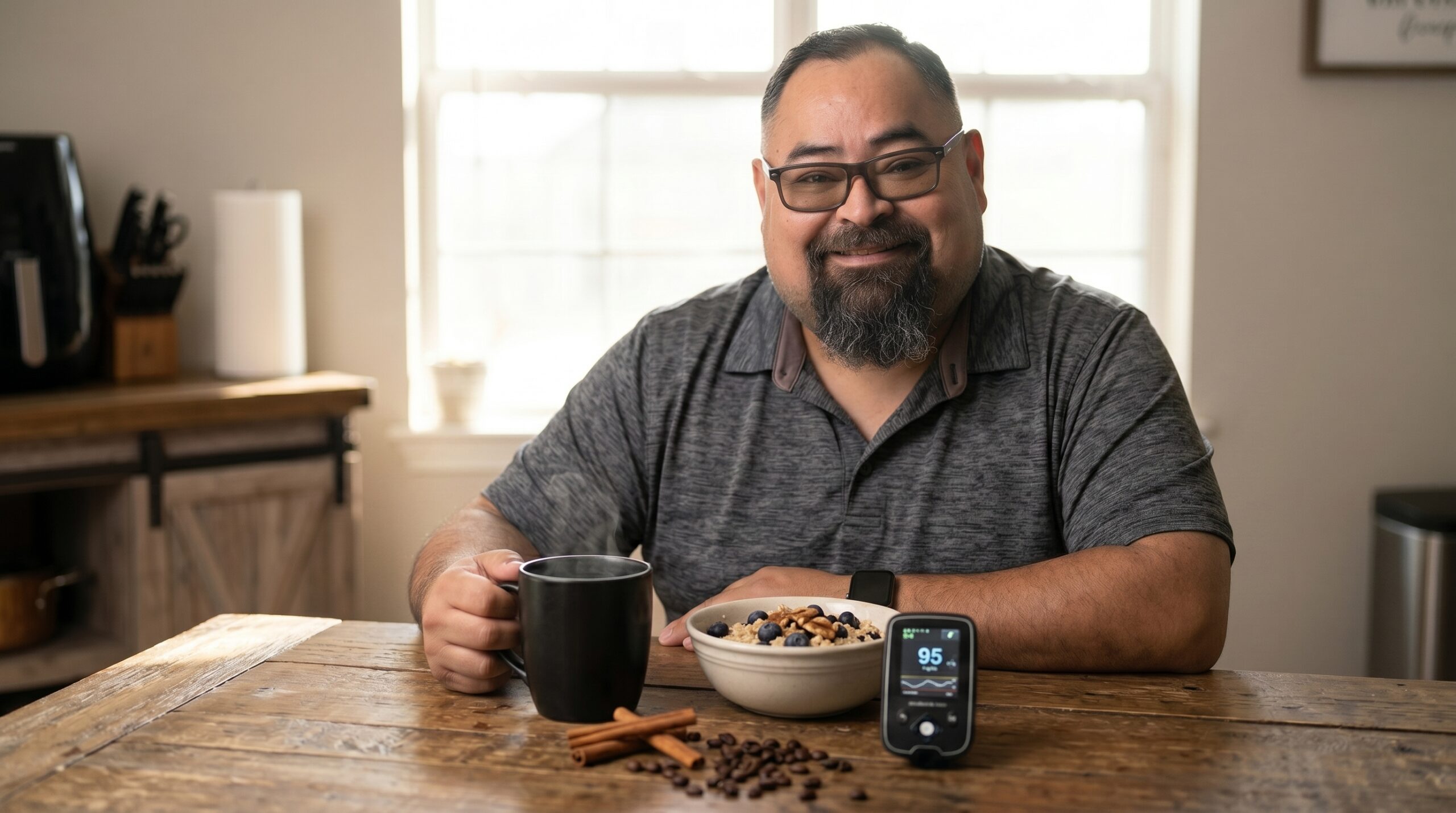
Coffee has a split reputation in diabetes research. Over the long run, people who drink it often tend to have a lower risk of type 2 diabetes. Yet in the short run, caffeine can push blood sugar higher in some people, especially after meals.
That tension matters because coffee itself is rarely the whole story. A plain cup and a dessert-like cafe drink are not the same thing. The safest choice is usually the one with the fewest surprises, the least sugar, and a caffeine level the body handles well.
What the latest research says about coffee and blood sugar
The evidence points in two directions at once. Large long-term studies often link regular coffee drinking with a lower risk of type 2 diabetes. At the same time, short-term trials show that caffeine can reduce insulin sensitivity for several hours in some people.
That doesn’t mean coffee is bad for diabetes. It means coffee is a mixed drink, chemically speaking. It contains caffeine, but it also contains chlorogenic acids, polyphenols, and other plant compounds that may help with glucose metabolism.

A new 2026 lab study added another piece. Researchers identified roasted coffee compounds called caffaldehydes A, B, and C. In test-tube work, these compounds blocked alpha-glucosidase, an enzyme that helps break down carbohydrates. That matters because slower carbohydrate breakdown can blunt blood sugar spikes. Still, this is early research in a lab, not proof that roasted coffee treats diabetes in real life.
Coffee may help lower long-term diabetes risk, but that doesn’t mean every cup improves blood sugar in the moment.
Why coffee may lower diabetes risk over time
The best guess is that coffee’s non-caffeine compounds do much of the useful work. Chlorogenic acids may slow glucose absorption and reduce the liver’s glucose output. Polyphenols may also improve how cells respond to insulin.
Roasting appears to matter too. Some compounds form during roasting, and the 2026 caffaldehyde finding suggests there is still more to learn about what ends up in the cup. Even so, the strongest human evidence shows an association, not a guarantee. Coffee drinkers may have a lower diabetes risk on average, but coffee is not a shield.
Why caffeine can still raise blood sugar in the short term
Caffeine can trigger stress hormones such as cortisol and adrenaline. Those signals may tell the liver to release more glucose into the bloodstream. As a result, blood sugar can rise for a few hours, even when the drink has no sugar in it.
This response varies a lot. Some people tolerate coffee with little change. Others see clear spikes, more jitters, worse sleep, or a racing heart. That difference is one reason broad research findings don’t always match what happens with a single morning cup.
The best coffee choices for people with diabetes
There is no single bean, roast, or brew that works best for everyone. Still, some options are easier to predict and easier to fit into blood sugar management. The common thread is plain preparation and control over what goes into the cup.
Black coffee is the cleanest starting point
Plain black coffee has almost no calories and no meaningful carbs. That makes it the simplest place to start when blood sugar matters. Brewed coffee, drip coffee, espresso, and an Americano can all fit this pattern, as long as they stay plain.

Simplicity is the main advantage. Once sugar, syrups, and sweetened creamers enter the cup, the metabolic picture changes fast. With black coffee, there is less guesswork and better control.
Decaf can be a good choice for blood sugar control
Decaf deserves more attention than it gets. It still contains many of coffee’s polyphenols and chlorogenic acids, but with much less caffeine. That means it may preserve some of coffee’s long-term benefits without the same short-term jolt to blood sugar.
For people who notice glucose spikes after regular coffee, decaf is often the better test. It can also be a better fit for those with insomnia, reflux, anxiety, or heart palpitations. In practice, unsweetened decaf often lands in the sweet spot between caution and enjoyment.
Filtered coffee is usually the safer everyday option
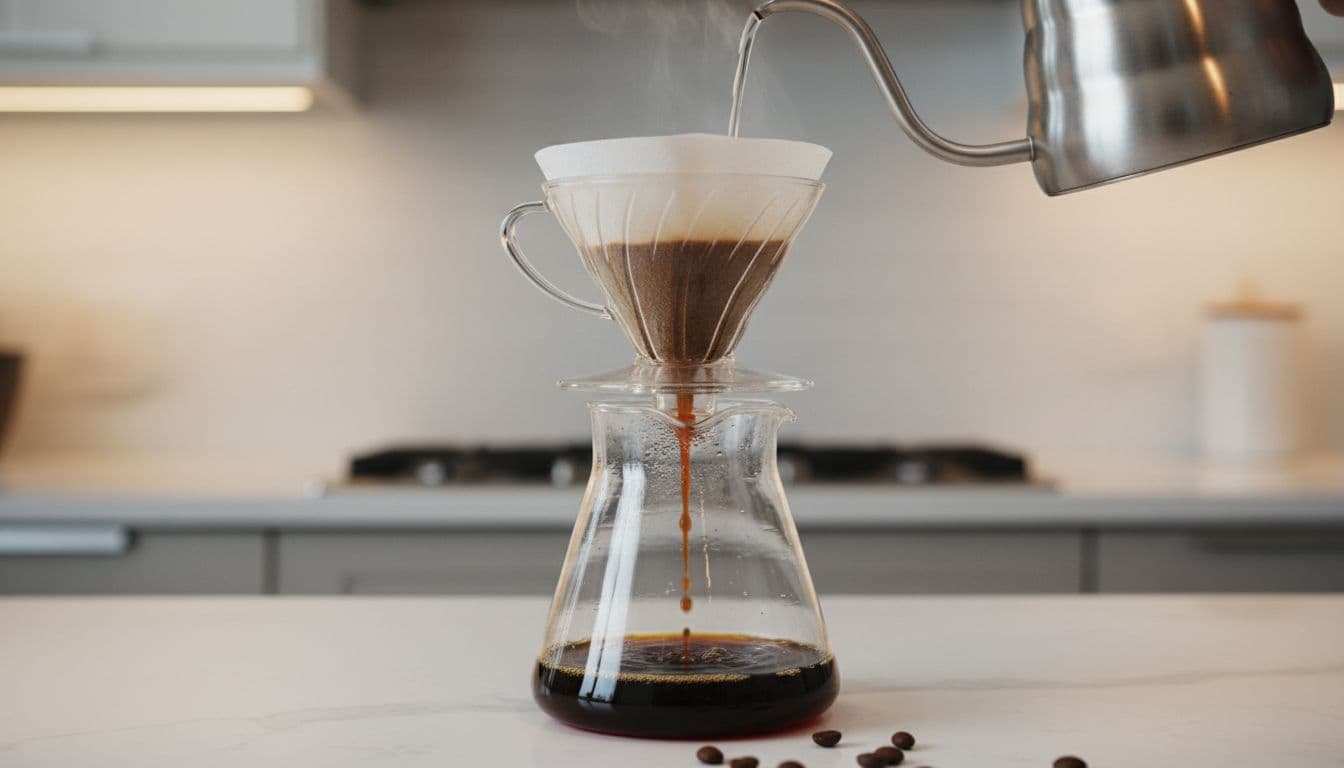
Filtered coffee has a quiet advantage. Paper filters trap more diterpenes, including cafestol and kahweol, than unfiltered methods such as French press or boiled coffee. Those compounds can raise LDL cholesterol in some people.
That point matters because diabetes and heart disease often travel together. A coffee choice that protects blood sugar but worsens cholesterol is less useful over time. Filtered black coffee, whether caffeinated or decaf, is usually the safest everyday default.
What to avoid adding to coffee if blood sugar matters
Coffee often gets blamed for what was added to it. A plain cup is one drink. A flavored, sweetened, cream-heavy version can behave more like a snack or dessert.
Sugar, syrups, and flavored creamers can undo the benefits
The main troublemakers are familiar: table sugar, sweet syrups, whipped toppings, and flavored creamers. These add fast-digesting carbs and often a lot of calories. A drink that started out close to zero carbs can turn into a quick blood sugar spike.
Even small additions add up. Two teaspoons of sugar in several cups a day can shift the pattern of the whole diet. Sweetened creamers do the same job more quietly because they look minor but often carry sugar and oils.
Coffee shop drinks often hide more sugar than expected
Large lattes, blended drinks, and seasonal specials can contain as much added sugar as a dessert. The problem is not coffee itself. It’s the syrups, sauces, sweetened milk bases, and toppings layered on top of it.
Portion size also matters. A small cappuccino with plain milk is one thing. A large caramel drink with whipped cream is another. For people managing diabetes, cafe menus often reward a close look rather than blind trust.
The Final Cup
For most people with diabetes, the most sensible coffee is plain, unsweetened, and easy to track. Black coffee is the cleanest baseline, while unsweetened decaf can be a better fit when caffeine causes spikes, jitters, or poor sleep.
Filtered coffee usually has the strongest everyday case because it keeps the drink simple and may be better for cholesterol as well. The best coffee for diabetes is rarely about a magical bean. It is about preparation, portion, and how the real body responds to the cup in front of it.