
If you’re like me and you love a good cup of coffee, what’s in your water really matters. Hard tap water can change both the taste of your brew and the health of your coffee machine. It’s worth understanding how minerals in your water can affect every cup you make. Coffee lovers are often surprised by how much simple tap water can completely change their daily drink, sometimes for the better, but often in ways that can be fixed with a few smart choices.
What Is Hard Tap Water?
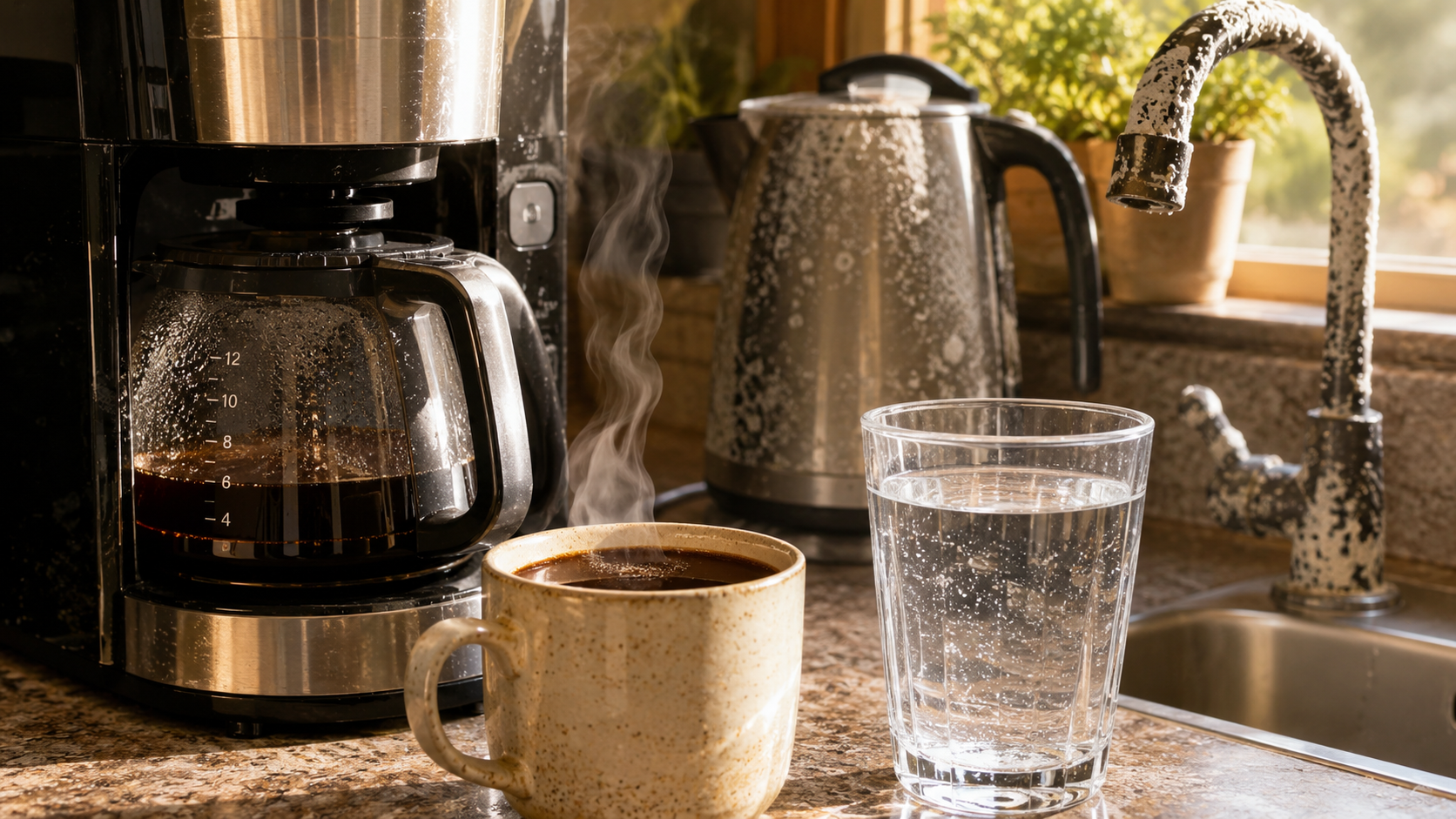
Hard tap water contains a lot of minerals, such as calcium and magnesium. You might notice this if you see white spots on your faucet or kettle. These minerals aren’t usually harmful to drink, but they can interact with your coffee in interesting ways. Some areas have especially hard water, which can actually change recipes if you care about details. Check out your local water report or simply look for those flaky mineral deposits as a clue.
How Hard Water Changes Coffee Flavor
I’ve noticed that coffee brewed with hard water often tastes pretty different from coffee made with filtered or soft water. The minerals in hard water can change how flavors come through and sometimes make coffee taste flat, chalky, or even bitter. Some coffee beans can lose their unique notes because hard water overpowers the subtle flavors you’d usually want to enjoy. If you’re working with a single-origin roast or something with complex flavors, those minerals might mask the fun tasting notes.
Effects on Your Coffee Equipment
I always tell people to check their gear if they use hard water a lot. Those minerals love to build up inside coffee makers, especially espresso machines. Over time, this buildup, called scale, can clog pipes, disrupt water flow, or damage the heating element. Cleaning out this buildup is a pain and, if ignored, can even shorten your machine’s life. This buildup happens much faster if you’re using water with a high mineral content, so folks who notice slow water flow or inconsistent temperature should look inside for scale.
Check out Urnex Clearly Coffee Pot Cleaner on Amazon.
Keeping Coffee Tasting Its Best
I’ve found that using filtered water can make a big difference, both for taste and for your machine’s health. Regular descaling is also really important if you’re dealing with hard water at home. Investing in a good water filter or treating your water means you get to enjoy better-tasting coffee and keep your equipment running smoothly. Some coffee enthusiasts even buy mineral-balanced water so they can control flavors exactly. At home, sticking with regular cleaning and paying attention to your water makes every coffee break a rewarding ritual.
FAQs About Hard Tap Water and Coffee
Does hard tap water make coffee taste bad?
It can. Hard tap water contains minerals like calcium and magnesium, which can make coffee taste flat, chalky, bitter, or less balanced.
Can hard water damage a coffee maker?
Yes. Over time, hard water can leave mineral scale inside your coffee maker. This buildup can slow water flow, affect heating, and shorten the life of the machine.
Is filtered water better for coffee?
Filtered water is usually better because it reduces unwanted minerals, chlorine taste, and other things that can interfere with coffee flavor.
How often should I descale my coffee maker?
If you use hard tap water, descaling about once a month is a smart habit. If your water is only mildly hard, every two to three months may be enough.
Can some minerals improve coffee flavor?
Yes, a small amount of minerals can help coffee taste fuller and more balanced. The problem starts when the water has too many minerals and overpowers the coffee.


